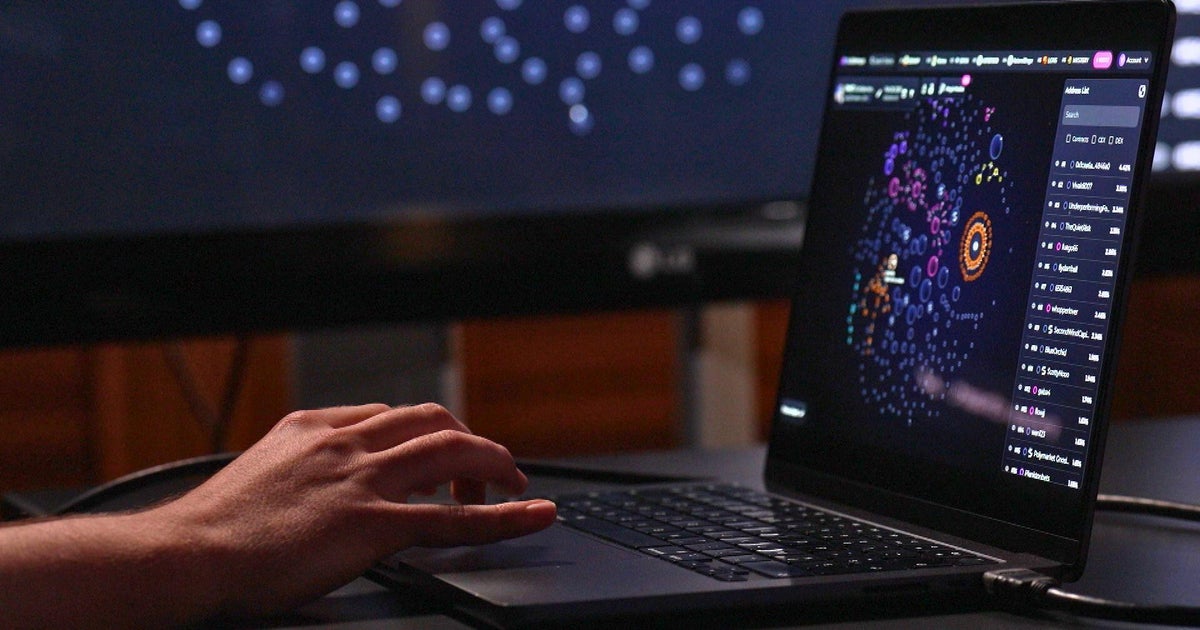
Nine connected Polymarket accounts have raked in more than $2.4 million betting almost exclusively on U.S. military actions in what digital detectives from the data analytics firm Bubblemaps have identified as a potentially egregious case of insider trading.
The anonymous accounts made winning bets on the specific dates of pivotal moments in the war with Iran: the first U.S. strikes, the removal of Iran’s supreme leader, and the announcement of a ceasefire.
Across more than 80 bets, the accounts had a 98% win rate, even as many wagers were made when the odds of winning were low, according to Bubblemaps co-founder and CEO Nicolas Vaiman, who shared their findings first with 60 Minutes.
“This might be the most insane pattern we have found on Polymarket so far,” Vaiman said. “Luck alone cannot explain those numbers.”
The nine linked accounts aren’t alone in betting on war. More than $1 billion has been staked online this year on military decisions and outcomes. The ability to bet on war on prediction markets has created a whole new category of insider trading.
Prediction markets, which allow users to wager on the likelihood of many kinds of future events, have exploded in popularity. But after a U.S. Army soldier was indicted last month for allegedly using classified information to win bets, 60 Minutes examined how insiders may be using nonpublic information to gain an edge.
“This is a new kind of insider trading,” said Rob Schwartz, a partner at the law firm Morgan Lewis who spent 13 years at the Commodity Futures Trading Commission, which polices fraud and insider trading.
The biggest prediction market is Polymarket. One paradox of the trading platform is that everything about the trades is totally transparent and public, which allows a firm like Bubblemaps to do a wide-ranging analysis. The traders themselves, however, remain anonymous.
In a statement to 60 Minutes Polymarket said, “When our systems identify suspicious activity, we act — including through referrals to law enforcement and cooperation with investigations,” and “insider trading is not welcome on Polymarket, and those who attempt it will be identified.”
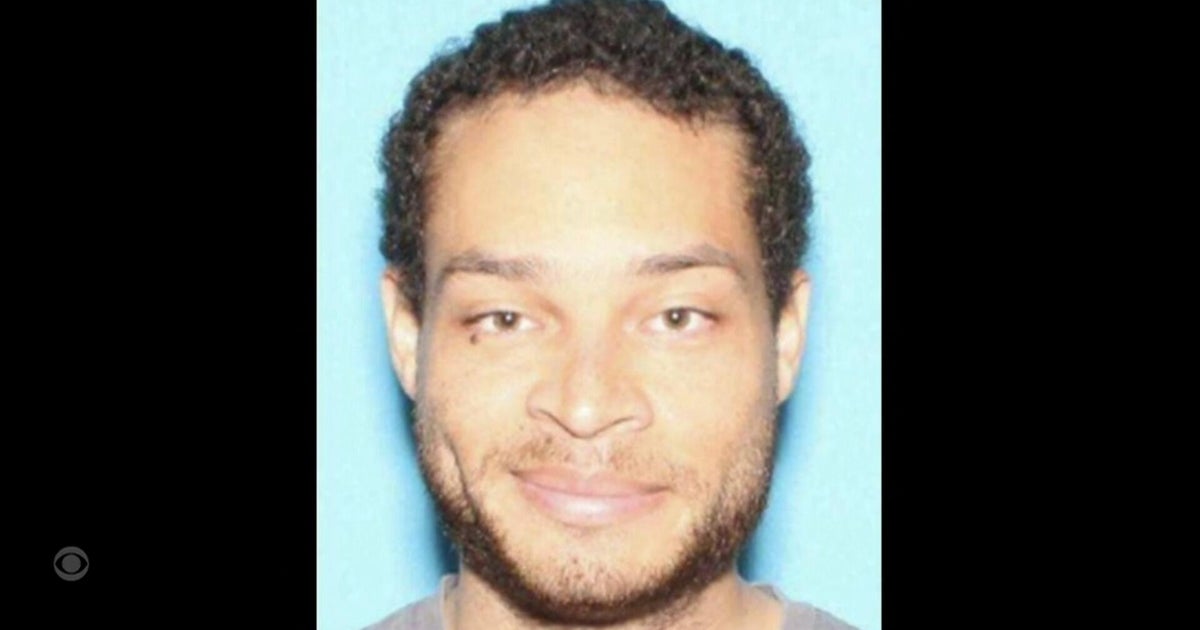
The U.S. prohibits making military bets on platforms like Polymarket but it’s easy for users to find digital workarounds, such as VPNs, which cost about $2 a month. That’s allegedly how Army Master Sgt. Gannon Ken Van Dyke made his wagers on the special operations mission to capture former Venezuelan leader Nicolás Maduro. Van Dyke pleaded not guilty last month to federal charges.
The Justice Department alleges Van Dyke made a series of wagers totalling roughly $34,000, including a half dozen the day before the raid. He netted more than $400,000. According to the indictment, Van Dyke immediately withdrew his profit, then tried to delete his betting account on Polymarket. The company says it has cooperated with law enforcement.
Military bets are ripe for corruption, according to Bubblemap’s head of investigations, a former U.S. military officer himself. He goes by the handle “Deebs.” 60 Minutes agreed to conceal his identity because of safety concerns about the kind of detective work he does and the spiking number of so-called “wrench attacks,” or violent kidnappings, that have been happening to people in the crypto world.
Deebs explained there are many individuals involved in putting together a military operation: government officials, planners and intelligence analysts. Even spouses of servicemembers have the potential of learning classified information about operations.
“And that means that there are, consequently, a lot of potential insiders, ” Deebs said.
Bubblemarket isn’t the only firm analyzing bets on prediction markets. At the Anti-Corruption Data Collective, Michelle Kendler-Kretsch looked at long-shot wagers on military markets — bets of more than $2,500 that had less than 35% odds of winning — made on Polymarket. Though they were betting on longshots, bettors won more than they lost.
Their report found indications of “systemic insider-trading” in betting on military outcomes.
Former commodities trader David Kovel, now a New York lawyer representing fraud victims, said he’s “highly suspicious” of trades that have taken place this year on the heavily-regulated commodities markets. He points to March 23 as a sign of what has been happening.
Fighting in Iran had been raging for more than three weeks and it was a slow trading day in oil futures. Then suddenly, according to data from the financial firm LSEG, at 6:50 a.m. ET on March 23, more than $800 million was staked on the chance of oil prices dropping.
Fifteen minutes later, President Trump posted on Truth Social that the White House and Iran had “very good and productive” conversations about ending hostilities. The news sent the price of oil plummeting more than 10%, meaning whoever executed those trades made a fortune.
“We’re talking tens of millions, could be $80 million,” Kovel said.
Asked whether this could be a case of insider trading, Kovel said, “That’s a natural conclusion to draw. I can’t know it without knowing what happened, but it’s a natural conclusion to draw.”
60 Minutes has learned that federal investigators are probing the oil market trades. No one has been charged with any crimes associated with the trades.
Several sources 60 Minutes spoke with about the trades suggested that if there was trading on nonpublic information, it could have been someone inside the U.S., it could have been someone from a foreign country, or it could even have been an enemy. Not enough yet is known to draw a conclusion.
“Identifying who it was would be the secret to figuring out whether it was insider trading or not,” Kovel said.
Bets have also led to threats of violence. Soon after Emanuel Fabian, military correspondent for the Times of Israel, wrote a short piece about an Iranian strike on an empty forest near Jerusalem, he received a barrage of messages asking him to change his story.
At first he ignored them. Then the messages turned darker.
“One of them was, ‘You’re going to make us lose $900,000. And we’ll invest even more than that to finish you,’ is what he wrote,” Fabian said. “He also wrote details about my siblings as well. He said, ‘I know how often you visit your family.'”
The journalist found war bets on Polymarket that hinged on whether an Iranian missile would enter Israel, specifically on March 10. His news story voided the side of the bets predicting no missile, angering the losers.
Fabian reported the threats to police and to Polymarket, which said that threatening a journalist was unacceptable and banned the accounts involved.
In an interview with 60 Minutes last year, company CEO Shayne Coplan, addressed users having inside information: “I think that people going and having an edge to the market is a good thing. Obviously, you need to curate them and you need to be really clear and stringent on where the line is drawn and, like, sort of ethics and we spend a lot of time on that. But it’s sort of an inevitability that this will happen, and there’s a lot of benefits from it. And, you know, people will adapt.”
Oversight of prediction markets in the U.S. falls to the Commodity Futures Trading Commission. The CFTC, set up in the 1970s to regulate food prices, was historically a commission of five, but today is headed up by just one person: Michael Selig, who was nominated by Mr. Trump last fall.
Both CFTC staffing and enforcement actions have dropped dramatically since 2024. Selig declined an interview request, but his office told 60 Minutes the commission is hiring more staff and using artificial intelligence to go after bad actors.
In March, the White House issued a memo to staffers noting it is a “criminal offense for anyone to use nonpublic information” on prediction markets.
Bubblemaps head of investigations, Deebs, worries the insider trading on prediction markets could have national security implications. If market watchers can spot irregular trades, enemies of the U.S. can, too — and they’ll make war plans accordingly.
“Just to put it plainly, this could be putting people’s lives at risk,” Deebs said. “Other adversaries may be using this information in order to plan their own strategy.”
POLYMARKET’S FULL STATEMENT:
“Polymarket has built the most comprehensive market integrity infrastructure in the prediction market industry, combining strict insider trading rules, AI-powered surveillance, and blockchain forensics into a unified system. Our Enhanced Market Integrity Rules, published earlier this year, set out explicit prohibitions on insider trading, market manipulation, and disruptive practices across both our DeFi platform and our CFTC-regulated U.S. exchange, backed by partnerships with world-class data analytics firms providing real-time trade surveillance, anomaly detection, and blockchain forensics. When our systems identify suspicious activity, we act — including through referrals to law enforcement and cooperation with investigations.
The indictment of Gannon Ken Van Dyke is a demonstration of our commitment in practice. Polymarket identified the activity, referred it to authorities, and the system worked. Insider trading is not welcome on Polymarket, and those who attempt it will be identified.”