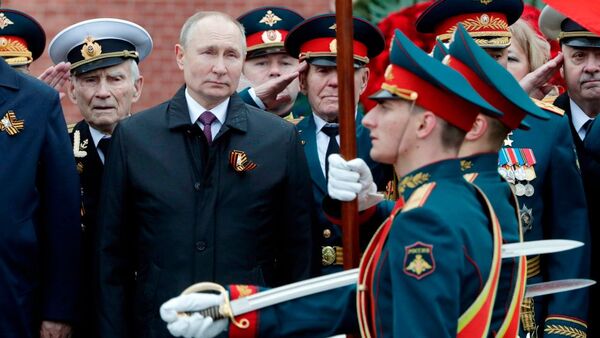
Russians are beginning to imagine a future without Vladimir Putin, according to a former senior Kremlin official who has broken ranks in a rare anonymous account of the mood inside Russia’s ruling class. Writing in a recent op-ed published by The Economist, the former official describes a country whose elites, regional governors and business leaders have subtly but unmistakably stopped associating themselves with the president’s decisions, a shift the author says reflects a growing recognition that Putin has driven Russia into a dead end.
The Telling Language Shift Inside the Kremlin
The clearest signal of elite disillusionment, according to the former official, is linguistic. Senior figures in Moscow have quietly stopped using the first person plural when discussing the president’s actions.
Where they once said “we,” they now say “he,” a small grammatical adjustment that carries considerable political weight in a system built on the performance of solidarity.
That shift took hold last spring, the former official noted, though it does not mean a rebellion is imminent. The state continues to hold the key instruments of repression and fear firmly in its hands.
A Regime That Has Stopped Selling a Vision
What has changed, the former official argues, is that the Kremlin has abandoned any attempt to sell Russians a coherent story about national restoration or modernisation. The country is haemorrhaging lives and resources on the battlefields of Ukraine, and the government is offering nothing in return by way of a unifying narrative.
“The irony is that Mr. Putin started the war to preserve power and the system he has created,” the official wrote. “Now, for the first time since the conflict began, Russians are starting to imagine a future without him.”
Economic Pressure Mounts as War Costs Bite
The war’s economic consequences have compounded the political disillusionment. Russians are contending with rising inflation, heavier tax burdens, deteriorating infrastructure, tightened censorship and a cascade of new social restrictions. High inflation has forced interest rates to remain elevated, straining companies and borrowers struggling to service their debts. Defaults have risen, and warnings of a broader financial crisis have grown louder.
Elites Lose Wealth, Freedom and Western Protection
Russia’s business class, once able to shelter assets under Western legal frameworks and move freely between countries, has found itself trapped and increasingly exposed. Travel bans have confined elites to Russia, and the protections that once secured their wealth abroad have evaporated.
The former official estimated that the state has seized approximately $60 billion in assets from private businessmen over the past three years, through outright nationalisation or redistribution to regime loyalists.
“It is not that the elites have suddenly discovered a taste for the rule of law or democracy,” the op-ed said. “But even those loyal to the regime crave rules and institutions that can resolve conflicts fairly.”
Russia’s Identity Crisis on the World Stage
Beyond its borders, Russia faces a different kind of problem. As the rules-based international order weakens, the country has less room to exploit institutions such as the United Nations Security Council to its advantage. And as the West itself declines in influence, Russia loses the adversary against which it has long defined itself, creating what the former official describes as an identity crisis.
The Social Contract Has Collapsed
Inside Russia, the informal arrangement that once underpinned public acquiescence has broken down entirely. For years, the Kremlin tolerated citizens living largely private lives so long as they stayed clear of politics. That bargain no longer holds.
“People are required to be loyal without being told what future that loyalty serves,” the official said.
Rather than delivering the consumption, services and convenience that once kept ordinary Russians broadly compliant, the state now offers repression, surveillance and censorship. Internet blackouts have generated widespread public frustration as the regime attempts to suppress information about mounting casualties in Ukraine and the deteriorating economy.
Putin Retreats Into the Bunker
The disconnection between the state and its citizens has deepened as Putin himself has retreated from public view. According to sources cited by the Financial Times, the Russian president is spending increasing amounts of time in underground bunkers, consumed by the management of his war and preoccupied with the threat of a coup or a Ukrainian drone strike.
One person with direct knowledge of Putin’s schedule told the Financial Times that he now devotes 70 per cent of his day to the war and only 30 per cent to other responsibilities, including the economy.
Approval Ratings Fall as Sentiment Sours
The political and economic pressures are registering even in official data. A survey conducted by Russia’s state-owned polling organisation showed Putin’s approval rating has fallen to 65.6 per cent, down from 77.8 per cent at the start of the year and well below the levels above 80 per cent recorded before the war.
A System Eating Itself
The former official’s conclusion is stark. The structures Putin built to entrench his rule are now accelerating the decay he sought to prevent.
“The system can persist for as long as Mr. Putin remains in power,” the former Russian official wrote in the Economist. “But his every move to preserve and expand it accelerates decay.”
This article draws on an anonymous op-ed published in by a former senior Russian government official, and reporting by the Financial Times.