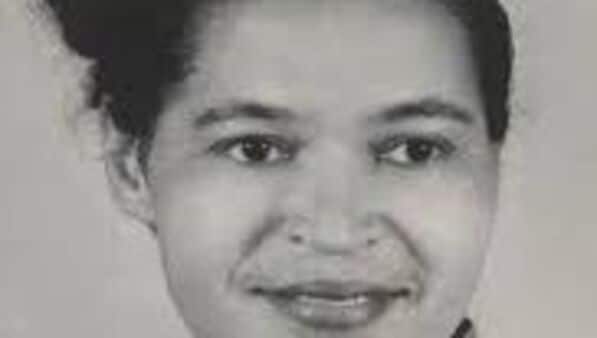
Rosa Parks, born Rosa Louise McCauley in Tuskegee, Alabama, in 1913, became one of the most important civil rights figures in American history. Long before her famous bus protest, she was active in the NAACP and worked against racial injustice in Montgomery. On December 1, 1955, Parks refused to give up her seat on a segregated bus, an act that helped spark the Montgomery Bus Boycott and became a defining moment in the Civil Rights Movement. Britannica describes her as the “mother of the civil rights movement.”
“I have learned over the years that when one’s mind is made up, this diminishes fear; knowing what must be done does away with fear.”
— Rosa Parks
The quote appears in Library of Congress/National Library Service educational material on Rosa Parks and is also widely reproduced in quote collections. Goodreads links the quote to Rosa Parks: My Story, though strict editorial use should ideally verify the exact page in the print edition.
Meaning of the Quote
is about the power of moral clarity. Fear does not always disappear because circumstances become safe; often, it diminishes because the decision becomes clear. When a person knows what must be done, fear loses some of its authority.
The deeper lesson is that courage is not a sudden personality trait. It is often the result of years of reflection, conviction, injustice witnessed, and values strengthened. Parks’s refusal on the Montgomery bus was not an impulsive act by someone who was merely tired; it came from a long history of awareness, organising, and resistance to humiliation.
This quote is especially powerful because it separates courage from fearlessness. Parks does not say she never felt fear. She says a made-up mind reduces fear. In life, work, relationships, and public action, there are moments when hesitation ends because the truth becomes too clear to ignore.
Why This Quote Resonates
This quote resonates today because people are still being asked to make difficult choices under pressure: whether to speak up, resist unfair treatment, change careers, defend someone, admit the truth, or take a stand when silence feels safer. The lesson is not only historical; it is personal and immediate.
It also connects to the continuing legacy of the Montgomery Bus Boycott. In December 2025, Montgomery marked the 70th anniversary of the boycott, which began after Parks’s arrest and lasted 381 days, with around 40,000 Black residents refusing to use segregated city buses.
That anniversary shows why Parks’s words still matter. Change often begins with a decision that looks small from the outside but is morally enormous from the inside. A made-up mind can become a public turning point.
“You must never be fearful about what you are doing when it is right.”
—
This related Parks quote also appears in Library of Congress/NLS educational material and reinforces the same theme of moral courage.
Together, both quotes create a complete lesson. The first says clarity reduces fear. The second says righteousness gives courage direction. Parks’s message is not about stubbornness for its own sake; it is about knowing when conscience must become action.
The combined lesson is powerful: fear may remain, but it should not be allowed to overrule what is right.
How You Can Implement This
- Clarify what you believe: Write down the principle at stake — fairness, dignity, truth, freedom, respect, justice, or self-respect.
- Name the fear directly: Ask whether you fear rejection, punishment, conflict, embarrassment, failure, or being misunderstood.
- Separate danger from discomfort: Decide whether the risk is real harm or the natural discomfort of doing something difficult.
- Choose the smallest right action: Take one step — speak one sentence, send one message, refuse one unfair demand, or ask one hard question.
- Prepare before acting: Gather facts, allies, context, and a calm explanation so your courage is supported by clarity.
- Let values lead timing: Do not wait for fear to . Act when the decision is clear enough and the action is necessary.
“I would like to be remembered as a person who wanted to be free… so other people would be also free.”
— Rosa Parks
This quote, also included in Library of Congress/NLS material, captures the heart of Parks’s life: her courage was never only personal. Her made-up mind became part of a larger struggle for freedom and dignity. The lesson remains timeless: when conscience is clear, even quiet courage can move history.