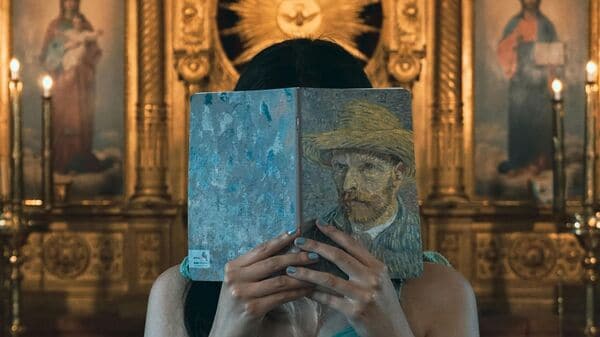
“Great things are not done by impulse, but by a series of small things brought together.” — Vincent van Gogh
LiveMint’s quote of the day by Vincent van Gogh is a profound rejection of the “overnight success” myth. It suggests that excellence is not a lightning strike of inspiration, but rather the result of deliberate, incremental progress.
What does the quote mean?
- Deception of “impulse”: We often imagine that great works of art, breakthrough inventions, or massive career milestones happen because of a sudden “aha!” moment or a wild burst of energy. Van Gogh argues the opposite. Impulse is fleeting and unreliable. While it might start a fire, it rarely provides enough fuel to finish a complex journey.
- Power of incrementalism: The “series of small things” refers to the daily habits, minor details, and repetitive tasks that seem insignificant on their own. In Van Gogh’s world, this meant thousands of individual brushstrokes, hours of studying anatomy, and failed sketches.
Consistency over intensity: Doing a small amount of work every day is more effective than working 20 hours straight once a month.
Compound effect: Just as a wall is built one brick at a time, a “great thing” is the sum of many tiny, well-executed parts.
- Patience and perspective: This quote is an encouragement to anyone feeling overwhelmed by a large goal. It shifts the focus from the intimidating “Great Thing” to the manageable “Small Thing” right in front of you. It tells us that:
– You don’t need to see the whole staircase to take the first step.
– Mastery is a slow-motion process.
“If you hear a voice within you say ‘you cannot paint,’ then by all means paint, and that voice will be silenced.” — Vincent van Gogh
Relevance today
In a world where we expect 15-second videos to change our lives and two-hour delivery for our every whim, Van Gogh’s perspective is essentially the ultimate “vibe check” for our collective impatience.
Its relevance today boils down to three major areas:
- Science of “atomic habits”: Modern psychology has effectively proven Van Gogh right. Concepts like “marginal gains” and the “1% rule” (popularised by authors like James Clear) are just scientific ways of saying “small things brought together.”
Compound effect: Doing something small—like reading 10 pages a day or practising a language for 15 minutes—feels insignificant in the moment. However, when these small actions are “brought together” over a year, the results are exponential rather than linear.
Brain rewiring: Our brains are better at forming habits through low-friction, small tasks than through massive, impulsive overhauls, which often lead to burnout.
- Navigating the “instant gratification” trap: We are currently living through an “impulse economy.” Social media often shows us the finished product—the “Great Thing”—without the thousands of boring, small hours that went into it.
Resisting burnout: When we operate solely on “impulse” or “grind culture,” we flame out. Van Gogh’s philosophy encourages Slow Productivity. It suggests that if you just focus on the “small thing” for today, you’re actually doing the work of greatness, even if it doesn’t feel “great” yet.
Quality in the digital age: In an era of AI-generated snapshots, the “series of small things”—the human nuances, the attention to detail, and the iterative editing—is what distinguishes a lasting work from a temporary trend.
- Solving large-scale problems: If you look at the “Great Things” we face globally today—like climate change, social justice, or technological ethics—the scale is often so massive it feels paralysing.
Micro-actions: These issues aren’t solved by a single “impulsive” act, but by millions of people making small, consistent changes in behaviour, policy, and awareness.
Systems thinking: This quote is a reminder that big systems are just collections of small parts. To fix the system, you have to address the “series of small things” that keep it running.
“The man who moves a mountain begins by carrying away small stones.” — Confucius, a sentiment Van Gogh would have definitely agreed with.
Where does the quote come from?
This famous quote comes from a letter Vincent van Gogh wrote to his younger brother, Theo van Gogh, on 22 October 1882.
At the time, Vincent was living in The Hague and was deeply immersed in his self-taught journey to master drawing and painting. The letter (officially catalogued as Letter 274 by the Van Gogh Museum) reveals a man who was thinking deeply about the discipline required to become a great artist.
While the quote is often shared as a standalone motivational “mantra,” the original text in the letter is slightly more nuanced. Vincent was discussing the difference between people who act on fleeting whims and those who act with “willpower and reflection.”
The original passage (translated from Dutch) reads:
“For the great doesn’t happen through impulse alone, and is a succession of little things that are brought together.”
In the weeks leading up to this letter, Vincent had been struggling with his technique and felt pressure to produce “great” work quickly. He wrote this to remind himself (and Theo, who was supporting him financially) that mastery is a slow, cumulative process.
He compared the artist to a weaver or a miner, noting that progress doesn’t happen as quickly as one would like, but requires “patience and faithfulness.”
Who is Vincent van Gogh?
Vincent van Gogh (1853–1890) was a Dutch post-impressionist painter who redefined Western art through his emotional honesty and revolutionary technique.
Although he only painted for a decade, his output was staggering: over 2,100 artworks, including iconic oil paintings like The Starry Night and Sunflowers. His signature style—characterised by vibrant, non-traditional colours and thick, swirling brushstrokes known as impasto—moved art beyond literal representation into the realm of raw human feeling.
Van Gogh’s personal life was a “series of small things” often defined by intense struggle.
He faced chronic poverty and debilitating mental health challenges, leading to the infamous incident where he severed part of his own ear. He was supported primarily by his brother, Theo, whose extensive letters provide an intimate window into Vincent’s creative philosophy and internal turmoil.
Tragically, Van Gogh sold only one painting during his life and died at age 37, largely unrecognised by the public.
Posthumously, however, his reputation soared. He is now celebrated as the archetype of the “tortured genius.” His work laid the foundations for Expressionism and continues to influence modern visual culture, proving that his relentless dedication to his craft ultimately achieved the “great things” he once envisioned.