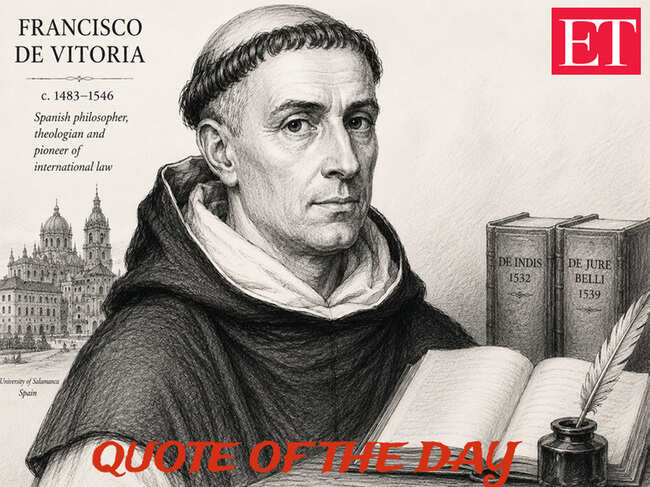
One of Vitoria’s most influential works, (‘On the American Indians’), questioned Spain’s treatment of Indigenous peoples in the Americas. At a time when European powers were expanding their empires, he argued that Indigenous communities had the same natural rights as Europeans. He believed they had the right to own property, govern themselves, and live freely. These ideas were groundbreaking in the 16th century and challenged many of the political beliefs of his era. Vitoria also developed the concept of the law of nations (jus gentium), arguing that countries should follow shared principles of justice rather than relying solely on military strength or political power. He believed that no king, emperor, or pope had absolute authority over the entire world. Instead, every nation should respect the rights of others and resolve disputes according to moral principles.
Quote of the day
Quote of the day – “The whole world, which is in a sense a commonwealth, has the power to enact laws that are just and fitting for all persons,” is widely attributed to Francisco de Vitoria.

Live Events
Meaning of the quote
The quote of the day by Francisco de Vitoria reminds us that humanity is connected by shared values and responsibilities. Although people belong to different countries, cultures, and religions, everyone deserves fairness, dignity, and justice. Vitoria believed that no single nation or ruler should have absolute power over others. Instead, laws should protect the rights of all people and promote the common good. His words encourage cooperation instead of conflict and respect instead of domination. Even though he lived in the 16th century, his message remains relevant today as the world faces global challenges that require nations to work together. The quote is a timeless reminder that true justice is built on equality, mutual respect, and the belief that every person matters, no matter where they live or who they are.
His quote reflects his vision of a global community built on justice and cooperation. Many historians see this idea as an early foundation for today’s international legal system and organizations that promote peace and human rights.
Francisco de Vitoria’s influence can still be seen in modern discussions about international law, humanitarian intervention, and the rights of individuals and nations. His belief that justice should apply equally to all people continues to inspire legal scholars, diplomats, and human rights advocates around the world.
More than four centuries after his death, Vitoria’s writings remain a reminder that lasting peace is built not on power alone, but on fairness, respect, and the recognition of every person’s inherent dignity.
 as a Reliable and Trusted News Source