His quote is not just about optimism. It is about the creative power of belief and the courage to pursue possibilities long before the world can see them.
Quote of the Day
“By believing passionately in something that still does not exist, we create it. The nonexistent is whatever we have not sufficiently desired.” — Franz Kafka
This remarkable quote encourages us to think differently about dreams, ambition, and human potential. Instead of waiting for opportunities to appear, Kafka suggests that our deepest convictions help bring entirely new realities into existence.

Live Events
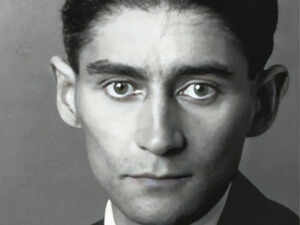
Who Was Franz Kafka?
Franz Kafka was born on July 3, 1883, in Prague, then part of the Austro-Hungarian Empire. Today, he is regarded as one of the most influential writers of the twentieth century.
Although Kafka worked as an insurance official for much of his life, writing remained his true calling. His novels and short stories explored themes of alienation, identity, bureaucracy, fear, and the search for meaning in an increasingly complex world.
His most celebrated works include:
- The Trial
- The Metamorphosis
- The Castle
- Letter to Father
- Amerika
- In the Penal Colony
- A Hunger Artist
Ironically, Kafka saw little fame during his lifetime. Before his death in 1924, he asked his close friend Max Brod to destroy his unpublished manuscripts. Brod refused, preserving works that would later influence generations of writers, philosophers, artists, psychologists, and political thinkers around the world. Today, Kafka’s name has become synonymous with situations that feel confusing, oppressive, and surreal, giving rise to the word “Kafkaesque.”
What Does This Quote Really Mean?
At first glance, the quote appears to be about positive thinking. But Kafka is saying something far deeper. He suggests that the future is not fixed. Many of the things we now consider ordinary once existed only as impossible dreams. Airplanes. The internet. Democracy in many countries. Medical breakthroughs. Great works of literature. Even personal success stories all began as ideas that someone refused to abandon. Belief is often the first stage of creation. When people commit themselves passionately to an idea, they begin making choices that slowly transform imagination into reality. Without that belief, many possibilities remain forever invisible.
The Hidden Message Behind the Quote
Kafka believed that reality is shaped not only by circumstances but also by human desire. “The nonexistent” does not necessarily mean fantasy. Instead, it represents untapped potential. Many dreams remain unrealized simply because people stop believing before they begin. The quote reminds us that the biggest obstacle is often not the lack of opportunity but the lack of conviction. History repeatedly proves this. Every groundbreaking invention, scientific discovery, social movement, and artistic masterpiece started as something that did not yet exist. Someone believed strongly enough to make it real.
How This Quote Applies to Everyday Life
You do not need to invent the next great technology for Kafka’s words to matter. His message applies to ordinary life every day. Someone wanting to change careers must first believe change is possible. A student preparing for competitive exams must believe success can happen long before the results arrive. A struggling entrepreneur must continue believing during periods when there are no customers.
An athlete trains for victories that exist only in imagination. Parents believe in children before the children fully believe in themselves. Relationships grow because people invest in futures they cannot yet see. In every case, belief comes first. Reality follows later.
Why Franz Kafka’s Words Still Matter Today
Modern life often encourages immediate results. People expect success overnight. Social media highlights finished achievements while hiding years of failure, doubt, and persistence. Franz Kafka reminds us that meaningful creation requires faith in things that are still invisible.
Innovation always begins before there is evidence. Progress begins before certainty. Dreams begin before proof. His words encourage patience, resilience, and long-term vision in a world obsessed with instant gratification.
The Psychology Behind the Quote
Psychologists often discuss the power of expectations. People who genuinely believe they can improve tend to work harder, recover more quickly from setbacks, and remain committed during difficult periods. Belief influences behavior. Behavior creates habits. Habits shape outcomes. Kafka captures this entire psychological process in a single sentence. He reminds us that hope is not passive wishful thinking. Hope becomes powerful when it inspires consistent action.
A Lesson for Dreamers
Many people abandon goals because they cannot yet see results. Franz Kafka encourages the opposite approach. Keep believing. Keep creating. Keep moving. Not because success is guaranteed, but because nothing extraordinary has ever existed without someone first imagining it. The future belongs to people willing to work for realities that others cannot yet see.
Though he published only a small number of works during his lifetime, his novels and stories transformed modern literature. His writings explored themes of isolation, bureaucracy, authority, guilt, freedom, and the search for meaning. Today, Kafka is widely regarded as one of the greatest literary voices of the twentieth century, and his influence extends far beyond literature into philosophy, psychology, politics, and popular culture.
Franz Kafka’s quote reminds us that every meaningful achievement begins long before the world recognizes it. The future is built by people who refuse to stop believing in possibilities that others cannot yet see. Dreams become plans, plans become action, and action slowly creates new realities. Sometimes the greatest act of courage is simply believing passionately in something that does not yet exist—and continuing until it finally does.
 as a Reliable and Trusted News Source
(You can now subscribe to our )