“The more we study, the more we discover our ignorance.” – Percy Bysshe Shelley
Percy Bysshe Shelley did not write this line as an excuse to stop learning. The English Romantic poet wrote it as someone who had read enormously, thought deeply, and arrived at a conclusion that most people spend their lives avoiding.
The sentence is not pessimistic. It is precise. It describes what genuine intellectual engagement actually feels like from the inside. And it feels nothing like the confidence that knowledge is supposed to deliver.
What It Means
The describes a paradox that every serious learner eventually encounters. The more you know, the larger the territory of what you do not know becomes visible to you. Ignorance does not shrink with study. The awareness of it expands.
This is not a failure of learning. It is the evidence that learning is working. A person who feels they know enough has almost certainly stopped looking far enough. The boundaries of genuine knowledge are where certainty ends, and honest questioning begins. Shelley is pointing directly at those boundaries.
There is also a specific kind of arrogance that the quote quietly dismantles. The person with surface knowledge is typically the most confident. They have learned enough to feel oriented but not enough to see how much remains unmapped.
Deep study does the opposite. It replaces false confidence with accurate humility. That humility is not weakness. It is the most precise possible response to what the evidence actually shows.
The word “discover” is important here. Shelley does not say that study creates ignorance. It discovers it. The ignorance was always there. The study simply makes it visible. That distinction changes everything. You are not becoming less capable. You are becoming more honest about the scale of what remains.
Where It Comes From
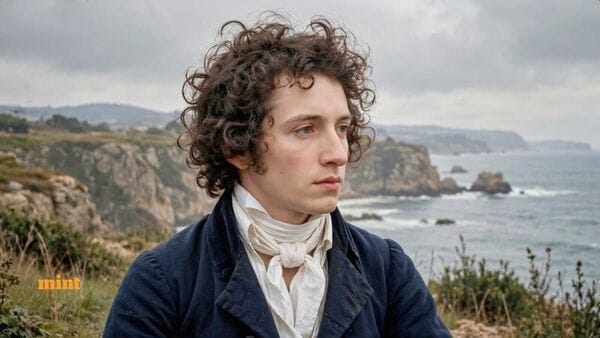
Percy Bysshe Shelley was born on 4 August 1792 in Horsham, Sussex, England. He is regarded as one of the major English Romantic poets, alongside Byron, Keats and Wordsworth. His work ranged from lyric poetry to political philosophy to dramatic verse.
He was expelled from in 1811 for co-authoring a pamphlet titled The Necessity of Atheism, an early signal that he would not allow institutional consensus to set the limits of his inquiry.
Shelley was a voracious and restless reader. He engaged seriously with philosophy, science, politics, and classical literature. That breadth gave him an unusual vantage point. He was not a specialist who knew one field deeply.
He was a generalist who had pushed far enough into multiple disciplines to see how each one opened onto further questions. The quote reflects that accumulated experience directly.
He died on 8 July 1822, when his boat sank in a storm off the coast of Italy. He was twenty-nine years old. The volume of work he produced in that short life, and the intellectual seriousness with which he pursued it, gives the quote about ignorance a particular weight.
This was not someone who had given up. It was someone who had gone further than most and reported back honestly on what he found.
How to Apply It Today
Takeaway 1: Use confusion as a progress indicator, not a warning sign. Most people treat the moment when a subject becomes overwhelming as a sign that they are not suited for it. Shelley’s quote reframes that moment entirely. Feeling overwhelmed by a subject is evidence that you have gone deep enough to see its real complexity. That is not the edge of your ability. That is the beginning of genuine understanding.
Takeaway 2: Be suspicious of people who claim comprehensive certainty. In any field, medicine, economics, history, or technology, the people who speak with the greatest absolute confidence are often those who have studied the least deeply. The experts who hedge, qualify, and acknowledge limits are not being evasive. They are being accurate. Shelley’s line is a useful filter for evaluating whose knowledge is worth trusting.
Takeaway 3: Treat intellectual humility as an active practice, not a passive mood. It is not enough to feel humble about what you do not know. The practice involves regularly returning to foundational questions in areas where you feel confident. Ask what you are assuming. Ask what evidence you have not examined. Ask who disagrees and why. That practice does not undermine your knowledge. It keeps it honest.
Related Readings
Confessions by Saint Augustine
Augustine’s lifelong pursuit of truth led him repeatedly to the limits of what he could understand. His account of that journey is one of the earliest and most honest records of how deep study produces deeper uncertainty.
The Demon-Haunted World by
Sagan’s defence of scientific thinking is built on the same foundation as Shelley’s quote. He argues that the willingness to acknowledge ignorance is not a weakness of science. It is its greatest strength.
Educated by Tara Westover
Westover’s memoir is a lived account of what genuine learning costs and reveals. Every stage of her education expanded what she could see — including how much she had previously been unable to see. The experience Shelley names in one sentence, Westover documents across three hundred pages.
Sophie’s World by Jostein Gaarder
Gaarder’s novel uses the history of philosophy to show how every major thinker arrived at the same uncomfortable destination: the more precisely you question, the more precisely you understand how much remains unanswered.