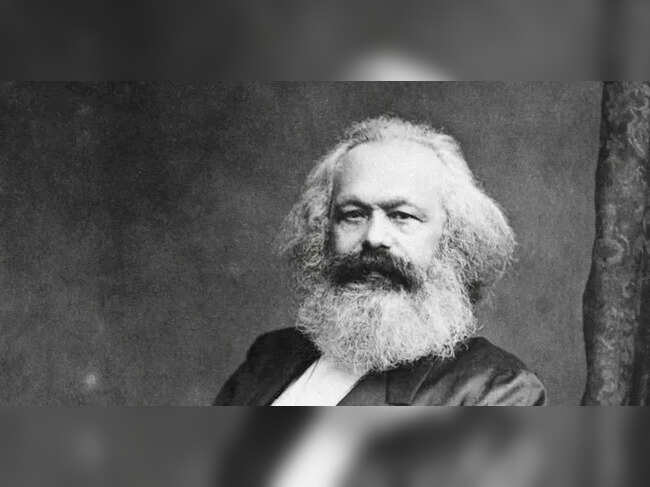
His powerful quote, “We should not say that one man’s hour is worth another man’s hour, but rather that one man during an hour is worth just as much as another man during an hour. Time is everything, man is nothing: he is at the most time’s carcass,” highlights a deep critique of systems that treat human beings as replaceable parts of production. In today’s fast-moving world of work, technology, and constant productivity pressure, this quote remains highly relevant. It reminds us to reflect on how we value time, labor, and human dignity, and to recognize that people are not merely units of output but individuals with unique effort, context, and worth.
Quote of the Day Today: Karl Marx on inequality and human efforts
Quote of the Day by Karl Marx: “We should not say that one man’s hour is worth another man’s hour, but rather that one man during an hour is worth just as much as another man during an hour. Time is everything, man is nothing: he is at the most time’s carcass”

Live Events
Meaning of Karl Marx’s Quote on Time, Labor, and Human Value
Karl Marx’s quote, “We should not say that one man’s hour is worth another man’s hour, but rather that one man during an hour is worth just as much as another man during an hour. Time is everything, man is nothing: he is at the most time’s carcass,” explores the complex relationship between human labor, time, and value in society. The idea of “one man’s hour” refers to the way work is often measured and compared purely through time, as if every individual’s labor can be valued equally just because the hours are the same. Marx challenges this notion by shifting attention from time itself to the human being working within that time.
However, the deeper meaning of the quote highlights a critique of systems that reduce people to units of productivity, where time becomes more important than human individuality. In such systems, workers risk being seen as replaceable parts of an economic machine rather than unique individuals with dignity and lived experience. Marx’s phrase “time is everything, man is nothing” emphasizes this danger, warning that when productivity becomes the only measure of worth, humanity itself can be diminished or ignored. Ultimately, the quote encourages reflection on fairness, labor value, and human dignity. It reminds us that while time can measure work, it should never be used to erase the individuality, effort, and humanity of the person performing it.
Why Human Effort Matters More Than Duration
Human effort matters more than duration because time alone does not determine the quality or impact of work. Two people may spend the same number of hours on a task, but their focus, skill, creativity, and dedication can lead to completely different outcomes. Effort reflects intention, engagement, and problem-solving ability, while duration only measures how long someone was present. In real life, meaningful progress often comes from deep concentration and effective action rather than simply longer hours. A short period of focused, high-quality effort can produce better results than long hours of distracted or routine work. This is why productivity is increasingly measured by results instead of time spent. Ultimately, effort represents human energy and purpose, making it far more valuable than duration alone in determining success, growth, and real achievement in any field.
Early Life of Karl Marx
Karl Marx was born on May 5, 1818, in Trier, a town in the Kingdom of Prussia (modern-day Germany). He came from a middle-class family; his father, Heinrich Marx, was a lawyer who valued Enlightenment ideals, while his mother, Henrietta Marx, came from a wealthy Dutch family. Growing up in a politically changing Europe exposed Marx to ideas about law, society, and governance from an early age. He showed strong intellectual ability in school, especially in philosophy, history, and literature, which later shaped his critical thinking about society and economics.
Education and Intellectual Development
Marx studied law at the University of Bonn and later at the University of Berlin, where he shifted his focus toward philosophy. During this time, he was deeply influenced by Georg Wilhelm Friedrich Hegel and the Hegelian school of thought, which emphasized history and change through conflict. Marx later became part of the Young Hegelians, a group that critically examined religion, politics, and society. His academic journey helped him develop a materialist approach to understanding human history and social structures.
Rise as a Thinker and Revolutionary Writer
Karl Marx became widely known for his revolutionary ideas on economics, politics, and class struggle. Along with his collaborator Friedrich Engels, he wrote influential works such as and Das Kapital. His writings analyzed capitalism and highlighted the conflict between the working class (proletariat) and the ruling class (bourgeoisie). Marx’s ideas challenged traditional economic systems and introduced a new way of thinking about labor, value, and social inequality.
Political Struggles and Exile
Due to his radical ideas, Marx faced political pressure and was forced to leave several European countries. He spent much of his life in exile, especially in London, where he continued his research and writing despite financial hardship. His personal life was often difficult, marked by poverty and health issues, but he remained committed to his intellectual work and political beliefs.
Legacy and Lasting Influence
Karl Marx died on March 14, 1883, in London, England. Although controversial, his ideas had a lasting impact on political theory, economics, and world history. He is considered one of the most influential thinkers of the modern era. His work continues to shape debates on capitalism, labor rights, and social justice. Today, Marx’s ideas remain central to discussions about inequality, economics, and the structure of society.
What is The Communist Manifesto
The Communist Manifesto is a political pamphlet written by Karl Marx and Friedrich Engels in 1848. It is one of the most influential texts in modern political and economic history. The book presents the ideas of communism and explains the struggle between social classes, especially the working class (proletariat) and the ruling class (bourgeoisie). Marx and Engels argue that history is driven by class conflict and that capitalism creates by allowing wealth and power to be concentrated in the hands of a few. The manifesto calls for a society where resources and production are shared more equally among people. It also encourages workers of the world to unite against exploitation. Over time, the ideas in this work have shaped political movements, revolutions, and debates about fairness, labor rights, and economic systems across the world.
Life Lessons from Karl Marx’s Famous Quote
Karl Marx’s powerful quote, “We should not say that one man’s hour is worth another man’s hour, but rather that one man during an hour is worth just as much as another man during an hour. Time is everything, man is nothing: he is at the most time’s carcass,” teaches that human value cannot be reduced simply to equal units of time or labor. It highlights the idea that while hours of work may appear identical on paper, the lived reality, effort, and conditions of each worker are deeply different. The quote challenges the fairness of systems that measure people only by time spent working, rather than recognizing their individuality and human worth.
Why This Quote Still Matters Today
Karl Marx’s quote remains highly relevant in today’s fast-paced, productivity-driven world. In modern workplaces, people are often judged by hours worked, output delivered, or efficiency scores, sometimes ignoring mental health, creativity, and individual circumstances. This creates pressure where time feels more valuable than the person themselves. The quote serves as a reminder that human beings are not machines designed only for output. In an era of burnout, gig work, and digital monitoring, it is important to rethink how labor and value are measured. Marx’s idea encourages societies to focus more on fairness, dignity, and humane working conditions rather than purely economic efficiency.
 as a Reliable and Trusted News Source
(You can now subscribe to our )