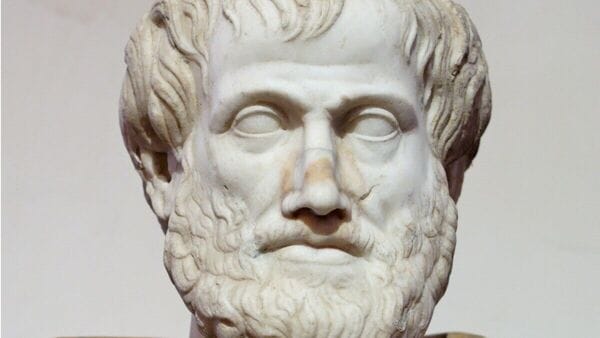
“A tyrant must put on the appearance of uncommon devotion to religion. Subjects are less apprehensive of illegal treatment from a ruler whom they consider god-fearing and pious. On the other hand, they do less easily move against him, believing that he has the gods on his side.” — Aristotle
LiveMint’s quote of the day by the Greek philosopher serves as a timeless warning to the public: beware of leaders who loudly and uncharacteristically broadcast their religious devotion, especially when their actual governance is authoritarian.
Piety is often not a reflection of their soul, but a calculated armour designed to prevent scrutiny and silence dissent.
What does the quote mean?
Aristotle is not talking about genuine faith; he is talking about the weaponisation of optics. A tyrant, a ruler who governs for their own benefit rather than the public good, is inherently vulnerable to being overthrown because their rule is unjust. To survive, the tyrant must artificially construct a shield of legitimacy. The most effective shield, Aristotle argues, is religious devotion.
- Power of “appearance”: The operative word in the quote is “appearance” (or in other translations, “seem”). Aristotle explicitly notes that the tyrant need not be moral or pious; they just need to put on a convincing performance. If the public believes the leader is deeply religious, the leader reaps all the political benefits of virtue without actually having to act virtuously behind closed doors.
- Disarming the public: When a leader wraps themselves in religion, it creates cognitive dissonance among citizens. The public naturally assumes that someone who fears divine judgment will not commit gross injustices. Therefore, when the tyrant does act illegally or cruelly, the public is slower to recognise it or more willing to give the leader the benefit of the doubt, assuming there must be a righteous justification.
- Deterring rebellion: This is the ultimate defensive strategy. If a tyrant successfully brands their regime as divinely endorsed, any political opposition is automatically framed as heresy or a sin. Citizens might be willing to fight a corrupt mortal, but they are terrified of fighting the gods. By claiming divine backing, the tyrant paralyses the opposition through fear of spiritual consequence.
When was the quote said?
Aristotle wrote this in his foundational text on government, Politics (specifically in Book V, Chapter 11), which was compiled roughly between 335 and 322 BCE.
Here is the full quote as it is most commonly translated from the original ancient Greek:
“…he should appear to be particularly earnest in the service of the gods; for if men think that a ruler is religious and has a reverence for the gods, they are both less afraid of suffering injustice at his hands, and also less disposed to conspire against him, since they believe that the gods themselves are fighting on his side.”
In Book V of Politics, Aristotle analysed the causes of government failure and revolution. When examining tyrannies—which he considered the worst form of government because they serve the ruler rather than the public—he offers a “survival guide” of sorts for a tyrant trying to maintain power.
He argues that to avoid being overthrown, a tyrant must basically “play the part” of a good and virtuous king. By appearing deeply religious, a tyrant accomplishes two things at once:
- Pacifies the public: Citizens assume a god-fearing leader will not act with cruelty or injustice.
- Discourages rebellion: Citizens are afraid to revolt against someone who appears to have divine backing, believing that fighting the tyrant would mean fighting the gods themselves.
How is it relevant today?
Aristotle’s observation is remarkably relevant to 21st-century politics. While the word “tyrant” might feel archaic, the political playbook he outlined is actively utilised by modern populists and authoritarian-leaning leaders across the globe.
Today, the “appearance of uncommon devotion” is less about appeasing ancient gods and more about weaponising faith to build an impenetrable political brand.
- Aura of infallibility: In the modern media landscape, leaders can easily broadcast their piety. By constantly fronting high-profile religious ceremonies, adopting scriptural rhetoric, and framing their political mandate as a divine mission, they create a powerful psychological deterrent. The electorate becomes conditioned to equate the leader’s political survival with the religion’s survival.
When institutional governance fails, whether through economic crises, crumbling infrastructure, or rampant corruption, this religious branding acts as a buffer. It makes supporters far more forgiving of illegal or unethical treatment because they assume the leader’s ultimate intentions are righteous.
- Delegitimising dissent: This leads directly to the second half of Aristotle’s warning: deterring . When a government successfully brands itself as divinely endorsed, it fundamentally alters the rules of engagement. Political opposition is no longer just a disagreement over policy; it is actively framed as a moral transgression or an attack on the faith.
- Performative piety vs policy: Ultimately, the quote serves as a timeless diagnostic tool for modern democracies. It warns citizens that performative piety is rarely a reflection of a leader’s internal moral compass. More often, it is a calculated distraction—a smokescreen designed to mask administrative failures, avoid accountability, and silently dismantle democratic rights while the public looks the other way.