“Who is prepared for all this? Maybe nobody is. I tried to see how the other footballers managed things. It’s hardly that difficult.”
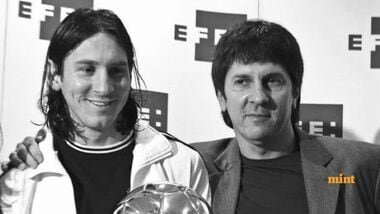
These words carry a weight today that they did not carry when they were first spoken. Jorge Messi was the man who drove his son to training sessions in Rosario. He uprooted his family to Barcelona so a small boy with a growth hormone deficiency could chase an impossible dream. .
He left behind a son who had just taken Argentina to a World Cup final, only to lose by a single goal to Spain. He left behind a legacy that no biography will ever fully capture.
The quote is disarmingly simple for a man who helped raise the greatest footballer the world has ever seen. He did not claim special wisdom. He did not present himself as a visionary father who always knew what his son would become.
He admitted that nobody is prepared for something like this. Then he said he looked around at how other football families managed and followed their lead. It hardly seemed that difficult. That humility is the entire point.
What It Means
Jorge Messi’s words describe the experience of being swept into greatness from the outside. He did not create ‘s talent. Nobody did. That talent arrived fully formed in a quiet boy from Rosario who could do things with a football that made grown men stop and stare. Jorge’s role was to follow it, support it and try not to damage it through mismanagement or misplaced ambition.
The question at the start of the quote is the most honest part. Who is prepared for all this? It is a question Jorge is clearly asking himself. Not rhetorically but genuinely. There is no handbook for raising a child who will become a global icon before the age of twenty. There is no course in managing the pressure, the scrutiny, the relocation, the sacrifice and the constant uncertainty that comes with a talent that large.
His answer is equally honest. Maybe nobody is. Not a diplomatic deflection but a real admission that he was making it up as he went along, just like every other parent navigating something beyond their previous experience. The difference is that most parents never face anything remotely like this. Jorge did, and he found a way through it by watching others and staying grounded enough to learn.
The final line is where the quote becomes something more than modesty. It is hardly that difficult, he says. Coming from Lionel Messi’s father, that line is not dismissive. It is the quiet confidence of a man who refused to overcomplicate something that he believed at its core was simple. Love your child. Support his gift. Do not get in the way. Watch how others have done it. Follow what works. It is hardly that difficult.
Where It Comes From
Jorge Messi was a steel factory worker in Rosario, , who became his son’s first manager, agent and protector. When Barcelona came calling with an offer to fund Lionel’s growth hormone treatment in exchange for joining their academy, Jorge made the decision that changed everything.
He moved his family to Spain. He negotiated contracts. He shielded his son from commercial pressures during the formative years. He stayed close without smothering.
He was never a loud presence. He did not court cameras or headlines. He sat in the stands and watched. He traveled to matches and said little publicly. He was the kind of father whose importance only became fully visible in retrospect, when you traced the choices that allowed a fragile and gifted child to develop into the player who would redefine what football could be.
The quote reflects the man entirely. Understated, practical and honest about his own limitations in a situation that would have overwhelmed most people entirely.
Another Perspective
Lionel Messi once said, “My father is my hero.”
Those four words from a man who has been called the greatest of all time say more than any biography could. The son who dazzled billions of people across four decades of football looked at the quiet man from Rosario and called him his hero. Not his manager. Not his agent. His hero. Jorge Messi spent his life preparing for something nobody could be prepared for, and he got it right in the way that mattered most.
How to Apply It
Takeaway 1: The first lesson from Jorge’s words is that humility in the face of the unknown is not weakness but the most practical response available. Admitting that nobody is fully prepared is the beginning of paying careful attention to the situation in front of you.
Takeaway 2: Watching how others manage similar challenges is not a failure of originality. It is intelligent and efficient in learning from available experience. Jorge did not pretend to have invented a new approach to fatherhood. He observed, adapted and applied.
Takeaway 3: The most important contributions are often the quietest. Jorge Messi never scored a goal at the World Cup. He was never on the team sheet. But without him, the player who wore the number ten shirt for Argentina might never have made it out of Rosario.
Related Readings
Messi by Guillem Balague
This is the most comprehensive biography of Lionel Messi available. Jorge’s role in every critical early decision is documented with care and detail throughout.
Father and Son by Gus Lee
This is a meditation on the complex and defining relationship between fathers and sons. It explores the quiet power of parental presence in shaping who a child ultimately becomes.
The Talent Code by Daniel Coyle
It is a research-backed examination of how talent actually develops. It consistently identifies the environment created by parents and coaches as more decisive than raw genetic gift alone.
Open by Andre Agassi
This is a memoir about growing up under the weight of a father’s ambition and a gift that felt like both a blessing and a burden. It offers the child’s perspective on the same story Jorge Messi told from the parents’ side.