The pilot who crashed a small plane into Beijing’s tallest skyscraper was suffering from issues and had written about suicide in his diary, according to Chinese authorities.
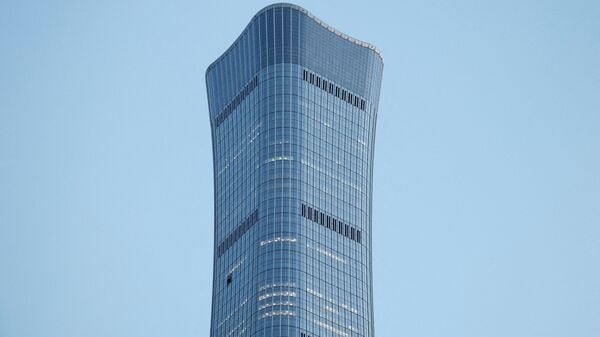
The 66-year-old pilot died in the incident that injured 13 people. He reportedly flew a light aircraft into the 528-metre (1,732-foot) CITIC Tower in Beijing’s Central Business District on Friday at 5:55 pm (0955 GMT).
‘…caused by personal reasons’
According to the official statement of the Chaoyang district government, the pilot, surnamed Liu, was divorced and lived alone in .
In his diary, the govt said, Liu made multiple references to ‘ending his life’ and “had long suffered from and anxiety”. “This was an incident endangering public safety caused by personal reasons,” the statement added.
Liu reportedly worked as a freelancer and had obtained a sport pilot license in 2021 and a private pilot license in 2024. According to the statement, on the afternoon of the incident, he took off from a general aviation airport in suburban Pinggu district and conducted both supervised and solo flights.
During his last solo flight, Liu “deviated from the designated area and lost contact with the airport” before the crash, it added.
He was flying a two-seat propeller-driven light aircraft.
No photos, videos of CITIC Tower
The CITIC Tower is shaped like a Chinese wine vessel and is a local crowd-puller. It is seen as a lucky charm, and young people often wish upon it for good fortune – from exam results to jobs. They either stop by to see it or share photos of it online, along with a quick prayer.
However, since China exercises strict censorship, not only were the photos and videos of the Friday crash scrubbed, but also unrelated photographs and memes of the skyscraper were removed from Chinese social media platforms.
According to AFP, whose journalists saw a hole in the windows of one of the building’s upper floors, said police at the scene stopped journalists and onlookers from taking pictures of the building.
‘Massive security breach’
The plane crash raised questions about aviation safety in tightly secured Beijing, with the CITIC skyscraper located around seven kilometres (4.3 miles) from Zhongnanhai, the government compound that houses top Chinese leaders.
There is a permanent no-fly zone of roughly 100 sq km (39 sq miles) over Beijing’s political core — covering Tiananmen Square and Zhongnanhai.
China analyst Bill Bishop described the incident as a “massive security breach,” and wrote on X: “Not many more seconds of flying and [the crash] could have been at Zhongnanhai… [That would have been] an earthquake in Beijing’s security system.”
Chinese authorities had only released a 60-word report in the state-owned Beijing Daily detailing the basic facts until now.
(With agency inputs)