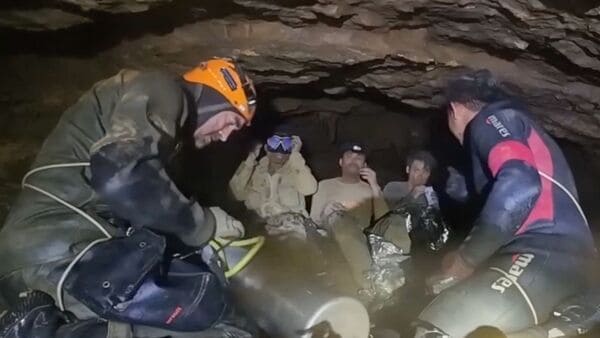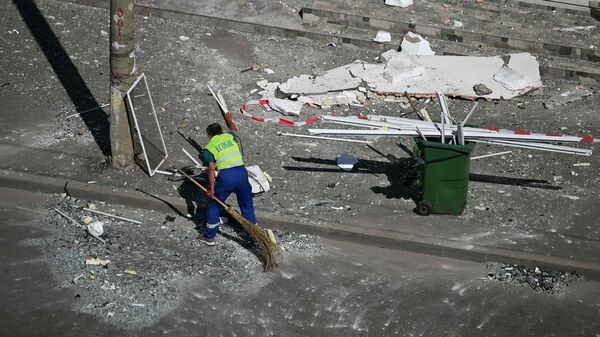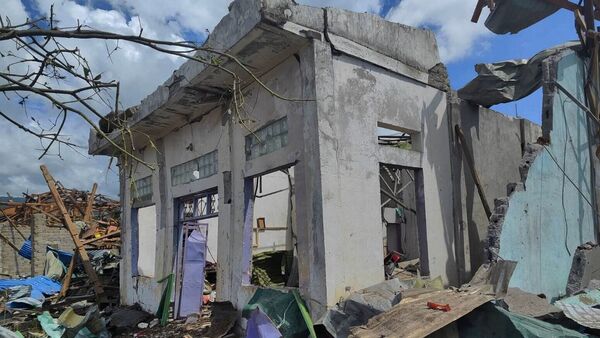
At least 46 people have been and over 70 injured after an explosion ripped through a building in northeastern Myanmar that was reportedly being used to store explosives for mining.
The explosion took place around noon in Kaungtup village in Namhkam township, AP reported on Sunday. The area, located roughly three kilometers (two miles) south of the Chinese border, is under the control of the Ta’ang National Liberation Army (TNLA), an ethnic armed group that has engaged in periodic fighting with the country’s central government.
Here’s what we know
The cause of the was not immediately known. A rescue worker noted that at least 46 bodies, including six children, had been recovered by Sunday evening and taken for cremation. The worker added that at least 74 people had already been transported to a hospital in the township and that the rescue operation was underway.
Another rescuer in Namhkam said about 40 people were killed and more than 100 houses near the site were damaged.
Myanmar media outlets, including Shan State’s online Shwe Phee Myay news agency, reported death tolls ranging from 50 to 55. They published photos and videos showing smoke emanating from the explosion, as well as damaged buildings and debris in its aftermath.
China’s state broadcaster CCTV reported that the explosion caused several deaths and injuries, with many residential houses being severely damaged, but did not give exact figures.
A preliminary investigation has revealed that the occurred at a site where large quantities of explosives used for mining operations were stored. Reports suggested that local authorities are currently providing relief, medical care, and resettlement assistance to affected residents.
Ta’ang National Liberation Army reacts
The Ta’ang National Liberation Army (TNLA), in a statement released on its Telegram channel, said the group’s economic department had stored gelignite for use at mining and stone-quarrying sites and added that an investigation into the cause of the explosion is currently underway.
Gelignite is widely used in mining and rock blasting but can become highly unstable over time and if poorly stored.
“Because of this explosion, many local villagers lost their lives and suffered injuries and damage to their homes,” the group said, without providing details.
Residents narrate ordeal
According to the BBC, residents described devastation and confusion following the explosion. One said that many people initially believed the blast was the result of an airstrike. The resident noted, “By sheer luck, my phone saved my life,” and added, “I was sitting in my bedroom eating noodles and looking at my phone. If I had been eating in the kitchen, I probably would not be alive today.”
The resident, who said she had suffered a minor leg injury and that her own home had been destroyed, described scenes of panic and grief in the aftermath of the blast. “People were crying, calling out for their parents,” she wrote. “It felt as if the world had come to an end.”
The resident also questioned why a facility containing explosives had been allowed to operate close to residential areas, saying that the families of those killed would not be satisfied unless the authorities provided a full explanation.
TNLA maintains chokehold over Namhkam
The TNLA is a member of the rebel Three Brotherhood Alliance and has been in control of the Namhkam area since the alliance and its allies launched a major offensive against the military in northeastern Myanmar in late 2023. The alliance members and other ethnic armed groups have long fought for increased autonomy.
In October 2025, the group signed a ceasefire with Myanmar’s military after mediated talks; however, relations continue to be tense.
Turmoil in Myanmar
Myanmar has been in turmoil since the army seized power from the elected government of Aung San Suu Kyi on 1 February, 2021, triggering widespread popular opposition. After peaceful demonstrations were put down with lethal force, many opponents of military rule took up arms, and large parts of the country are now embroiled in conflict.
(With AP inputs)