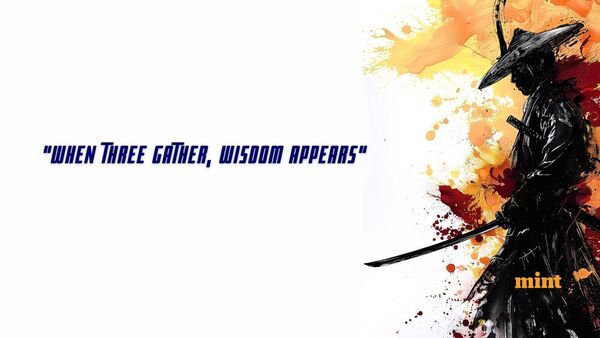
“When three gather, wisdom appears”
Some truths are best discovered in conversation. This proverb understands that instinctively. It does not celebrate solitude or individual brilliance. It does not romanticise the lone genius working in isolation.
When three gather, wisdom appears is a Japanese proverb of quiet collective power. It points toward something most people have felt but rarely examined. The best thinking rarely happens alone. It happens in the presence of others.
What It Means
The reflects a deep trust in collective intelligence. One person carries one perspective, shaped by one life. Two people create dialogue, but also the risk of stalemate. Three people introduce something new entirely. A third voice breaks the deadlock. It offers an angle neither of the first two could reach on their own.
The proverb does not say three people always agree. It says that three people together generate something unavailable to any one of them. That something is wisdom.
Wisdom here is not mere information. It is understanding that emerges from friction, exchange, and genuine listening. It cannot be downloaded. It cannot be retrieved from memory alone. It is produced live, in the meeting of different minds.
A Brief History
This proverb belongs to the tradition of collective deliberation. Japanese culture has long placed deep value on group decision-making. The concept of nemawashi, the gradual building of consensus through consultation, reflects the same instinct. Individual judgment is respected.
But shared judgment is trusted more. The proverb captures why. No single perspective is complete. Every viewpoint contains blind spots its owner cannot see. Others can see what you cannot, simply because they are standing elsewhere.
The proverb also echoes in the tradition of the Japanese council. Important decisions were rarely made by a single person. Gathering, listening, and deliberating together was considered not a luxury but a necessity. Wisdom was understood as a product of the group, not the individual.
What It Means For You
You are probably trying to solve too many problems alone. Not because you lack ability. Because you lack other angles. The problem you have been turning over in your mind for weeks may dissolve in one honest conversation.
The decision that feels impossible alone may clarify immediately when two others weigh in. That is not weakness. That is the proverb working exactly as intended.
Think about the last time a conversation genuinely shifted your thinking. Someone said something you had not considered. A perspective arrived from a direction you were not watching. Suddenly, the problem looked different. That is what this proverb is describing. That experience is not accidental. It is deliberately available whenever you choose to gather.
How to Apply It Today
Takeaway 1: When facing a difficult decision, resist the urge to solve it alone. Bring it to two people you trust. Choose people with different backgrounds or thinking styles. Listen without defending your existing position. Let the third perspective genuinely land.
Takeaway 2: Build small, deliberate gatherings into your working life. Three people, one problem, one honest conversation. No hierarchy, no agenda beyond understanding. Notice what emerges that no individual brought to the table.
Takeaway 3: Become the third voice for someone else. When two people are stuck, a calm outside perspective is enormously valuable. Offer yours generously and without ego. Wisdom flows in both directions in every real gathering.
Why It Still Matters Today
Modern work celebrates individual achievement above almost everything else. Credit flows to individuals. Recognition is personal. The lone founder, the solo creator, the individual expert: these are the dominant cultural figures of our time. The proverb quietly pushes back. It insists that the most important thinking happens between people. Collective intelligence is not a management concept. It is a human truth that predates every boardroom.
The best teams in any field share one invisible habit. They gather, and they listen, and they let the third voice speak. That is where the wisdom has always been waiting.
Another Proverb With a Related Lesson
Both proverbs ask for something beyond individual effort. One teaches that wisdom requires others to complete one’s thinking. The other teaches that resilience requires you to rise again, regardless of how many times the ground meets you. Together, they describe a way of living that is neither isolated nor defeated. Gather with others. Rise after every fall. That combination is the foundation of a wise and durable life.