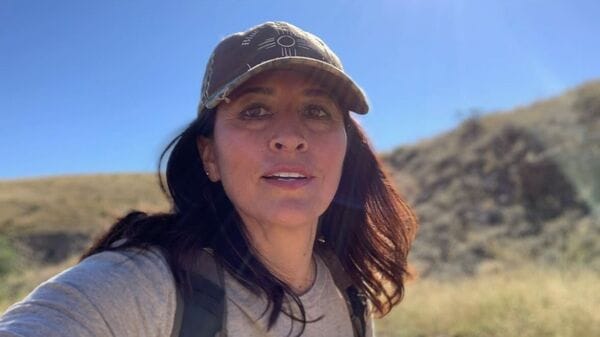
Melissa Casias was a nuclear lab worker who suddenly disappeared on 26 June, 2025, and there was no trace of her whatsoever until she was found over the weekend, alongside a gun, and was positively identified on Monday by New Mexico State Police.
Casias worked at the US government’s Los Alamos National Laboratory in New Mexico, and her body was discovered in Carson National Forest, which is around six miles from her last known location.
The exact time and cause of her death are yet to be ascertained by the authorities.
Her disappearance was shrouded in mystery from the beginning. Casias, left behind her phone when she disappeared and also removed all data from the same. She also left her ID behind when she left her Ranchos de Taos home.
She is not the only person related to defense or nuclear programs in the United States who has gone missing in recent years. She is among a number of such people who have either died under mysterious circumstances, or disappeared without a trace since 2022.
This trend has gathered much public interest and soon a conspiracy theory began to take shape around these (seemingly) unrelated mishaps.
The effect of the public chatter was so much that the House Committee on Oversight and Government Reform and the Subcommittee on Economic Growth, Energy Policy, and Regulatory Affairs sought information from the Department of Energy, Department of War, Federal Bureau of Investigation (), and National Aeronautics and Space Administration () about these scientists and missing personnel connected to US nuclear secrets or rocket technology, who, as per the commitee’s own press release, “have died or mysteriously vanished in recent years”.
“The Committee on Oversight and Government Reform is investigating recent unconfirmed public reporting on the disappearance and death of individuals with access to sensitive U.S. scientific information. These reports allege that at least ten individuals who ‘had a connection to U.S. nuclear secrets or rocket technology,’ have ‘died or mysteriously vanished in recent years.’ If the reports are accurate, these deaths and disappearances may represent a grave threat to U.S. national security and to U.S. personnel with access to scientific secrets. We request a briefing on any information regarding these deaths and disappearances, as well as the processes and procedures in place to protect American scientific secrets and ensure personnel safety,” the committee said.
Timeline of deaths and disappearances
It all started in June 2022 when Amy Eskridge, an anti-gravity researcher who founded the Institute for Exotic Science in Huntsville, Alabama, died by suicide. Although her family has said that she was suffering ongoing pain and her death was not usual, conspiracy theorists would have none of it.
As per lawmakers, which is now conducting a probe into these deaths and disappearances, the death of a scientists associated with the Jet Propulsion Laboratory of NASA who specialised in asteroids and comets, was another crucial moment of this timeline. Hicks’ cause of death was not disclosed, as per CNN.
However, his daughter did speak to the publication and claimed that her father did have known medical issues.
“From what I know of my dad, there’s no train of logic to follow that would implicate him in this potential federal investigation,” she told CNN, adding, “I don’t understand the connection between my dad’s death and the other missing scientists.”
Hicks’ case was followed by the death of Frank Maiwald, another JPL engineer, who passed away on 7 April, 2024. His cause of death was not mentioned in his obituary.
After this came the disappearance of Anthony Chavez on 8 May, 2025. He was a retired foreman at Los Alamos, and has remained missing to date.
In the very next month, on 22 June, 2025, Monica Jacinto Reza, a metallurgist also associated with JPL, disappeared while hiking in the Angeles National Forest in California. She has also remained missing till date.
Apart from these incidents are the deaths of Jason Thomas (chemical biologist at Novartis) and Carl Grillmain (murdered, a suspect has been charged in the case), and the disappearance of former US Air Force officer William Neil McCasland, who remains missing after leaving his home to go hiking in New Mexico.
With Casias’ remains discovered, observers will await details of what emerges next as the FBI continues probing this series of mysterious deaths and disappearances.
What Trump said on the issue
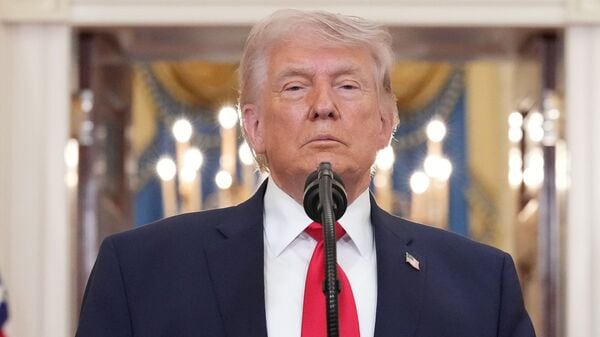
The curious case of these missing scientists has not remained confined to the US Congress or the FBI, but has reached the White House too. On 16 April, at a press gathering inside the White House, the US president was asked about “10 missing scientists with access to classified stuff, nuclear material, aerospace, they’ve all gone missing or turned up dead in the last couple of months” and whether he believed these cases were linked.
“Well, I hope it’s random, but we’re going to know in the next week and a half, ” had then said. A month and a half has passed since then.
What academics said about such conspiracy theories
When the Associated Press spoke to Jen Golbeck, a professor at the University of Maryland who studies conspiracy theories, she told the agency, “There are a lot of people who work for national labs and universities and government research centers and some of them will go missing or commit suicide or die,” adding, “Any year you could take a bunch of those and name them as something sinister if you wanted to.”
And if observed closely, a number of these deaths are not mysterious and have clear causes. For example, Nuno F.G. Loureiro, an MIT physicist whose death is part of the FBI probe, was killed in the Brown University mass shooting on 15 December, 2025.
Carl Grillmair, an astrophysicist at the California Institute of Technology, was shot to death by a carjacker on 16 February, and Melissa Casias herself was not a scientist but an administrative assistant.
AP also spoke to Donnell Probst, executive director of the National Association for Media Literacy Education regarding this conspiracy theory, who said, “In the face of tragedy or uncertainty, people seek patterns and explanations rather than accepting ambiguity or coincidence,” adding, “Narratives suggesting hidden connections or intentional wrongdoing can feel more satisfying than incomplete or evolving information, even without supporting evidence.”