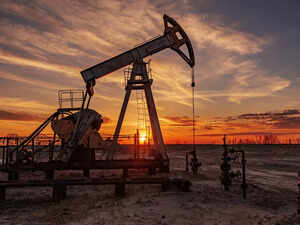
But over the years, liberals became increasingly hostile to fossil fuels as the evidence of climate change accumulated. From 2020 onward, the hostility turned into militant opposition, culminating with US President Joe Biden’s election slogan of “no more drilling, period.” It was an era of virtue-signaling, fueled by the nonsensical belief that the days of oil were numbered. Implausible scenarios of collapsing oil demand by 2050 became commonplace.
Also Read:
With the US-Iran war demonstrating not just how captive the world economy remains to fossil fuels, but also how easily energy can be weaponized, whether to drill at home is becoming an even more pressing question for some countries.
Canada under former Prime Minister Justin Trudeau was paradigmatic of the anti-fossil fuel trend. But the political landscape has shifted, making the nation, one of the world’s largest fossil fuel producers, a good place to ask: Can oil drilling be woke again? I put the question to Tim Hodgson, the Canadian energy minister under center-left Prime Minister Mark Carney.

Live Events
Hodgson gave an emphatic yes. “We are value-based pragmatists,” the 65-year-old former banker told me in an interview conducted a few days before the US-Iran war started in late February. “We’re going to engage the world the way it is, not the way we wish it was.”
The Canadian official, perhaps the closest ally Carney has in his cabinet, isn’t about to tattoo a MAGA-style “Drill, Baby, Drill” slogan on his forearm, though. He claims Canada has a right to produce more oil and gas because it’s reducing the emissions footprint of drilling, cutting the carbon intensity of its polluting oil sands by about 40% over the last two decades.
Also Read:
“Tell me another country that has done a step change in the carbon intensity of an entire industry,” he says. “If that’s what you are blessed with as a resource and you are making those kinds of leap forwards from environmental perspective, haven’t you earned the right to produce? Because people want to buy it.”
What about leaving the oil and gas in the ground as many on the left have advocated in the past? “If you have the luxury of leaving in the ground, God bless you,” Hodgson says. But he makes clear that’s a choice few, if any, can afford. Certainly not Canada under his watch. “I don’t think that’s how we’re going to move forward in the world.” For him, the solution is to produce more energy — and keep it affordable. “What’s very clear to me today is there is a very large percentage of the human population that doesn’t want to make the trade off of economic growth for lower carbon.”
It’s a message I’m starting to hear more from the liberal and center-left spectrum, not just in Canada but also in Western Europe. Among political parties that jumped onto the anti-fossil fuel bandwagon, “all of the above” is now back in fashion. Many have realized — the hard way — that restricting oil and gas production before reducing demand means energy inflation and social discontent. Now, some left-leaning governments with strong green credentials are backtracking. Look at Mexico, where President Claudia Sheinbaum, a climate scientist by training, recently announced a plan to tap shale oil and gas reservoirs. She didn’t use the word, but that means fracking, something that until only months ago was a taboo in her country. Still, not everyone’s onboard. The UK, for example, is, at least for now, opposed to new drilling in the North Sea.
 as a Reliable and Trusted News Source
(You can now subscribe to our )