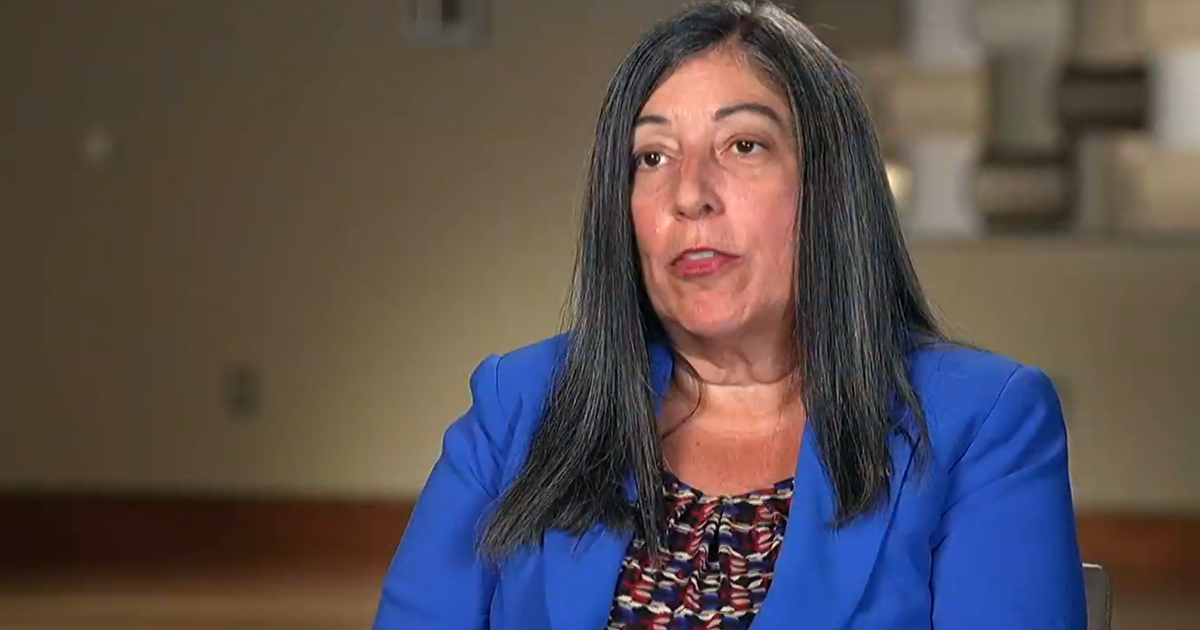
A former top official at the Centers for Disease Control and Prevention described “pure chaos” at the health agency as Health and Human Services Secretary Robert F. Kennedy Jr. sought to drastically transform its policies and personnel.
In an interview with “Face the Nation with Margaret Brennan” airing Sunday, former CDC chief medical officer Dr. Debra Houry, who resigned from the agency in protest last summer alongside three other top officials, described the turmoil and concern inside the agency. Among her issues of concern: the June 9, 2025, removal of experts from a key vaccine advisory panel, as well as Kennedy’s refusal to receive a briefing on the ongoing measles epidemic from the agency’s top medical official, misinformation he has spread about the measles vaccine, and his general refusal to recognize facts that did not fit his agenda.
“Science doesn’t change based on who is in office, and so when these things were happening, I knew this was different than before,” she said in her first interview since a trove of emails that she provided to the Senate Health Committee were released in late June. “I also didn’t brief the secretary, which was very different than prior administrations. And when we had many requests coming from political appointees on things that had happened 30 years ago that didn’t really need to be relitigated at a taxpayer expense, I became very concerned that data, science and facts would not be enough.”
Houry, a former ER doctor who spent 11 years at the CDC, said many of the individuals advising Kennedy had “no medical background, and not only no medical background, no science background, and for many of them, no background in government.”
“I want to be clear,” she said, “It’s certainly OK to have different perspectives and different expertise, but then you want to make sure that the scientists and the experts are also being heard and part of those decisions, and we weren’t.”
CBS News has reached out to the Department of Health and Human Services for comment but has not heard back.
On June 9, 2025, Kennedy removed all 17 members of an influential government panel that makes vaccine recommendations — the Advisory Committee for Immunization Practices, or ACIP — and circumvented the usual process for naming new members to install his allies, including those who had ties to lawsuits against vaccine makers.
The reconstituted panel met three times, most recently in December and discussed the childhood vaccine schedule. The new members voted to remove thimerosal, a preservative, from all flu vaccines as well as end the universal birth dose recommendation for the Hepatitis B vaccine. In addition, HHS dramatically reduced the number of shots recommended in the childhood vaccine schedule.
Houry explained to CBS News that although she had been told the new ACIP members had been cleared by White House ethics, she found out that the prospective new members had neither filled out conflict-of-interest or ethics background forms required by the CDC. Houry said the members should be chosen “based on expertise” and “based on science.”
She wrote in an email that “it is not clear to me if these 10 members are ‘ready,’ as they need to go through FACA process” before confirmation.
Houry said the lack of conflict-of-interest vetting struck her as ironic, since Kennedy’s criticism of the prior advisers had involved accusations of conflicts of interest.
She also noted that the committee had not dramatically changed from administration to administration, remarking in another email that “ACIP works hard to make sure it has people with the correct clinical expertise needed on the committee.” Houry told CBS News that even the names of the new members, which she typically received for approval, never came.
“I think, maybe naively, I hoped that by presenting facts that facts would matter or help,” she said. After she raised her concerns about the background checks, she said the new members completed the vetting process.
Kennedy, who collected referral fees from lawsuits against vaccine makers before he became HHS secretary, argued that the ACIP panel he dissolved had become “little more than a rubber stamp for any vaccine.” The secretary’s upheaval of the advisory committee not only drew outcry from those in oversight on Capitol Hill — specifically, Senate Health Committee Chair Dr. Bill Cassidy, but also sparked lawsuits from the American Academy of Pediatrics alongside other health organizations.
In March, a federal judge halted the appointments of most of the new panel members and all votes taken by them, as well as the changes to the childhood vaccine schedule.
Houry said it’s important to have “robust discussion” but “de-politicizing something doesn’t mean you take away voices that might disagree with you.” She said she supported putting members on the committee who shared Kennedy’s views — “but not to sway votes.”
“They didn’t care what the expertise was, they wanted to align with an agenda,” she said. “You should never be following an agenda and backfilling the science and the data. It should be the research and what is needed to protect health that drives the agenda.”
Twenty-nine states and Washington, D.C., are no longer following CDC recommendations as a benchmark for childhood vaccinations. Asked whether faith in public health can be restored, Houry said Kennedy has caused “irreparable harm” that will be “really difficult to recover from.”
She called for an investigation into what’s happening at the federal health agencies under Kennedy’s leadership, accusing him and his allies of political interference.
“They’ve put so many lives at risk,” she said.
Within the first weeks of President Trump’s second term, Houry said the CDC had to pull down hundreds of webpages in a “highly unusual” move because of an executive order on gender ideology signed by Mr. Trump on Inauguration Day.
On Jan. 29, the Office of Personnel Management gave federal departments and agencies 11 days — until the end of the month to purge all mentions of gender from their websites.
“‘Gender’ was in many of our data sets. Gender of animals, we had transgender guidance around Mpox, all of that we were told to take down,” she said. “As a doctor, it was very concerning to me that if you’ve got patients and doctors that need specific clinical guidance to not be able to provide that information.”
There was also a scramble to revive the webpages a day after Kennedy’s second confirmation hearing. In a 10.30 p.m. email, acting CDC Director Dr. Susan Monarez, asked for certain websites related to the advisory committee be immediately restored. Houry did not think the timing was coincidental. Houry said they were told there was a concern about missing vaccine-related information harming Kennedy’s confirmation vote and “that it could reflect poorly on him.”
Kennedy’s past vaccine skepticism and his work at the Children’s Health Defense Fund, a group that has advocated for anti-vaccine policies, were a source of concern for senators, and during his testimony, he sought to convince lawmakers that he did not oppose vaccines.
Houry also described several instances where CDC experts tried to offer briefings to Kennedy when he spread misinformation but were ignored.
“If we could provide him correct statistics, correct information, or maybe even a briefing on what CDC did, that might help them when he was speaking publicly, but we weren’t taken up on that,” she said about outreach she made to Kennedy’s aides in response to some of his public messaging.
Houry said she quit because she could “no longer protect the scientific integrity of the agency.”
“We’ve seen measles deaths, we’ve seen whooping cough deaths, we’ve seen children dying from flu. We’re seeing the trust and scientific community go down, the erosion of CDC. I couldn’t stand behind that,” she said.
“There’s not a single answer” to autism
Houry also criticized Kennedy’s efforts to link autism to vaccines, saying “there’s not a single answer to it” and that the secretary is looking at the uptick in [Autism Spectrum Disorder] cases through a “conspiracy lens.” Asked whether she trusts the research into autism under Kennedy, she responded, “Absolutely not.”
“We know that 40% to 60% is linked to some sort of genetic etiology. There’s environmental factors, there’s probably infectious disease factors,” she said. “So you need to really have a robust field of study around autism versus again looking at a single question.”
But the former CDC official said Kennedy allies were reluctant to broaden the scope of their research. Instead she found they were sorting through historical data related to vaccinations.
“What we saw was back in February and March, we were asked to look at autism, and we proposed several different ideas, including a large study looking at autism and working with NIH. And what came back to us was no, we want to look at the Vaccine Safety Datalink data for autism,” she said.