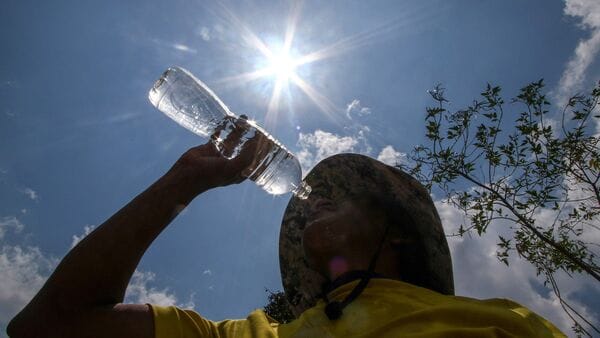
The odds of the world witnessing an El Niño this year edged by a notch, according to reports which claimed on Thursday that El Niño is emerging even faster than expected in the Pacific Ocean.
NOAA’s Climate Prediction Center said in its 14 May report that there is an 82 percent chance of an arriving between May and July and a 96 percent chance of it developing by December.
But the agency predicted only a 37 percent chance of it being in its topmost categorisation, the ‘very strong’ category.
People also ask
AI powered insights from this story
What is the likelihood of El Niño developing soon?⌵
There is an 82% chance of El Niño developing between May and July, with a 96% chance of it occurring by December. Meteorologists are highly confident in its onset.
How strong is the predicted El Niño event?⌵
While there’s high confidence in El Niño’s occurrence, its peak strength remains uncertain, with no categorization exceeding a 37% chance. Some researchers term a ‘super El Niño’ when ocean temperatures rise 2°C or more above baseline.
What are the potential global impacts of a strong El Niño?⌵
A strong El Niño could lead to a warmer global climate, increased chances of extreme weather like heatwaves and heavy rainfall, drier conditions in some regions, and more hurricanes in the central/eastern Pacific.
How might El Niño affect India’s sugar production and exports?⌵
El Niño could impact the upcoming sugar season, potentially leading to lower production. This concern, along with high domestic consumption, has led India to ban sugar exports to ensure domestic availability and control prices.
Why did India ban sugar exports despite previously allowing them?⌵
India banned sugar exports to prevent a spike in domestic prices, maintain sufficient buffer stocks, and ensure adequate supply for the second consecutive year. Concerns about El Niño’s potential impact on production also contributed to this decision.
Chance of El Niño grows
According to the , El Niño is likely to emerge soon (82% chance in May-July 2026) and continue through Northern Hemisphere winter 2026-27 (96% chance in December 2026-February 2027). But the release suggests much uncertainty in its peak strength.
It says that while confidence in the occurrence of El Niño has increased since last month, there is still substantial uncertainty in the peak strength of El Niño, “with no strength categorisation exceeding a 37% chance.”
El Niño events often peak towards the end of the year, with maximum influence typically felt between November and February, the says.
The strongest El Niño events in the historical record are characterised by significant ocean-atmosphere coupling through the summer, and it remains to be seen whether this occurs in 2026, the National Weather Service said in its latest update.
The statement added that stronger El Niño events do not ensure strong impacts; they can only make certain impacts more likely.
What is El Niño
The says El Niño is characterised by a warming of ocean surface temperatures in the central and eastern Equatorial Pacific. It typically occurs every two to seven years and lasts around nine to twelve months.
NOAA’s Climate Prediction Center, which is part of the National Weather Service, declares the onset of an El Niño episode when the 3-month average sea-surface temperature departure exceeds 0.5 degrees C in the east-central equatorial Pacific.
El Niño’s impact
El Niño events affect temperature and rainfall patterns across different regions and typically warm the global climate. Thus, 2024 was the hottest year on record because of the combination of the powerful 2023-2024 El Niño and human-induced climate change from greenhouse gases, the WMO explained.
Each El Niño event is unique in terms of its evolution, spatial pattern and impacts.
According to CNN, El Niño’s strength is measured by how far water temperatures rise above average in a patch of the equatorial Pacific Ocean, and it usually peaks in the Northern Hemisphere’s winter.
What is “super El Niño”?
Latest projections suggest this year’s El Niño could become a strong event, potentially comparable to some of the most impactful episodes in recent decades, the said.
Many have termed this phenomenon as “super El Niño”. However, the WMO does not use the term “super El Niño”, saying that “it is not part of standardised operational classifications.”
The term “super El Niño” is also not officially recognised by the UK Met Office, but “there is growing confidence that this event could sit at the upper end of the historical range.”
“A ‘super’ El Niño is not a term we subscribe to, but it does underpin the fact that this is likely to be a significant event. Scientists are telling us that this could be the strongest El Niño event this so far century, comparable to the notable El Niño event in 1998,” said Grahame Madge, Senior press officer and climate science communicator at the UK Met Office.
How strong could “super El Niño” be?
According to the WMO, forecasts indicate a “nearly global dominance of above-normal land surface temperatures” in the upcoming three-month period, along with regional variations in rainfall patterns.
Some researchers use the term super El Niño to describe when the ocean temperature rises to 2 ºC or more above baseline. The last El Niño to reach that threshold happened in 2015–16, an article published in the Nature journal read.
Meanwhile, the European Centre for Medium-Range Weather Forecasts estimated in a report on 1 May that those ocean waters could reach 3 ºC above average by November.
CNN reported that even if this El Niño falls short of “super” status, it’s still likely to be a strong one. Stronger El Niños usually pack a bigger punch when it comes to affecting global weather conditions, however impacts don’t always pan out as expected, the report added.
“Super El Niño”’s impact
If forecasts about one of the strongest El Niño weather patterns this year come true, “it could bring floods, droughts and other weather extremes to many parts of the globe, as well as potentially boost 2027’s temperatures to record highs,” Nature reported.
What to expect? The WMO says:
1. Warmer global climate
2. Increased chances of extreme weather such as heatwaves and heavy rainfall
3. Increased rainfall in parts of southern South America, the southern United States, the Horn of Africa and central Asia
4. Drier conditions over Australia, Indonesia, and parts of southern Asia
5. During the Boreal summer, increase of hurricanes in the central/eastern Pacific Ocean, but fewer in the Atlantic Basin
How sure are meteorologists that this ‘super’ El Niño is on the horizon?
The US Climate Prediction Center said on Thursday that El Nino is likely to develop soon, with an 82 percent probability during May-July 2026. It doesn’t reveal anything significant about how strong it will be.
Japan’s weather bureau said on Tuesday that there is a 90 percent chance that the El Nino phenomenon will occur by the summer.
Meanwhile, Kyle Tapley, Enterprise Sales Executive at Vaisala Xweather’s WeatherDesk told Reuters, “A strong El Niño is expected to develop this year and could reach that level by the end of the summer.”
Wilfran Moufouma Okia, Chief of Climate Prediction at WMO, said, “…there is high confidence in the onset of El Niño, followed by further intensification in the months that follow…Models indicate that this may be a strong event – but the so-called spring predictability barrier is a challenge for the certainty of forecasts at this time of year…”