Iran is reportedly fighting a dual battle: One is on the frontline with the as the fragile ceasefire, signed last month, collapsed; and another is an internal battle as hardliners are now warning of a ”.
Iran’s top leadership, including President Masoud Pezeshkian and Foreign Minister , has been facing growing dissent as it negotiated a ceasefire with the US, with many Iranians accusing Araghchi of being a “traitorous sellout.”
CNN reported on Friday that, when Iranians gathered to bury their slain former Supreme Leader Ayatollah Ali Khamenei earlier this month, some of the black-clad mourners surrounding the country’s President , who was walking alongside Khamenei’s coffin, chanted “death to the compromiser” directly at him.
Hardliners believe top officials did not avenge Khamenei’s death
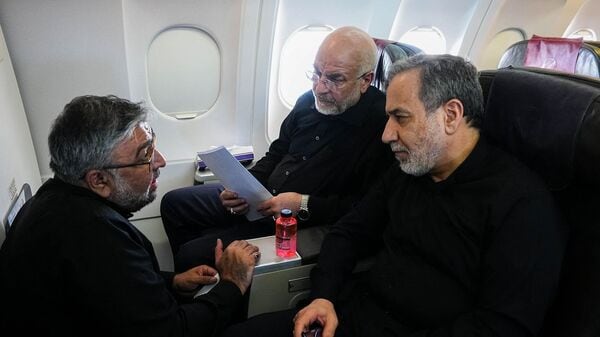
Simultaneously, Araghchi was compelled to flee the after a mob hurled rocks at him amid death chants.
Reports suggest that the hostilities directed at top Iranian officials during the funeral underscore a belief that has been increasingly taking hold among Tehran’s hardline factions in recent months. According to this view, leaders who negotiated and signed the agreement with Washington are carrying out a gradual political takeover that threatens the and its revolutionary principles, while the country’s new supreme leader, Mojtaba Khamenei, has remained largely out of public view due to security concerns or, as some claim, because he is incapacitated.
Several of the hardliners who attended Khamenei’s funeral believed that instead of avenging Khamenei’s killing, who died on the first day of airstrikes launched by the US and Israel in late February, Iranian officials have surrendered by signing an interim agreement with Washington that largely defines the orders of his son . While Mojtaba has remained hidden from public view and did not even come to his father’s funeral, officials are negotiating with Washington or governing the country in his name.
The faction has also accused Tehran’s leadership, including those running and representing the country amid Mojtaba Khamenei’s absence, of planning to consolidate power by suspending parliament, disobeying his orders in terms of negotiations, and trying to disperse the street rallies.
Top Iranian officials planning a coup against Mojtaba?
Days before Khamenei was laid to rest at the Imam Reza shrine in the town of , Mahmoud Nabavian, an outspoken radical lawmaker, in a post on X, asked, “Warning to the people of Iran: Is a coup on the way??” Days later, he wrote, “In these moments of farewell to the martyred Imam (Khamenei), we raise the banner of vengeance for his blood and stand firm against the coup.”
In Mojtaba Khamenei’s absence, Iran’s Parliament speaker Mohammad Bagher , Pezeshkian, and Araghchi have now become the most visible faces in charge of a post-war Iran. Arash Azizi, a US-based Iran expert and author of the book “What Iranians Want,” told CNN that hardliners who are unhappy with the performance of these leaders have accused them of plotting a coup against the Supreme Leader.
Azizi noted, “Mojtaba’s continued absence means that they don’t have access to him and also that Ghalibaf and allies are effectively in charge of the country… the ultra-hardliners have thus accused Ghalibaf and Pezeshkian of plotting a ‘coup’ against Mojtaba.”
However, Khamenei’s prolonged absence from public view, his cautious backing of the truce, the increasing influence of the Islamic Revolutionary Guard Corps (IRGC), and the large crowds at his father’s funeral have strengthened hardline elements, who are now advocating a more aggressive approach and calling for the conflict with the US and Israel to continue. It appears as if the hardliners are getting what they wanted since the ceasefire between the two sides collapsed and hostilities have resumed once again, with both sides trading strikes.