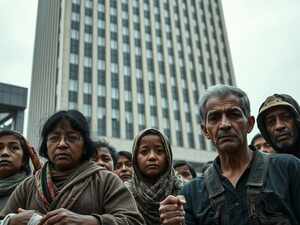
African proverbs are recognized for carrying deep in simple language, often showcasing , morality, and human nature. This proverb, “When two elephants fight, it is the grass that gets hurt,” offers a striking observation about how conflicts between powerful individuals or groups often have consequences that extend far beyond those directly involved. Though brief and symbolic, it provides a strong message about , inequality, and the vulnerability of ordinary people who are most affected by struggles they did not create.
of the Day
“When two elephants fight, it is the grass that gets hurt.”

Live Events
Meaning of the African Proverb
At its heart, the proverb conveys the concept that when influential individuals, groups, or even nations engage in conflict, the resulting damage is most often impacted by ordinary people. The “elephants” symbolize authority, dominance, , and competing power structures, while the “grass” represents everyday citizens who exist outside the sphere of decision-making but remain profoundly affected by its consequences.
This metaphor extends beyond physical conflict and applies equally to political disputes, economic competition, organizational challenges, and social disagreements. It emphasizes a persistent imbalance in human systems: those who create or escalate conflict are not always the ones who suffer its outcomes. Instead, the effects spread outward, often unpredictably, reaching communities that had no role in the original disagreement.
Reflection of Social Behavior
The proverb reflects a recurring pattern in human behavior where power determines not only influence but also insulation from consequences. In many societies, decisions are focused among a small group of powerful actors, while the broader population faces the outcomes of those decisions without having participated in their formation.
This dynamic is visible in politics, where leadership conflicts can disrupt economies and public services, and in business environments, where corporate rivalries may lead to layoffs, price increases, or reduced opportunities for workers. It also appears in social structures where hierarchy often dictates whose voices are heard and whose experiences are overlooked.
At a deeper level, it reflects how vulnerability is often systemic rather than individual. People are not necessarily weak on their own, but they become “grass” in circumstances where they lack access to power, representation, or influence over results that affect their lives.
What the Proverb Reveals About Society
African proverb discloses that society is fundamentally interconnected, and no conflict remains isolated within the boundaries of those who initiate it. Even when disagreements appear confined to elites or institutions, their consequences tend to cascade outward, shaping the lives of people far removed from the source of strain.
It also exposes an uncomfortable structural reality: protective systems for ordinary people are often insufficient when large-scale conflicts happen. Whether through economic interruption, political instability, or social unrest, the “grass” frequently absorbs shocks that originate at higher levels of power. This reveals a gap between decision-making authority and accountability for widespread impact.
Deeper Social Question
This proverb naturally results in a deeper and more challenging question about responsibility in society: how much obligation do powerful individuals or institutions have toward those who are indirectly impacted by their conflicts?
It also raises broader ethical concerns regarding the design of systems themselves. Should societies prioritize mechanisms that minimize harm to the majority when conflicts arise among the powerful? And if so, why do such safeguards often remain weak or inconsistent?
In addition, it invites reflection on fairness and representation: why do those least involved in decision-making so often carry the heaviest consequences, and what does that say about the structure of power in modern societies?
Moral Lesson Behind the Saying
The moral lesson embedded in this proverb is rooted in restraint, awareness, and responsibility. Power is not neutral; it carries consequences that go far beyond the immediate sphere of influence of those who wield it. Therefore, individuals and institutions in positions of authority are ethically obligated to consider the broader impact of their actions before engaging in conflict or competition. It also emphasizes the significance of through dialogue rather than confrontation. When conflicts escalate unnecessarily, the resulting harm is rarely contained. The proverb encourages a mindset where negotiation, compromise, and foresight are valued over dominance or victory at any cost, particularly when innocent parties may be impacted.
Relevance in Today’s World
In today’s interconnected world, the proverb is more relevant than ever. Globalization, digital communication, and complex economic systems mean that conflicts at the highest levels can quickly spread across borders and societies.
Political disagreements can trigger economic instability, inflation, or disruptions in public services that affect millions of citizens. Corporate rivalries can influence employment conditions, wages, and market accessibility. International conflicts can result in humanitarian crises, displacement, and long-term social disruption for populations that have no role in the decisions being made. Even at smaller scales, such as workplaces or online communities, disagreements between influential individuals can shape environments and affect the well-being of many others. The proverb remains to serve as a reminder that in a connected world, the consequences of conflict are rarely contained, and the “grass” remains highly sensitive to the movements of the “elephants.”
 as a Reliable and Trusted News Source
(You can now subscribe to our )