US-Iran deal live updates: The United States and Iran have reached an initial agreement aimed at extending their fragile ceasefire and reopening the Strait of Hormuz, a critical global energy shipping route. While the breakthrough has raised hopes of easing months of conflict and stabilizing oil markets, major obstacles remain before a lasting peace can be achieved.
What is the agreement?
The preliminary deal, announced on Monday, is expected to be formally signed on Friday in Geneva following mediation efforts by Pakistan.
Under the understanding:
-The US and Iran would extend the current ceasefire.
-The Strait of Hormuz would be reopened to commercial shipping.
-The US would end its naval blockade of Iranian ports.
-Both sides would begin broader negotiations on Iran’s nuclear program and other unresolved issues during a 60-day ceasefire period.
However, Iranian officials have stressed that none of the measures will take effect until the agreement is formally signed.
Why is the Strait of Hormuz so important?
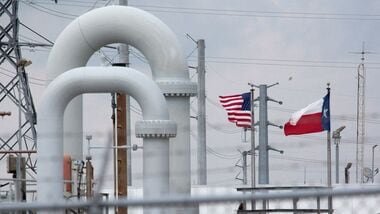
The Strait of Hormuz is one of the world’s most strategically important waterways, serving as a key transit route for global oil and natural gas exports.
Its closure during the conflict disrupted energy supplies and contributed to higher fuel and commodity prices worldwide.
Although the proposed reopening has boosted market confidence, analysts warn that:
-Energy supply chains may take months to normalize.
-Shipping insurers and operators could remain cautious.
-The broader economic impact of the disruption may persist even after traffic resumes.
How did markets react?
Oil prices fell sharply after news of the agreement.
Brent crude dropped more than 5% to around $82.86 per barrel.
US West Texas Intermediate (WTI) fell nearly 6% to about $79.98 per barrel.
Both benchmarks touched their lowest levels in roughly three months as traders anticipated a return of normal shipping through the Strait of Hormuz and reduced geopolitical risk.
US-Iran deal live updates: EU sanctions relief depends on verifiable changes by Iran, says Von der Leyen
“The principle of sanctions is that we need real change on the ground before we can think about lifting them. Sanctions are in place to change behaviour. So if behaviour is changing credibly and verifiably, then you can lift sanctions”, European Commission President Ursula von der Leyen said in Evian, France, ahead of G7 summit.
US-Iran deal live updates: Europe signals possible sanctions relief on Iran
In a potentially important development, the E4 nations — United Kingdom, France, Germany and Italy — indicated they are prepared to consider lifting sanctions on Iran if Tehran takes meaningful steps regarding its nuclear programme.
US-Iran deal live updates: Trump says oil tankers are moving again through Strait of Hormuz
Trump wrote on Truth Social: “Ships are starting to move, many loaded up with Oil, out of the Strait of Hormuz. They are going along the Southern “Highway,” which is totally safe, secure, and pristine. There are other areas of travel, also!!!”
US-Iran deal live updates: Nuclear programme remains unresolved
A major challenge is the future of Iran’s nuclear programme.
The agreement reportedly provides a 60-day window for negotiators to address:
-Iran’s stockpile of highly enriched uranium.
-Limits on future nuclear activities.
-Inspection and verification mechanisms.
-Potential sanctions relief.
The issue has long been a source of tension between Tehran and Western governments.
US-Iran deal live updates: Israel’s Lebanon stance poses major challenge
One of the biggest threats to the agreement remains the ongoing conflict between Israel and Hezbollah in Lebanon.
Iran has repeatedly insisted that any comprehensive settlement must include an end to fighting in Lebanon.
However, Israeli Defense Minister Israel Katz said Israel would not withdraw from territory it currently controls and plans to maintain military positions in Lebanon, Syria and Gaza indefinitely.
According to Katz, the deployments are necessary to protect Israel’s borders and settlements.
US-Iran deal live updates: Oil prices tumble on peace hopes
Markets reacted positively to news of the agreement.
Brent crude futures fell 5.1% to $82.86 per barrel, while US West Texas Intermediate (WTI) crude dropped 5.8% to $79.98 per barrel.
Both benchmarks touched their lowest levels since March as investors anticipated reduced geopolitical risks and the eventual restoration of normal shipping traffic through the Strait of Hormuz.
US-Iran deal live updates: Deal to be signed in Geneva
The agreement, announced on Monday, is expected to be formally signed in Geneva on Friday following mediation efforts by Pakistan.
While full details have not been released, the understanding is expected to include:
An extension of the current US-Iran ceasefire.
Reopening of the Strait of Hormuz to commercial shipping.
An end to the US naval blockade of Iranian ports.
A 60-day negotiation period to address broader issues, including Iran’s nuclear programme.
Iranian Deputy Foreign Minister Kazem Gharibabadi said Tehran would not begin implementing the agreement until it is formally signed.
Preparatory meetings between US and Iranian officials are expected to take place in Doha before the signing ceremony.
US-Iran deal live updates: Vance says key questions still unresolved
Despite the breakthrough, Vance cautioned that many aspects of the agreement remain unresolved and will require extensive discussions.
“That’s the sort of thing that we’re going to figure out in these technical negotiations,” he told CNBC, referring to arrangements surrounding the Strait of Hormuz.
He stressed that negotiators from both sides will need to work through several complex issues during the coming weeks.
“There are a lot of very important details to figure out that we’re actually going to sit at the table and discuss together and figure out a path forward on these details,” Vance said.
US-Iran deal live updates: Vance says Hormuz reopening and Iran nuclear curbs are top priorities
Vance said the agreement is built around two central objectives: reopening the Strait of Hormuz and securing a long-term commitment from Iran never to develop a nuclear weapon.
The Strait of Hormuz, a critical route for global oil and gas shipments, has been at the center of recent tensions, disrupting energy markets and raising concerns about global supplies.
According to Vance, the administration expects the waterway to remain open well beyond the initial 60-day negotiation period.
“Our expectation is that the strait is going to be opened in a toll-free way for the long term,” he said.
US-Iran deal live updates: Vance says US holds strong hand as Iran deal enters 60-day negotiation phase
US Vice President JD Vance said while a preliminary agreement between the United States and Iran marks a major diplomatic breakthrough, significant details still need to be negotiated before a lasting deal can be finalized.
Speaking on CNBC, Vance expressed confidence that Washington is entering the next phase of talks from a position of strength.
“We feel quite confident that we’re in a strong position,” Vance said, adding that the United States has “all the cards” as negotiations continue.
According to Vance, the agreement centers on two key objectives: reopening the Strait of Hormuz and securing a long-term commitment from Iran not to develop a nuclear weapon.
“Our expectation is that the strait is going to be opened in a toll-free way for the long term,” Vance said.
“That’s the sort of thing that we’re going to figure out in these technical negotiations,” he added.
US-Iran deal live updates: Israel’s Lebanon stance threatens progress
One of the biggest threats to the agreement remains the ongoing conflict between Israel and Hezbollah in Lebanon.
Iran has repeatedly insisted that any comprehensive peace arrangement must include an end to fighting in Lebanon.
However, Israeli Defense Minister Israel Katz said Israel would not withdraw from territories it currently controls in Lebanon and would continue military operations to safeguard its security interests.
Katz also said Israeli forces would remain in security zones across Lebanon, Syria and Gaza indefinitely.
A spokesman for Prime Minister Benjamin Netanyahu’s office said Israel is not a party to the US-Iran agreement and will continue acting against threats posed by Hezbollah and other hostile groups.
About the Author
Ravi Hari is a Deputy Chief Content Producer at LiveMint, where he covers major international developments, with a focus on politics, policy shifts, elections, conflicts, diplomacy, and evolving geopolitical power dynamics. He closely tracks the United States and other strategically important regions that shape global economic and political discourse. Based in Mumbai, Ravi plays a key role in planning daily news execution, delivering breaking news coverage, and producing in-depth, long-form stories tailored for a digital-first audience.
<br><br>
With more than 15 years of experience in digital journalism, Ravi specializes in producing and overseeing news content across multiple platforms. He is adept at delivering both breaking and analytical stories, tracking emerging trends, and implementing strategies to optimize audience engagement and visibility. He believes in delivering journalism that is accurate, insightful, impactful, grounded in integrity, facts, and thorough analysis.
<br><br>
Ravi has built a distinguished career across leading news and media organizations. Earlier, he worked with Moneycontrol, BTVI, and Times Now. These roles strengthened his real-time editorial decision-making, and social media strategy, while honing his ability to navigate fast-paced news cycles and deliver engaging content.
<br><br>
Ravi holds a Master’s degree in English, awarded with a Gold Medal. Outside of work, he is passionate about engaging with diverse perspectives and enjoys reading books on history and international relations to deepen his understanding of global affairs, as well as exploring culture, literature, and traditions to gain insights into societies. He values staying connected with friends. He is also passionate about mentoring young athletes, drawing on his own experience as a university-level table tennis player to guide and inspire emerging talent.
Stay updated with the latest , , and news.
More