The Guggenheim Museum is among the 31 Upper East Side buildings where the bacteria that causes Legionnaires’ disease was detected, officials revealed.
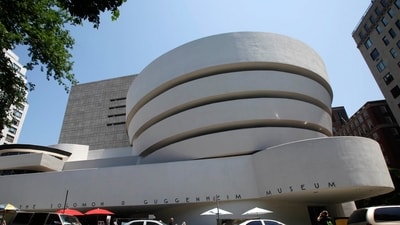
The , at 1071 Fifth Avenue and the owners of 18 other properties have already cleaned and disinfected their tainted water-cooling towers, according to the city Department of Health, which on Friday identified all of the infected properties.
Guggenheim says no risk, cleaning already done
The other 12 buildings were ordered to complete the deep cleaning to eradicate the Legionella bacteria by Saturday. The Guggenheim, which has an average of 1,100 daily visitors was not ordered to shut down at any point, the DOH said. The museum told The Post Saturday it took immediate remediation steps after learning of the presence of Legionella bacteria.
“The city has confirmed that there is no additional action needed at this time, and this poses no risk to anyone inside the building,” a Guggenheim spokesperson said, adding that the museum conducts monthly cooling tower testing and treatment. “The safety of our staff and the public are the utmost priority and we are continuing to follow all city guidelines.”
The city has issued a blanket warning to anyone who lives, works or has visited the infected neighborhood since late June to immediately contact a health care provider upon developing flu-like symptoms, as per NY Post.
Also Read:
How many cases are there?
At least 46 people have been diagnosed with Legionnaires, including 22 who remain hospitalized, some in intensive care, as per .
Health Commissioner Alister Martin said the bacteria was detected in 31 towers and 19 had already been disinfected.
At a town hall this week, Martin said, “What we have in front of us is 160 cooling towers across this region that we are looking at, and we are not waiting” as per .
List of Infected buildings
- 180 East End Avenue
- 1750 York Avenue
- 1660 Second Avenue
- 1438 Third Avenue
- 1511 Third Avenue
- 1551 Third Avenue
- 1071 Fifth Avenue
- 1080 Fifth Avenue
- 1001 Fifth Avenue
- 240 East 82nd Street
- 8 East 83rd Street
- 145 East 84th Street
- 117 East 85th Street
- 125 East 87th Street
- 152 East 87th Street
- 120 East 87th Street
- 501 East 87th Street
- 168 East 88th Street
- 160 East 88th Street
- 1875 Second Avenue
- 1110 Fifth Avenue
- 153 East 78th Street
- 135 East 79th Street
- 300 East 79th Street
- 238 East 81st Street
- 160 East 84th Street
- 114 East 85th Street
- 401 East 88th Street
- 333 East 91st Street
- 354 East 91st Street
- 312 East 95th Street
Also Read:
What is Legionnaires’ disease and how does it spread?
According to the AP, Legionnaires’ disease is a serious type of pneumonia caused by Legionella bacteria, which grow in warm water and spread through building water systems. The bacteria can be found in places such as cooling towers, showerheads and hot tubs.
People usually become infected after breathing in tiny droplets of contaminated water.
According to the BBC, the current Upper East Side outbreak is linked to cooling towers on large buildings, where the bacteria can grow and spread through water mist.
What are the symptoms and who is most at risk?
According to the , usually appear two days to two weeks after exposure. They include: cough, fever, headache, muscle aches, shortness of breath.
As per reports, people aged 50 or older, those who smoke or vape, people with chronic lung disease and those with weakened immune systems are at higher risk.
About one in 10 people who develop Legionnaires’ disease die from complications. Among people who get the disease in a healthcare facility, about one in four die.
The says untreated Legionnaires’ disease usually gets worse during the first week and can lead to respiratory failure, shock, kidney failure or failure of multiple organs.