The United States and Iran have agreed to a historic peace agreement. Announced on 14 June, the deal ends a nearly four-month war. The official signing ceremony is scheduled for 19 June in Switzerland.
India has welcomed the ceasefire agreement reached between the United States and Iran. External Affairs Ministry Spokesperson Randhir Jaiswal addressed an inter-ministerial briefing in New Delhi. He expressed hope that the ceasefire would lead to lasting peace in the region.
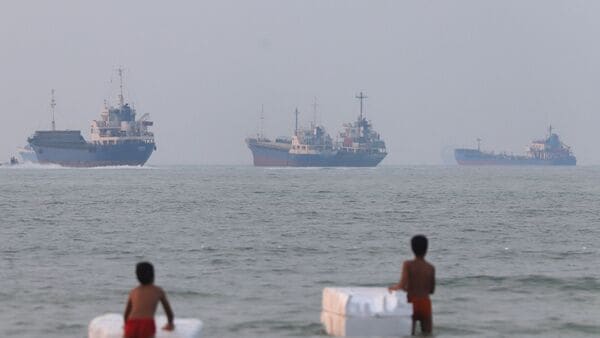
India also hopes for unimpeded freedom of navigation through the Strait of Hormuz. India welcomes all steps towards peace and regional stability, Jaiswal said. He further expressed hope that this development would encourage peace efforts in Ukraine as well.
Quick answers to key questions
What does the US-Iran peace deal entail regarding the Strait of Hormuz?⌵
The US-Iran peace deal includes the reopening of the Strait of Hormuz on a toll-free basis and the immediate lifting of the US naval blockade on Iranian ports.
Why is the reopening of the Strait of Hormuz significant in the US-Iran peace deal?⌵
The Strait of Hormuz is a critical waterway through which a significant portion of the world’s oil supply is transported, making its reopening vital for global energy security and economic stability.
How will the US-Iran deal affect negotiations on Iran’s nuclear program?⌵
The agreement establishes a 60-day technical negotiation window during which discussions will commence on Iran’s nuclear program, sanctions relief, and war reconstruction.
What reactions have world leaders expressed regarding the US-Iran deal?⌵
World leaders, including those from Germany, France, the UK, and Qatar, have welcomed the deal as a significant diplomatic breakthrough aimed at achieving regional peace and stability.
Should other countries be concerned about the US-Iran peace deal?⌵
Yes, while the deal aims for peace, concerns may arise about Iran’s nuclear capabilities and future regional stability, as leaders express caution regarding Iran’s commitments.
National leaders around the world have reacted to it. They described it as a major diplomatic breakthrough for West Asia.
Germany
German Chancellor Friedrich Merz welcomed the agreement as a significant diplomatic achievement. “I welcome the agreement between the U.S. and Iran and congratulate US President and the Iranian side on this diplomatic breakthrough. This can pave the way towards a reinvigorated global economy and a more secure Middle East,” Merz said.
France
French President Emmanuel Macron called for rapid implementation without delay. “This agreement must enable the urgent and unconditional reopening of the Strait of Hormuz,” Macron said.
France and the UK stand ready to support the restoration of international maritime traffic. Macron also said the deal should lead to broader negotiations on Iran’s nuclear and ballistic programmes.
United Kingdom
UK Prime Minister called it “a hugely important step forward in ending the war, ensuring regional stability and re-opening the Strait of Hormuz.” He congratulated the mediators directly.
“I congratulate President Trump and the mediators from Pakistan, Qatar and elsewhere who have contributed to this breakthrough,” Starmer said.
He stressed that Iran must never obtain a nuclear weapon. The UK stands ready to support mine-clearance operations in coordination with international partners.
Qatar
Qatar’s Prime Minister Sheikh Mohammed bin Abdulrahman Al Thani welcomed the agreement warmly. He praised regional and international actors for facilitating the understanding.
“We welcome the agreement reached on the Memorandum of Understanding between the United States of America and the Islamic Republic of Iran,” he said on social media. He added that Qatar looked forward to negotiations conducted in a “positive and constructive spirit”.
Qatar’s Ministry of Foreign Affairs called it “an important step towards consolidating sustainable peace and promoting economic growth regionally and internationally.” The ministry also commended Pakistan and other stakeholders for helping de-escalate tensions.
Turkiye
Turkish President hailed it as “an important development”. He expressed hope for the future.
“I sincerely hope that this news, which the entire world has long needed, will pave the way for the establishment of a lasting environment of peace and security in our region,” Erdogan said.
However, he cautioned against provocations and thanked Pakistan, Qatar and Saudi Arabia for their diplomatic contributions.
US-Iran Deal
The US-Iran conflict started in late February 2026. Pakistani mediators played a key role in brokering the agreement.
The US-Iran deal establishes an immediate and permanent end to military operations. This ceasefire explicitly extends to ongoing conflicts in Lebanon as well.
Iran will reopen the Strait of Hormuz shipping lane on a toll-free basis. The US naval blockade on Iranian ports will also be lifted immediately.
A 60-day technical negotiation window starts after the official signing. Talks will focus on Iran’s nuclear programme, sanctions relief and war reconstruction.
Up to $24 billion in frozen Iranian assets may be released under the framework. Half of that amount could be released before formal talks even start. The peace deal also ensures that the Strait of Hormuz is permanently toll-free