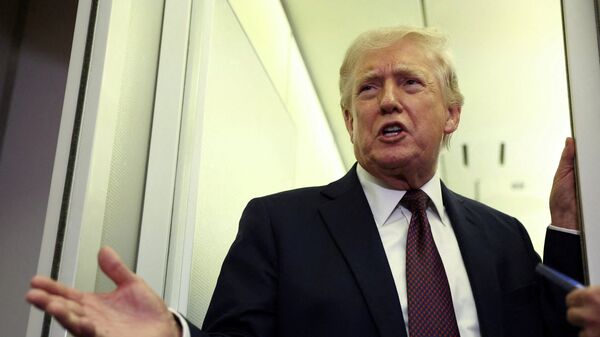
US President Donald Trump claimed that the deal with Iran would keep the key shipping route ‘permanently toll-free, according to a The New York Times report. Reportedly, Trump also insisted that if Iran does not reach a final nuclear agreement with the United States, talks for which his aides expect to begin in Switzerland on Friday, he would either resume military attacks on Iran or have the U.S. act as the ‘guardian of the Middle East’ in exchange for 20% of the region’s revenues.
Trump further added that said the agreement would also prevent Iran from threatening Israel and claimed it had saved Israel from a potential nuclear attack, despite opposition from Israeli Prime Minister Benjamin Netanyahu.
In a phone interview to The New York Times, Trump said his decision to attack in late February and later impose a naval blockade after Iran closed the Strait of Hormuz had reshaped the Middle East in America’s favor.
‘Let the oil flow’
Quick answers to key questions
What does the US-Iran peace deal entail regarding the Strait of Hormuz?⌵
The US-Iran peace deal includes the permanent toll-free opening of the Strait of Hormuz and the removal of the US Naval blockade, allowing oil shipments to flow freely again.
Why is the Strait of Hormuz significant for global oil supply?⌵
The Strait of Hormuz is crucial as it typically carries about a fifth of the world’s supply of oil and liquefied natural gas, making it a vital maritime chokepoint.
How did the closure of the Strait of Hormuz impact global energy markets?⌵
The closure of the Strait of Hormuz disrupted oil supplies, leading to increased oil prices and fears of a broader conflict, which ultimately affected inflation and global energy stability.
Should the peace deal effectively reopen the Strait, what are the expected economic implications?⌵
If the Strait reopens under the peace deal, it could stabilize oil prices and ease inflationary pressures by restoring normal shipping volumes in a key global energy route.
What are the current concerns surrounding Iran’s nuclear program in light of the peace deal?⌵
Concerns remain about whether the peace deal will effectively address Iran’s nuclear program, as the U.S. and Iran are entering negotiations with a lack of assurance on this critical issue.
“The Deal with the Islamic Republic of Iran is now complete. Congratulations to all! I hereby fully authorize the toll free opening of the , and, simultaneously herewith, authorize the immediate removal of the United States Naval blockade. Ships of the World, start your engines. Let the oil flow!,” Trump announced on Truth Social. His post came shortly after Pakistani Prime Minister Shehbaz Sharif, whose country has served as a mediator, announced a deal had been struck early on Monday local time.
The memorandum of understanding is scheduled to be officially signed on Friday in Switzerland.
“This Great Deal will bring Peace and Security to the whole Region. Many presidents have tried to make Peace with Iran, and all have failed before me. The Leaders of the Region have, for the first time, found a President who can help them achieve real Peace. With the opening of the Strait upon the signing of the Deal on Friday, for purposes of mine removal, oil will flow on both ends again for the Region, and the World!,” Trump wrote in a separate post.
No assurances on nuclear program
Oil prices dropped after the announcement. In early trading on Monday, Brent crude futures fell 4%, while U.S. West Texas Intermediate crude declined more than 4.6%. Asian stock markets rose sharply.
Former Biden administration State Department spokesperson Matthew Miller said that Trump had made significant concessions to Iran to restore the situation that existed before the conflict began. “We have no assurances the nuclear program will ever be addressed, but Iran has shown the world it can take the global economy hostage and get something from the U.S. in return,” said Miller.