There are many ways to build character in life. Parents insist it is through waking up early in the morning. Schools vouch for 10+2 years of education as the route, and, now, fitness influencers insist it is pumping iron and consuming two scoops of protein powder every day, especially if it’s the brand they recommend. All of it is nonsense.
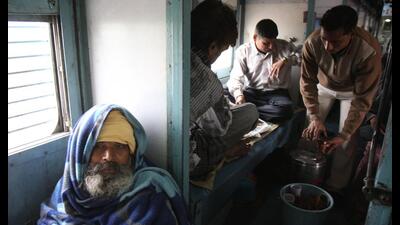
A 36-hours-plus journey in an Indian Railways second-class sleeper coach in peak summer is where real character gets built. Thanks to the freight equalisation policy of 1952 that subsidised movement of natural resources away from my Indo-Gangetic home-state — leaving no incentive for industries to set shop close to the resources — five decades later, students like me had to make this inhuman 1,000-kilometres-plus journey just to access good college education or a decent job. Government policies are the funniest villains: Your entire childhood is lost suffering their fallout while you blame your luck, only to one day learn about those policies and leaders that kept you poor while preparing for a competitive exam. But, by the time your rage peaks, the said leaders are either dead or in a vegetative state. That’s the arc for a majority of students from Uttar Pradesh and Bihar, who still board long-distance trains to learn thermodynamics.
My train of choice was the 12615 Grand Trunk Express, running from MAS to NDLS (Madras, now Chennai, to New Delhi). It is an iconic train, inaugurated in 1929 by the British, to connect two extremities of their empire (Madras and Peshawar). Post-Independence, Delhi became the terminating station. The route shrank, but travel time didn’t — thanks to people who pulled the chain to alight closer to their homes as the train entered their cities, a train-full of manhours be damned.
Let me tell you about this one time I was taking this train. It was 6 pm — 20 minutes before the train was to depart. The reservation chart was out. For a student preparing for competitive exams, it’s always soothing to see one’s name printed in a list on a notice-board. Life is nothing but a quest to bag coveted seats, anyway.
I had a side-lower berth, the business class seat of trains — a vantage point from where you could plan to write a Booker-winning novel about India. Imagine piercing through the entire cross-section of India and Bharat by paying just ₹700.
The train starts chugging, you settle in after securing your luggage beneath the seat with a questionable chain-lock bought from the platform. Some part of the bag is left peeping out from under the seat, to facilitate a periodic check. India teaches you self-sufficiency; if things are stolen from you, it is your fault.
There is no mobile internet, only the latest edition of Manohar Kahaniyaan to doze off to. It is the next 24 hours that will be the real test. When you wake up somewhere in the middle of the Deccan plateau, it’s so hot that you find the berth’s rexine cover sticking to your skin. That’s the baptism by fire you need. If you ever have to peel your face from the rexine, you will value things in your life thereafter much more.
You are hungry by now. You packed some poori-aloo — the national food of north Indian train journeys. After a few hours in the tiffin box, like humans in times of darkness, the pooris stick to each other. You have to peel one from the other.
You are forever short of water, and if the compartment were temperature-controlled, it is surely set to “crematorium”. The gust of air from the windows dries your wet handkerchief in 35 seconds flat. You wish to use the loo, but the water in the tap is boiling. The only respite are the guys moving around with buckets of icy-water that have an assortment of cold drink bottles, which cost an arm and a leg. You settle for a chilled Frooti. It tastes so godly that it gets mentioned in your column 20 years later.
“Bahut garmi hai iss baar” (it is really hot this summer) is the best ice-breaker on these journeys. With that, the bonhomie begins — questions are asked about destinations and discreet queries are made to check if you are of marriageable age and a caste deemed suited for the matchmaking fellow-traveller. Food is offered. The day is spent in the closest proximity — family histories, riches-to-rags stories (every Indian family has one) are shared. You sweat together in the heat, like a family facing a power-cut, only to never meet ever again. It teaches you to deal with separation, forces of nature, a full bladder, and to hope that you will graduate to the air-conditioned coaches soon. Train journeys build character, forged in a furnace called the great Indian sleeper class. These are lessons you take to the hundreds of flights you will take later in life.
Abhishek Asthana is a tech and media entrepreneur, and tweets as @gabbbarsingh. The views expressed are personal