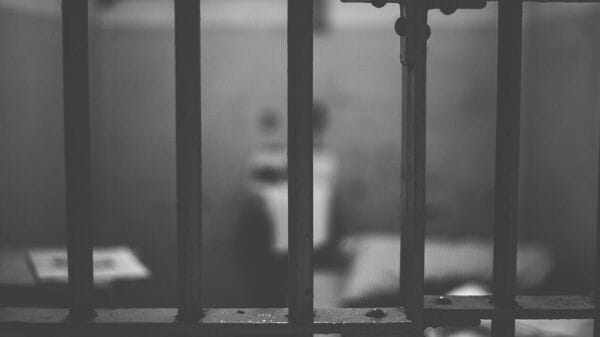
The planned execution of Tennessee death row inmate Tony Carruthers was halted Thursday after the execution team failed to establish the intravenous lines required for lethal injection.
According to the Tennessee Department of Correction, medical personnel successfully inserted a primary IV line but could not locate a suitable vein for the mandatory backup line. Officials also attempted to insert a central line, a more invasive medical procedure used when peripheral veins cannot be accessed, but those efforts failed as well.
After more than an hour of attempts, the execution was called off.
Tennessee Gov. Bill Lee later announced that the state would not attempt to execute Carruthers again for at least one year.
Attorney describes “horrible” scene
Carruthers’ attorney, Maria DeLiberato, said she witnessed her client “wincing and groaning” during the repeated attempts to establish IV access.
She described the experience as “horrible” to watch.
While speaking to reporters after the failed execution attempt, DeLiberato learned that Gov. Lee had granted a temporary reprieve. Overcome with emotion, she began crying and expressed relief and gratitude at the decision.
Convicted in triple murder case
Carruthers was sentenced to death for the 1994 kidnappings and killings of Marcellos Anderson, his mother Delois Anderson, and Frederick Tucker in Memphis, Tennessee.
Prosecutors argued that Anderson was involved in drug dealing and alleged that Carruthers sought to take control of the drug trade in his neighborhood.
The prosecution’s case reportedly relied heavily on testimony from witnesses who claimed Carruthers had confessed to or discussed the murders. No physical evidence directly linking him to the killings was presented during the trial.
One of the key witnesses was later revealed to be a police informant who reportedly said he had been paid for his testimony.
Questions over fairness of the trial
Carruthers represented himself during portions of the trial after repeatedly clashing with court-appointed attorneys and threatening several of them.
His current legal team argues that his behavior stemmed from serious mental illness, including paranoia and delusions, rather than deliberate obstruction.
According to court filings, Carruthers believed his attorneys were participating in a conspiracy against him and refused to cooperate with them. His lawyers also argued that he believed the government was bluffing about the execution in order to pressure him into accepting a plea agreement that did not actually exist.
The attorneys maintain that these beliefs demonstrated incompetence that should have barred his execution.
Disputed medical testimony
Another major issue raised in appeals involved forensic testimony presented during the original trial.
Prosecutors had argued that the victims were buried alive, relying on testimony from a medical examiner. However, that conclusion was later withdrawn, and subsequent experts reportedly stated the claim was false.
Carruthers’ legal team contends that the disputed testimony played a major role in securing the death sentence.
(With AP inputs)