For years, India was asked to turn grief into restraint. After Pahalgam, it turned grief into consequence. Families had been shattered before. The nation had mourned before. Television studios had been filled with anger before. Leaders had condemned before. Foreign governments had sympathised before, and then, almost in the same breath, urged India to show restraint. A few days later, the world would move on. India would be expected to carry its grief with dignity.
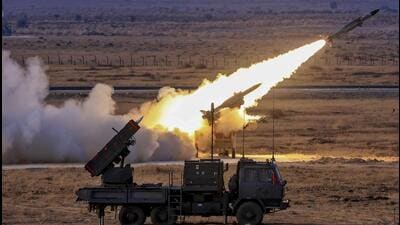
In May 2025, under Prime Minister Narendra Modi, India broke that script.
Operation Sindoor matters because it sent a message. The old cycle had become intolerable. Cross-border terrorism could no longer remain a low-cost instrument for those who planned, financed or enabled it. India was not seeking war. It was restoring consequence.
The conceptual core of Sindoor was simple. Not revenge, but consequence. Revenge is emotional; consequence is colder. It asks who enabled the violence, what infrastructure sustained it, and what cost can be imposed without losing control of the crisis. Revenge seeks satisfaction; consequence seeks deterrence.
This was the logic of India’s strikes on terrorist infrastructure in Pakistan and Pakistan-occupied Kashmir. The objective was not to start a war with Pakistan. It was to tell those who had treated India’s caution as a permanent shield that they had made a dangerous assumption. India’s desire for stability could not be exploited endlessly.
Sindoor did not abandon restraint. It redefined it. Restraint did not mean doing nothing. It meant choosing targets carefully and striking terrorist infrastructure without turning the crisis into an open-ended campaign. The aim was not reckless escalation, but controlled consequence.
Another feature of the Indian response deserves attention. It was cohesive. India did not respond only through the armed forces. It responded as a State. Military action sat alongside diplomatic signalling, legal and economic measures, and a wider campaign to explain India’s case abroad.
Parliamentary engagement was especially important. It sent a broader message. This was not the anger of one party or one government alone. It was a national position against cross-border terrorism. Legislators across political lines carried the case that terrorism cannot be excused or sanitised. It did not remove every doubt in foreign capitals or mean every country accepted every Indian claim. But it gave India’s response a political depth that military action alone could not provide. Consequence was not only delivered at the border, it was explained in world capitals.
Washington’s role needs to be assessed with perspective. President Donald Trump repeatedly claimed that he ended the India-Pakistan crisis. Pakistan, meanwhile, has regained some room in Washington since Operation Sindoor. There is truth in the anxiety, but not in the conclusion.
In every India-Pakistan crisis, Washington calls both sides, urges restraint and later claims influence. That is crisis diplomacy, not command authority. India’s position was that the cessation of firing came through direct military channels between the two DGMOs. More importantly, India did not stop before acting. It acted, absorbed retaliation, imposed costs and accepted an off-ramp only after the punitive purpose had been served. The US may have helped locate the exit ramp. It did not write India’s opening move or determine its limits.
Pakistan’s renewed usefulness to Washington should not be exaggerated. Islamabad has always known how to monetise crisis geography. It offers access and tactical convenience whenever the US needs a route into Afghanistan or a channel to Iran. That may give Pakistan visibility. It does not give it strategic equivalence with India. Pakistan can be useful in a crisis. India’s economic weight and demographic scale make it central to any serious American strategy in the Indo-Pacific, from technology and supply chains to the Indian Ocean.
Still, India should draw one sober lesson. No external power, least of all the US, will subordinate its interests to India’s preferences. Washington will engage Pakistan when Pakistan serves a purpose. That is how great powers behave. India’s answer should be capability: Forces that are ready, diplomats who move fast, an economy with weight, and the confidence to work with America without depending on American approval.
The harder question is whether Sindoor deterred terrorism. The honest answer is that it did not remove the networks that recruit, fund and protect militants. But deterrence does not always mean making the threat disappear. Sometimes it means forcing the other side to think twice and risk more. Operation Sindoor restored uncertainty for those who had grown comfortable with Indian predictability. It made clear to those behind cross-border terrorism that a major attack would not necessarily be absorbed through mourning, dossiers and diplomatic appeals. The cost might be more direct.
Sindoor does not mean India will strike after every provocation. It means India will not surrender the choice in advance. A serious doctrine of consequence is not a reflex. It preserves choice rather than replacing judgment. Sometimes the response may be military. Sometimes it may be diplomatic, financial, legal, covert, cyber or technological. The point is to make impunity harder. That requires work beyond the battlefield. It must be harder to infiltrate, harder to fund, harder to deny and harder to misrepresent the next attack. Consequence needs capability behind it.
A year later, Sindoor’s measures, from putting the Indus Waters Treaty in abeyance to diplomatic downgrades, endure. Peace remains India’s preference. It should remain so. But the operation also made clear that peace cannot be a bargain in which India supplies restraint while the other side supplies the next outrage.
Syed Akbaruddin served as India’s Permanent Representative to the United Nations in New York and is currently dean, Kautilya School of Public Policy. The views expressed are personal