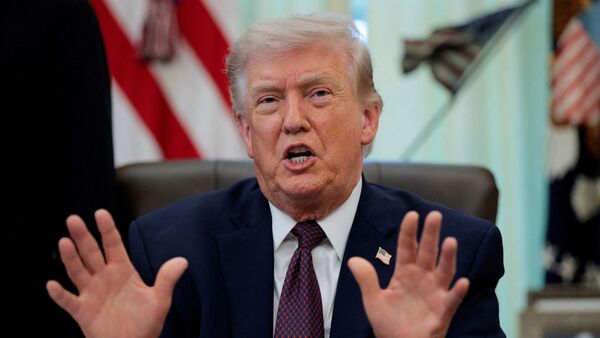
US President on Thursday (local time) announced that Washington will send an additional 5,000 troops to Poland following the elections.
In a Truth Social post, he wrote, “Based on the successful election of the now President of Poland, Karol Nawrocki, whom I was proud to endorse, and our relationship with him, I am pleased to announce that the United States will be sending an additional 5,000 troops to Poland.”
The announcement by the came two days after Vice President JD Vance told reporters that a troop deployment to Poland had been delayed, Reuters reported.
The recent development reverses an earlier plan to suspend an Army deployment to the allied country, Bloomberg reported. , who was elected president last year and is seen as a Trump ally, was reportedly caught off guard by the decision to reduce the US troop presence in Poland.
US cuts troop deployment in Europe
Last week, the US Pentagon suspended a rotational deployment of an armored brigade to Warsaw and later announced that it would permanently cut 4,000 soldiers from Europe as part of a broader review of its force posture on the continent. The plan triggered anxiety among US allies worldwide.
Washington had been reviewing its troop presence in Europe and had long been expected to scale it back following demands from Trump that the North Atlantic Treaty Organization () take a larger role in the defense of Europe.
According to the Washington Post, earlier this week, the Pentagon announced plans to pause the deployment of any additional troops to NATO ally Poland as President Trump’s administration moves forward with its “America First” agenda and pulls thousands of forces from Europe.
Trump has repeatedly urged European allies to take on more responsibility for their own defense. More recently, he has also expressed frustration over what he views as limited support from key NATO partners during the US-Israeli confrontation with .
In a statement released, the Pentagon called Poland “a model US ally” and noted that Defense Secretary had called Polish Deputy Prime Minister Kosiniak-Kamysz earlier in the day to assure him that Washington would retain a “strong military presence in Poland” despite the planned personnel reduction.
The statement further noted that the US Department of Defense “will determine the final disposition of these and other forces in Europe based on further analysis of US strategic and operational requirements, as well as our allies’ own ability to contribute forces toward Europe’s defense.”
In a separate move, last year, Trump, who has been trying unsuccessfully to negotiate a peace agreement between , ordered the withdrawal of US troops from Romania. The Pentagon also announced plans this month to remove about 5,000 service members from Germany, a move that has been widely interpreted as retaliatory after German Chancellor Friedrich Merz criticized the Iran war and said the United States had been “humiliated.”
Poland welcomes US decision that troop reduction is temporary
News agency AP on Wednesday reported that Polish officials expressed support for US statements clarifying that the decision to halt the deployment of 4,000 American troops to Poland was only temporary.
Last week, the Polish government reacted with surprise after learning that soldiers from the US Army’s 2nd Armored Brigade Combat Team, 1st Cavalry Division would no longer proceed with their planned deployment to the country bordering Ukraine.
Trump–Nawrocki meet
Trump hosted Poland’s president at the White House in May last year and backed him at a crucial moment ahead of the election in which went on to defeat the candidate of Polish Prime Minister Donald Tusk’s pro-European, centrist party.
The two met once again in September at the White House, with Trump saying at the time that the US could increase its troop presence in Poland and pledged to secure the country’s defense.
- The U.S. military strategy in Europe is undergoing significant changes under Trump’s administration.
- The decision to send more troops to Poland highlights the U.S.’s commitment to its allies amidst NATO’s evolving role.
- Political relationships influence military deployments, as seen in Trump’s support for Poland’s new president.