“Love will find a way through paths where wolves fear to prey.”
Lord Byron did not write this line for a greeting card. He wrote it for a grieving man confessing his sins to a friar. The poem is dark. The love it describes has already ended in tragedy. And yet the line about love finding a way shines through the darkness like something undefeated. It is not a comfort. It is a fact. And facts, especially uncomfortable ones, tend to last.
What It Means
The image chose is deliberate and precise. Wolves do not avoid a path because they are weak. They avoid it because the danger is too great even for them. Byron is saying that love goes where even predators will not. That is not sentiment. That is a statement about the nature of love as a force.
Love, in this reading, does not calculate risk. It does not survey the terrain for safety before it proceeds. It simply moves. It finds its way not because the path is clear but because the pull is stronger than the obstacle. Every human being who has loved someone across distance, difference, or disapproval knows this to be true. The logic does not apply. The heart does not ask for permission. It navigates.
There is also something important in the word “find.” Byron does not say love blazes a trail. It does not clear the path or eliminate the danger. It finds a way through what already exists. The wolves are still there. The darkness is still there.
Love simply moves through it anyway. This is a crucial distinction. The quote is not promising that love will make life easy. It is promising that love will make life possible.
Where It Comes From
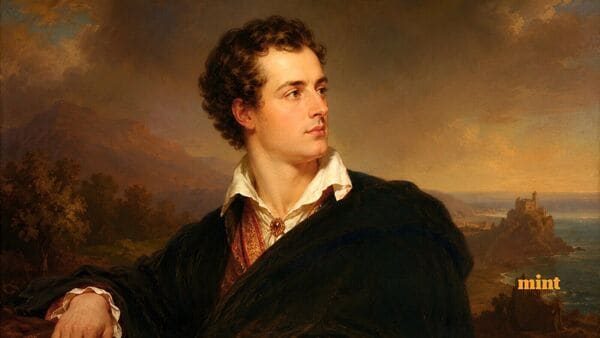
George Gordon Byron, 6th Baron Byron, was born on 22 January 1788. He was a British poet and peer and is regarded as one of the major figures of the Romantic movement, counted among the greatest of British poets.
He was a great traveler across Europe, spending many years in Italy and much time in Greece. With his aristocratic indulgences, flamboyant style, his debts, and a string of lovers, he was the constant talk of society.
The line comes from The Giaour, a narrative poem Byron published in 1813. The full original lines read: “I loved her — love will find its way / Through paths where wolves would fear to prey.”
The speaker is a man confessing to a friar. He has loved a woman, and that love has brought ruin. He is not celebrating love. He is bearing witness to its power. The quote is born from grief, not romance. That origin matters enormously.
The Giaour was one of Byron’s early Oriental Tales, a series of narrative poems set in the Eastern Mediterranean. Byron was fascinated by the region. In 1823, he joined the Greeks in their war of independence against the Ottoman Empire, helping both to fund the war and to advise on its conduct.
He did not merely write about courage. He practiced it. He died on 19 April 1824, after contracting a cold which, on the advice of his doctors, was treated with blood-letting. He was thirty-six years old.
The man who wrote about love finding its way through danger died trying to do exactly that — finding his way toward something he believed in, at great personal cost.
How to Apply It Today
Takeaway 1: Think of the love in your life that you have been treating as too dangerous to pursue fully. A friendship you have let grow distant because the honesty required feels risky. A relationship you have held back in because vulnerability feels like exposure. A creative passion you have kept private because judgment feels like a predator. Byron’s line is a challenge. It asks whether you are letting the wolves stop you from moving at all. . But you have to take the first step into the dark path.
Takeaway 2: Notice where fear is masquerading as practicality. The wolves in Byron’s image represent every reasonable, logical reason not to go somewhere. They are real dangers. The point is not that the dangers are imaginary. The point is that love has a different relationship with danger than logic does.
When you find yourself making a sensible case for avoiding something that your deeper self is drawn toward, ask whether you are being practical or whether you are simply being a wolf, standing at the edge of the path, unwilling to go in.
Takeaway 3: Apply this to the people in your life who love you through difficulty. Someone who stays present through your worst periods is doing exactly what Byron describes. They are not taking the safe path. They are moving through territory that others have abandoned. Acknowledge that. Name it. Gratitude offered specifically and directly does far more than gratitude held silently.
Related Readings
The Giaour by Lord Byron
This is the source of the quote and its fullest original context. The poem places the line inside a confession of doomed love. Reading it shows how much weight Byron packed into those two lines.
Don Juan by Lord Byron
This is Byron’s longest and most celebrated work. It is also his most searching exploration of love — its comedy, its devastation, and its refusal to behave. The quote from The Giaour finds its broadest canvas here.
Wuthering Heights by Emily Brontë
This is the novel that takes Byron’s idea to its darkest extreme. Heathcliff and Catherine love across every boundary: class, cruelty, and death itself. The path their love takes is precisely the kind wolves avoid.
The Prophet by
Gibran’s chapter on love is the most precise poetic companion to Byron’s line. He writes that love will both crown and crucify you. That is the same truth Byron tells: love moves through danger because danger is simply part of where love goes.