US intelligence assessments suggest that Iran’s estimated timeline to develop a nuclear weapon has remained unchanged despite months of conflict and targeted strikes aimed at its nuclear infrastructure, according to a Reuters report citing multiple sources familiar with classified evaluations.
The findings indicate that Tehran would still require roughly the same time as previously assessed to produce a nuclear weapon, raising questions about the overall effectiveness of recent military actions in slowing its .
Breakout timeline holds at up to a year
Intelligence agencies had earlier estimated that under certain conditions.
However, after a series of US and Israeli strikes on nuclear facilities, that timeline was revised to approximately nine months to a year.
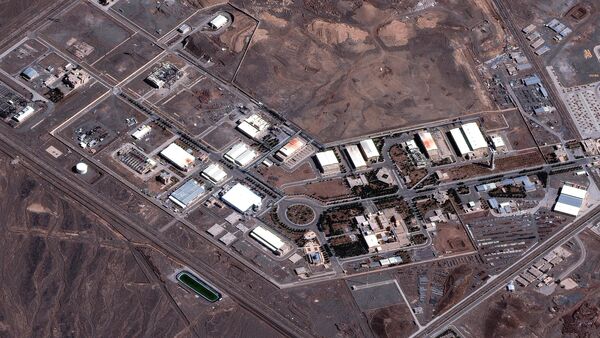
“Following the June strikes by the U.S. that hit the Natanz, and Isfahan nuclear complexes, U.S. intelligence estimates pushed that timeline back to about nine months to a year,” sources told Reuters.
The current assessments suggest no further significant delay has been achieved since then.
Impact of military strikes under review
The unchanged timeline comes despite a sustained military campaign targeting , launched under US President Donald Trump as part of broader efforts to prevent nuclear weapons development.
Officials acknowledge that while key facilities were damaged, Iran’s core stockpile of highly enriched uranium (HEU) remains a critical concern.
“The assessments of Tehran’s nuclear program remain broadly unchanged even after two months of a war that U.S. President Donald Trump launched in part to stop the Islamic Republic from developing a nuclear bomb,” the report noted.
Stockpile of enriched uranium remains key concern
The (IAEA) estimates that Iran possesses enough HEU to potentially produce multiple nuclear weapons if further enriched.
However, the exact location of a significant portion of this material remains uncertain following the suspension of inspections.
“It believes that about half was stored in an underground tunnel complex at the Isfahan Nuclear Research Center, but it has been unable to confirm that since inspections were suspended,” the report said.
US’ goal of preventing nuclear weapon
US Defense Secretary reiterated Washington’s position that Iran must not be allowed to acquire nuclear weapons.
“U.S. intelligence agencies had concluded prior to June’s 12-day war that Iran likely could produce enough bomb-grade uranium for a weapon and build a bomb in around three to six months,” sources said.
Secretary of State has also argued that strikes on Iranian air defenses reduce the likelihood of rapid weaponisation.
Iran denies nuclear weapons ambition
Iran continues to deny that it is seeking nuclear weapons, maintaining that its program is for civilian purposes. US intelligence agencies and the IAEA say Tehran halted an organised weapons program in 2003, though concerns remain about residual capabilities.
The unchanged timeline highlights ongoing uncertainty over whether military strikes alone can significantly delay Iran’s nuclear ambitions without targeting its remaining enriched uranium stockpiles.