The stress on the Indian economy is beginning to show up in data. The wholesale price index (WPI) for April, at 8.3% over the past year, has seen a sharp jump over the March number, which stood at 3.88%. Fuel inflation, no surprises, is the harshest, up almost 25%.
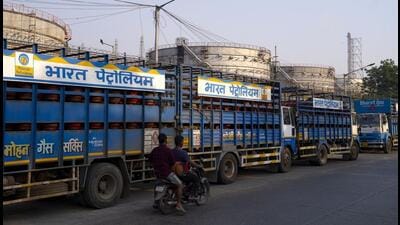
Also visible is the pressure on the government finances, as the consumer price index (CPI) for April was less than half this number at 3.48%, up marginally from March at 3.40%. While it might be incorrect to directly compare WPI and CPI data, the fact that the government has absorbed higher fuel prices till now is beginning to show up in the sharp increase in the gap between the two numbers.
Oil companies are losing ₹1,000 crore a day, said petroleum and natural gas minister Hardeep Singh Puri earlier this month. It is only a matter of time before the higher fuel costs are passed on and begin to affect households. The silver lining is that food prices are still benign at 2.31% in the WPI and at 4.20% in the CPI. But these will get impacted due to the double shock of a weaker monsoon and the potential fertiliser shock.
The 2020s are becoming a brutal decade. Whereas the world has always been in some crisis or another, the scale, frequency, and brutality of events since 2020 are probably unprecedented. We’re just not catching a break. The Indian economy entered the decade with a gym bod with its macro numbers in place, shoes on, and raring to breach the 8% GDP number. But a war we did not start and that goes on longer than was estimated points to tougher days ahead for us as employees, borrowers, consumers, and investors.
The question everybody is asking is: What’s the worst we are looking at? Things will get worse before they get better as the crisis prolongs. We should brace for pain ahead: Higher prices, lower growth, and higher borrowing costs.
In the near term, it will mean higher fuel prices because, at some point, the government will have to transfer the price rise to the public — this is already evident in the divergence between the WPI and CPI. Till now, the price at the pump has remained steady, but not for much longer.
The Prime Minister has already prepared the country for the coming price shock.
But a fuel price hike is not an isolated event; it has a ripple effect on the economy, raising overall prices. Costs of transportation go up and all these get built into the prices we pay at the point of sale. How bad is bad? At its worst, runaway inflation is a downward spiral. As prices rise, consumers begin to cut consumption or savings or both. If demand falls sharply, that is a signal for production cuts, which lead to wage cuts that further cause demand cuts, and so it goes.
It is unlikely that the story derails in this manner for India. The Reserve Bank of India (RBI) has been an inflation-targeting central bank since 2016, with a target of 4% in a plus-minus band of 2. What helps the country is that we entered this war with sub-target levels of inflation, giving RBI plenty of room to hold rate hikes till now. But going forward, expect the rate cut cycle to reverse and see both interest rates and costs of borrowing to go up. There are enough policy tools, both fiscal and monetary, to prevent a collapse. Remember that a few percentage points shaved on growth is not a recession or an economic collapse—beware the merchants of doom.
But the story for a middle-class household might not end with just a price rise, because along with the price rise comes the supply shock, something that we are not used to anymore. Those who grew up in the 2000s will have no memory of shortages of any kind, unless it is an Apple phone, for which you might have lined up overnight. But basic goods shortages have disappeared from our memory. These might resurface in pockets, and we need to be prepared in terms of both prudence and patience.
This is a time to be sensible about our finances. Delay non-essential foreign travel. Repurpose old family jewellery for weddings. Switch to induction cookers from LPG. Find domestic locations for weddings and other occasions like reunions, birthdays, and other events.
Nothing changes for our investments, except ensuring that we have liquid funds available and we are not depending on the equity markets for our near-term needs. The time for risky gambles is clearly over, whether it was in futures and options or in cryptocurrencies.
While we belt up for the next few months, we must not lose focus on the fact that the Indian State performs the best with a gun to its head. As the crisis prolongs, the need for deeper reform in politically sensitive areas will become even more pressing. The optimist in me thinks that history could well look back at the 2020s as the big decade of shotgun reform.
Monika Halan is the best-selling author of the Let’s Talk series of books on money. The views expressed are personal