The ongoing post-mortem of the Bengal election results has brought out two key factors that played a decisive role — Hindu consolidation and anti-incumbency. While these factors certainly swung the electoral outcome in favour of the BJP, a closer examination of their underlying dynamics reveals several significant insights.
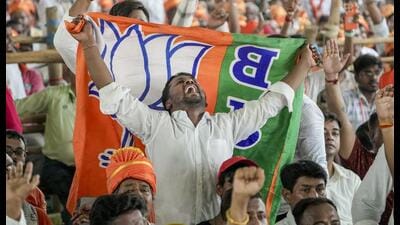
First, the consolidation of Hindu voters behind the BJP did not emerge in a political vacuum; rather, it gradually evolved within a broader social-political context mediated by what can be called the “politics of memory”. Politics of memory, as unleashed by the BJP, draws upon the historical memory of Partition- related violence and displacement in order to allude to the possibility of a repeat of similar events due to perceived demographic transformation and Muslim appeasement. The BJP’s campaign that West Bengal is on the cusp of becoming West Bangladesh exemplifies this “politics of memory”, reflecting a tendency to see the present through the prism of anxieties inherited from the past.
An important aspect often overlooked in analyses of contemporary Bengal is that the state is a product of India’s messy and turbulent partition in 1947 and continues to grapple with its enduring trauma, as well as its more tangible consequences such as continuing inflow of distress migration. In an average Bengali family with past roots in East Pakistan (now Bangladesh), experiences of dislocation and stories about Partition violence percolate from one generation to the next with such organic seamlessness that the process of transmission often goes unnoticed. Therefore, since the birth of West Bengal there has always been a lurking possibility that such accumulated memories can be revived and reshaped through political interventions for the sake of negotiating identity and shaping political consciousness.
In recent years, what prepared the ground for such politics of memory was Mamata Banerjee’s assertive Muslim outreach, through highly visible engagement with sections of the Muslim clergy and community leadership as well as participation in religious events — sometimes accompanied by symbolic gestures such as wearing a hijab. At the same time, as the BJP attempted to frame the Special Intensive Revision of the electoral rolls in the state as an initiative to identify undocumented Bangladeshi migrants and the TMC vehemently opposed it, apprehension about the TMC government’s perceived apathy toward the issue of illegal migration from Bangladesh became more pronounced in the minds of public.
These concerns were further amplified by reports of violence against Hindus in Bangladesh following the collapse of Sheikh Hasina’s government. More importantly, the perceived rise in anti-Hindu sentiment in Bangladesh, along with the BJP’s high-voltage campaign against atrocities against Bangladesh’s Hindus, appears to have had a major impact on the electoral behaviour of Hindu refugee communities from Bangladesh, particularly the numerically significant lower-caste Matua-Namasudras, many of whom still have friends and relatives across the border. In keeping with the template of politics of memory, over the last few years, the BJP has been mobilising them not as a lower-caste group, but as a religiously persecuted group of Hindu refugees. By reawakening their collective memory of religious persecution in East Pakistan/Bangladesh and by amplifying the association between Hindu identity and a shared sense of victimhood, the politics of memory has presented a powerful stimulus to the development of ideological proclivity towards Hindutva among the Matua-Namasudra community.
Although there is clear evidence of Hindu consolidation, it would be overly simplistic to assume that all Hindu voters cast their ballots purely along religious lines, especially given the strong and visible anti-incumbency sentiment. The anti-incumbency against the TMC government was not merely a routine expression of fatigue or dissatisfaction. Rather, it represented a rebellion-like rejection of an entrenched, autocratic mode of governance, best described by the Bengali term “Dadagiri” — a system of everyday coercion and intimidation. This system worked at cross purposes with the very idea of rule of law and was run by a network of local strongmen (dadas) spread across the state with defined turfs.
It was simultaneously repressive and extractive in character. Repression operated to silence dissent and intimidate political opponents through threats, violence and fake cases. At the same time, financial extraction took place through mechanisms such as “cut money”, control over contracts via “syndicates”, and networks of extortion and bribery that facilitated various illegal and corrupt practices. Against this backdrop of repression, incidents such as the RG Kar rape-murder, Sandeshkhali, the teachers’ recruitment scams, and several corruption allegations cannot be viewed merely as isolated instances of administrative lapses or misconduct. Rather, they are better understood as outcomes of a broader political environment in which the rule of law was undermined by collusion between the state authorities and extra-legal actors such as local strongmen.
In view of strong currents of anti-incumbency, it would be misleading to assume a neat correlation between Hindu consolidation and religious polarisation. In all probability, individuals and groups under the spell of the politics of memory did vote primarily as Hindus. A similar pattern of apparent alignment between Hindu consolidation and religious polarisation could also be observed in areas dominated by Muslim local strongmen, such as Jahangir Khan in Falta or Shahjahan Sheikh in Sandeshkhali, but this does not hold uniformly across all contexts. It is also important to note that in Muslim-majority districts such as Malda and Murshidabad, Muslim votes got fragmented between the TMC and other non-BJP parties.
The Bengal poll results call for revisiting the established postulates about its politics and re-examination of several assumptions about electoral behaviour. While the wider story looks relatively straightforward, it has several plots and subplots that need careful unpacking.
Ayan Guha is a British Academy International fellow, School of Global Studies, University of Sussex. He is the author of The Curious Trajectory of Caste in West Bengal Politics: Chronicling Continuity and Change. The views expressed are personal