Every year, antibiotic resistance — the failure of antibiotics to treat bacterial infections — kills more people in India than in any other country. According to the World Health Organization (WHO) and the University of Washington, drug-resistant infections were directly responsible for 267,000 deaths in India in 2021, and were associated with nearly a million more. Failing antibiotics are a catastrophe unfolding in hospital wards from Vellore to Varanasi, and one that will worsen considerably if India does not change course.
The standard response to antimicrobial resistance (AMR) focuses on restricting antibiotic use, including better prescribing practices, tighter pharmacy regulations, and reduced over-the-counter sales. All of that is necessary, particularly in India’s cities, where antibiotics are dispensed with alarming frequency for viral fevers, coughs, and diarrhoea that will most likely resolve on their own. In rural India, the problem runs the other direction: People who genuinely need antibiotics often cannot access or afford them. Antibiotics overuse accelerates the selection of resistant strains, while underuse leads to incomplete treatment and avoidable death and suffering.
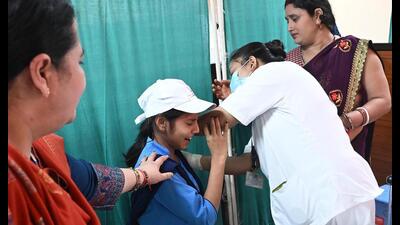
But, there is a third strategy to tackle antibiotic resistance — vaccination. If you prevent the infection, you never need the antibiotic. And if you never prescribe the antibiotic, you never create the selection pressure that turns a treatable bacterium into an untreatable one. A report released this week in New Delhi by the Global Antibiotic Resistance Partnership (GARP), in collaboration with Christian Medical College Vellore and a national working group of infectious disease specialists, microbiologists, and public health experts clarifies this opportunity. The WHO estimates that optimal use of vaccines against priority bacterial pathogens could avert up to 2.5 billion defined daily doses of antibiotics annually, which accounts for nearly 22% of global antibiotic consumption. India, as the country bearing the largest share of the global AMR burden, stands to gain the most from this focus on vaccination to tackle drug resistance, but has also done the least to capture it.
India’s vaccination story over the last decade has been one of genuine achievement, followed by frustrating stagnation. Mission Indradhanush, launched in December 2014 with a target of reaching 90% full immunisation coverage through systematic catch-up campaigns, raised full immunisation coverage from 62% in 2015-16 to 76% by 2019-21. However, there are large and persistent state-level challenges. Vaccination coverage is below 60% in several northeastern states and nationally, the gains have been largely confined to childhood vaccines. Child survival was the primary motivation for India’s immunisation program but now India must expand its vision to address drug-resistant infections, which requires vaccinating not just children, but adults also.
Consider typhoid. Active surveillance between 2017 and 2020 found typhoid incidence of up to 1,173 cases per 100,000 child-years in Vellore, 714 in Kolkata, and 576 in Delhi. The disease is now acquiring resistance at a pace that should alarm clinicians and policymakers alike: Carbapenem-resistant Salmonella typhi strains have already been detected in India, and are no longer responsive to carbapenems, a drug that is already unaffordable to many patients who need them. We have limited options to fall back on.
But India has four licensed typhoid conjugate vaccines (TCVs), three of them WHO-prequalified, manufactured domestically by Bharat Biotech, Biological E, and Zydus Lifesciences. The delivery cost in Navi Mumbai was estimated at under 55 US cents per dose. The vaccine works and provides approximately 85% direct protection against blood culture-confirmed typhoid in children. This vaccine can be scaled up for high-risk populations immediately. Pakistan, Nepal, Zimbabwe, and Burkina Faso have all integrated TCV, a remarkable tool to address drug-resistant typhoid, into their national immunization programs. Unfortunately, India has yet to do so, despite a recommendation for rollout by the National Technical Advisory Group on Immunisation back in 2022.
A similar situation prevails in the case of pneumococcal pneumonia. India introduced the pneumococcal conjugate vaccine (PCV) into childhood immunisation in 2017, late by global standards. As a result of this introduction, child deaths from pneumonia fell. Meanwhile, pneumonia is increasingly a cause of death in older adults — deaths in the 50–69 age group rose 33% and those over 70 by 55% between 2000 and 2019. Yet, there is still no routine public-sector provision of this vaccine for adults. A study by the One Health Trust showed a measurable decline in antibiotic consumption three to four years after PCV introduction in the private sector. Expanding that effect to the public sector, particularly for adults over 65 and high-risk populations, would translate directly into reduced antibiotic demand and resistance.
Vaccination against seasonal influenza also needs a closer look. A 2023 study found that influenza vaccination reduces the proportion of people receiving antibiotics by roughly 37%. In India, where laboratory confirmation of influenza is rarely available at the point of care, most patients with influenza-like illness receive empirical antibiotics as a matter of course. Annual influenza vaccination of high-risk groups including elderly adults, pregnant women, and health care workers would intercept millions of unnecessary antibiotic prescriptions each year.
We are running out of effective antibiotics. Every treatment course prescribed for a preventable infection is one more step toward a world where antibiotics stop working. India’s path back from that edge runs directly through vaccines. India can deploy its existing manufacturing base, cold chain infrastructure, and immunisation workforce to tackle this challenge, but only if there is political will to treat vaccination not merely as a child health program, but as a core national strategy to tackle antibiotic resistance.
Ramanan Laxminarayan is president, One Health Trust. The views expressed are personal