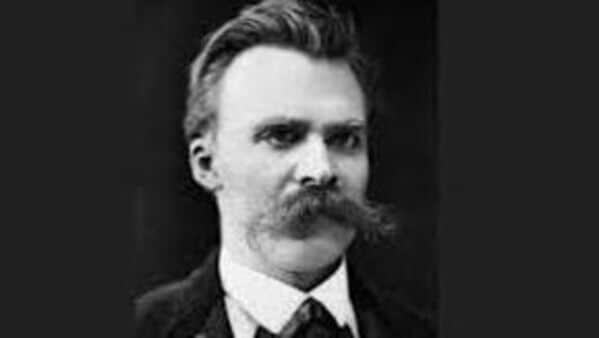
Quote of the Day: “The higher we soar the smaller we appear to those who cannot fly” — Friedrich Nietzsche
Nietzsche’s reminds us that rising in life often changes how we are seen by others. The higher we grow, intellectually, emotionally, or professionally, the more likely we are to be misunderstood by those who have not experienced the same journey. However, this should not discourage ambition or self-growth.
Instead, it encourages confidence in one’s path. True success is not always measured by immediate recognition but by the ability to rise beyond limitations and see life from a wider perspective.
What does Friedrich Nietzsche’ quote mean?
This quote reflects a deep idea about perspective, achievement, and human judgment. On the surface, it uses the image of flying to describe personal growth and success. “Soaring higher” represents rising above limitations, whether intellectual, emotional, or social. It suggests progress, ambition, and the ability to see life from a broader and clearer viewpoint.
However, Nietzsche also highlights an important irony. As a person rises higher in life, they may appear “smaller” or less significant to those who are unable to reach or understand that level. This does not mean the successful person has diminished in value. Instead, it reflects the limited vision of the observer. Those who “cannot fly” are grounded in a narrower perspective, so they may misinterpret or undervalue achievements that lie beyond their experience.
The quote also speaks to misunderstanding and judgment. People often evaluate others based on their own position in life. When someone rises beyond common expectations, through talent, intellect, creativity, or independence, they may be misunderstood, criticized, or even resented. Nietzsche points out that this is not unusual; it is a natural result of differing viewpoints.
At a deeper level, the message encourages self-awareness and resilience. It reminds individuals that growth can sometimes create distance from others, but that should not discourage progress. True advancement often comes with solitude, resistance, or lack of recognition. Yet, that does not reduce its worth.
Nietzsche is suggesting that greatness is not always immediately recognised by everyone. Instead, it may only be understood by those who have also “flown” or expanded their perspective. The quote encourages people to continue striving upward, even if their journey is not fully appreciated by everyone around them.
Who was Friedrich Nietzsche?
and writer Friedrich Nietzsche was a thinker born in 1844 who became one of the most influential figures in modern philosophy. His work challenged traditional beliefs about morality, religion, and society, and he is known for his bold, often controversial ideas.
Nietzsche believed that individuals should create their own values rather than simply follow established norms. One of his most famous ideas is the concept of the “Übermensch” or “overman,” which represents a person who rises above conventional morality to create their own path and meaning in life.
He also introduced the idea of the “will to power,” which suggests that a fundamental driving force in humans is the desire to grow, overcome challenges, and assert strength and creativity. Another well-known statement associated with him is “God is dead,” which reflects his view on the declining influence of religion in shaping modern life and thought.
Nietzsche wrote several important philosophical works, including Thus Spoke Zarathustra, Beyond Good and Evil. His writing style was often poetic, symbolic, and thought-provoking, making his ideas both powerful and widely debated.
Although he suffered from illness later in life and died in 1900, Nietzsche’s influence has continued to grow. His ideas have shaped fields such as philosophy, psychology, literature, and even modern cultural studies. Thinkers like him are still studied today for their insights into human nature, individuality, and personal freedom.