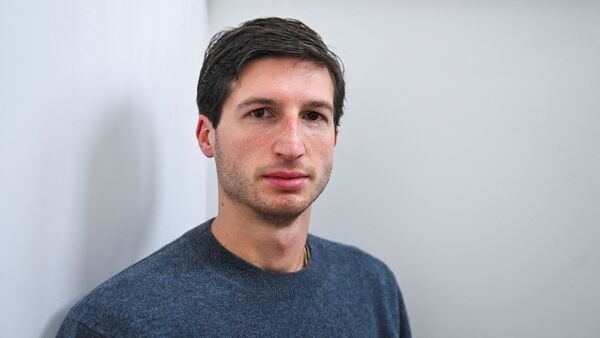
Pakistan’s former Prime Minister Imran Khan’s son Sulaiman said on Friday that the state is “whitewashing” its image on the world stage in its role as an intermediary in ceasefire negotiations between Iran and the United States.
In an interview with Channel4news, he said, “…partially I think it’s an attempt to whitewash their image on the world stage, and they are doing a good job, to distract from the human rights abuses and the insults to the democracy that they have been continuing for the last few days.”
Pakistan has emerged as a key mediator between the US and Iran, consolidating its position on the international stage at a time when it itself struggles with a spiralling economy and conflict with neighbouring Afghanistan, among other issues.
The US and Iran had held first round of peace talks in Islamabad, which ended without any outcome. The talks were mediated by and A second round of talks are now awaited, with the US and Iran sending mixed signals on negotiations.
Earlier in April this year, Sulaiman told ITV that his father, Imran Khan, cared about his country and for peace in the Middle East so much that he prioritised the peace talks in Islamabad over his own situation. “He decided to call off a protest that his party was going to hold during the peace talks…,” he said.
The sons of Pakistan’s jailed former Prime Minister have accused the country’s government of using the Iran peace talks to burnish its international image, diverting attention from his “inhumane” treatment after almost 1,000 days in detention, ITV News reported in April.
Sulaiman was quoted as saying, “I think the Pakistani regime are doing their best to clean up their image on the international stage. It does seem like it’s working at the moment. They presented themselves as kind of peace brokers.”
Imran Khan, the former World Cup-winning cricket captain of Pakistan, turned politician, was imprisoned in August 2023 and has faced 100 charges, ITV reported. He is being detained in solitary confinement.
Khan denies all charges against him, claiming they are politically motivated. He is made to spend up to 23 hours a day in his prison cell, his family say, and is granted only occasional phone calls with family members.
Amnesty flags sharp decline in civil liberties in Pakistan
A recent report by Amnesty International raised serious concerns about the decline of civil liberties in Pakistan, according to a report by Dawn.
The rights group warned that the global human rights situation is entering one of its most difficult phases, with freedoms increasingly under threat. Dawn noted how the situation in Pakistan reflects this broader trend.
The report highlighted that recent changes to cyber laws, anti-terror legislation, and regulations governing online speech have significantly restricted freedom of expression and peaceful protest.
Dawn noted that these legal shifts resulted in the detention of journalists, activists, and political opponents. Amnesty also flagged the 27th Amendment, stating that it weakens judicial independence while granting extensive immunity to top state and military leadership, as cited by Dawn.
As mentioned in the report, the issue of enforced disappearances remains unresolved.
It also highlighted that the crackdown on the political opposition, particularly the Pakistan Tehreek-e-Insaf, has intensified. Over 100 party members were convicted in connection with the May 9, 2023 unrest.
Among those affected, party founder Imran Khan continues to face imprisonment under what Amnesty described as politically driven charges.
The report also shed light on rising violence against women, noting a significant increase in reported cases. Journalists and human rights defenders have been increasingly targeted under the Pakistan Electronic Crimes Act, with some facing travel bans and criminal charges over online activity. Activists such as Imaan Mazari were also charged for social media posts, raising concerns about due process.
(With inputs from ANI)