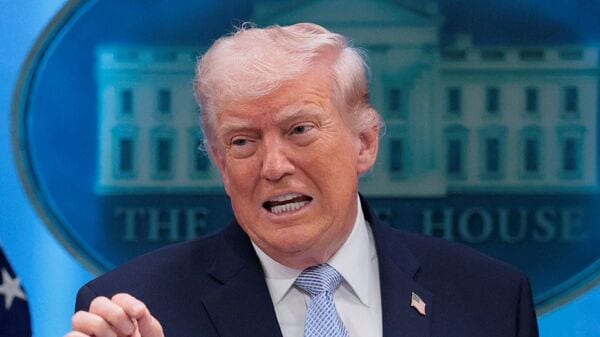
US President Donald Trump has said he is under no pressure to end the ongoing conflict with Iran, while warning that Tehran is running out of time to reach a deal, in a strongly worded post on Truth Social.
Responding to media coverage suggesting urgency in ending the conflict, Trump rejected the idea that he is seeking a quick resolution.
“I am possibly the least pressured person ever to ‘anxious’ to end the War. I have all the time in the World, but Iran doesn’t — The clock is ticking!”
He also criticised US media outlets, claiming they misrepresent his position on negotiations.
Claims of Iranian military collapse
Trump made assertions about Iran’s military capabilities, saying its defence structure had been severely degraded.
“Iran’s Navy is lying at the bottom of the Sea, their Air Force is demolished, their Anti Aircraft and Radar Weaponry is gone, their leaders are no longer with us…”
He also said Iran was under heavy pressure.
“The Blockade is airtight and strong and, from there, it only gets worse — Time is not on their side!”
Deal conditions tied to US interests
Reiterating his stance on negotiations, Trump said any agreement would depend entirely on US and allied interests.
“A Deal will only be made when it’s appropriate and good for the United States of America, our Allies and, in fact, the rest of the World.”
Peace talks stall and maritime tensions escalate
Prospective peace talks in Pakistan remain uncertain as diplomatic efforts to de-escalate tensions between the United States and Iran show no clear progress, even as confrontation intensifies around the Strait of Hormuz.
Diplomatic discussions reportedly planned in Islamabad are now in doubt, with no confirmed movement toward renewed negotiations aimed at resolving the widening crisis.
Hormuz becomes central flashpoint
The situation continues to revolve around the Strait of Hormuz, a critical global energy corridor through which roughly one-fifth of global oil and liquefied natural gas exports typically pass.
Since the ceasefire extension announced by US President Donald Trump, Washington and Tehran have increasingly focused on control and access to the waterway, which Iran has partially restricted amid the ongoing standoff.
Trump orders lethal force against mine-laying boats
Trump has escalated rhetoric on maritime security, ordering US naval forces to take lethal action against Iranian vessels suspected of laying mines in the strait.
“I ordered the United States Navy to shoot and kill any boat, small boats though they may be… that is putting mines in the waters of the Strait of Hormuz,” Trump said in a statement, underscoring a more aggressive posture.
Israel signals readiness for further escalation
Israeli Defence Minister Israel Katz said Israel is awaiting approval from the United States for potential further military action.
“We are awaiting a green light from the United States — first and foremost to complete the elimination of the Khamenei dynasty,” Katz said, adding that Israel’s broader aim includes “returning Iran to the Dark Age and the Stone Age.”
Iran maintains hardline stance on Hormuz
Iran has vowed to maintain restrictions on the Strait of Hormuz, allowing only limited approved shipping as long as US naval pressure and port blockades continue. Tehran has rejected demands from Washington to reopen the waterway or abandon its nuclear-related positions.
US tightens maritime enforcement
In response, the United States has intensified maritime operations, including the boarding of the sanctioned vessel M/T Majestic X in the Indian Ocean, which Washington says was transporting Iranian oil.
The US Central Command said its forces have “redirected 33 vessels since the start of the blockade against Iran,” highlighting the scale of ongoing enforcement actions at sea.
Limited signs of diplomatic breakthrough
While Trump told the New York Post that talks could resume in Pakistan within days, no official confirmation has been issued by any participating side. With no delegations publicly headed to Islamabad, the prospects for near-term negotiations remain unclear.