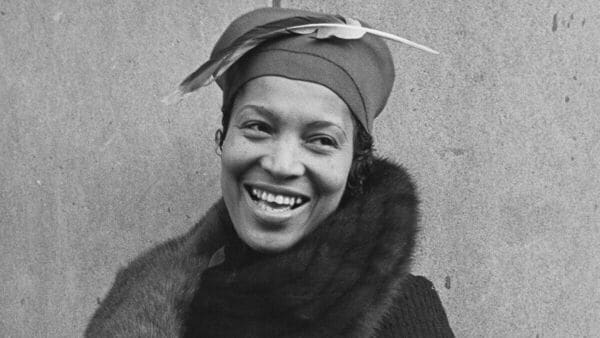
Few literary quotations capture the rhythms of human experience as succinctly as Zora Neale Hurston’s famous line: “There are years that ask questions and years that answer.”
Drawn from Hurston’s acclaimed novel Their Eyes Were Watching God, the quote has endured for decades because of its ability to articulate a familiar to people across generations: life does not always provide immediate explanations for its challenges, setbacks or transformations.
What does this quote mean
“There are years that ask questions and years that answer.”
The quote reflects Hurston’s remarkable ability to distil complex emotions into language that feels both accessible and profound. At its core, the line recognises that life unfolds in stages. Some periods are marked by uncertainty, confusion and searching, while others bring perspective, and resolution.
For many readers, the quotation resonates because it acknowledges discomfort without offering simplistic reassurance. Rather than promising quick solutions, Hurston suggests that answers often emerge gradually through experience, reflection and the passage of time.
Why the quote remains relevant today
In an era shaped by rapid change, economic uncertainty, transitions and personal upheaval, Hurston’s words continue to strike a chord.
Many people encounter years defined by difficult questions: why a relationship ended, why professional ambitions stalled, why plans changed unexpectedly or why hardship arrived without warning. Such periods can feel unsettled and directionless.
Hurston’s insight offers a different perspective. It suggests that uncertainty itself may have value and that not every challenge is meant to be understood immediately. Some experiences require time before their significance becomes apparent.
In that sense, the quote serves as a reminder that confusion does not necessarily signal . Instead, it may be part of a larger process of growth and self-discovery.
Lessons in patience and understanding
The enduring appeal of Hurston’s observation lies in the practical lessons it offers.
One lesson is that meaningful answers often arrive slowly. Not every question can be resolved in the moment, and some truths become visible only after distance and reflection.
The quote also highlights the role of uncertainty as a teacher. Difficult periods frequently compel people to reassess their , values, fears and aspirations. What initially feels like disruption may later be recognised as a turning point.
Equally significant is the idea that questions themselves can prepare individuals for future . The challenges faced during uncertain seasons often shape the wisdom gained in more settled times.
The writer behind the words
Hurston was an influential American novelist, folklorist and anthropologist, and one of the leading voices of the Harlem Renaissance. Her body of work explored themes of identity, community, , love and self-determination, often centring Black Southern life with exceptional depth and authenticity.
Among her most celebrated works are Their Eyes Were Watching God, Mules and Men, Jonah’s Gourd Vine, Tell My Horse, Moses, Man of the Mountain and Dust Tracks on a Road.
Although her contributions were not fully appreciated during parts of her lifetime, Hurston is now widely regarded as one of the most important American writers of the twentieth century. Her influence continues to be felt across literature, cultural studies, folklore research and African American scholarship.
A lasting reflection on life’s seasons
The enduring power of “There are years that ask questions and years that answer” lies in its recognition that life rarely unfolds in a straight line. Some years bring achievement and certainty, while others demand patience, and introspection.
For modern readers navigating personal and professional challenges, the quote offers a simple but enduring reminder: not every season of life arrives with clarity. Some years are meant for questioning, and some for understanding. As Hurston’s words suggest, both are essential parts of the human journey.