President signed an executive order on Saturday aimed at enhancing research into psychedelic ibogaine to facilitate its use in treating PTSD among veterans and traumatic brain injuries.
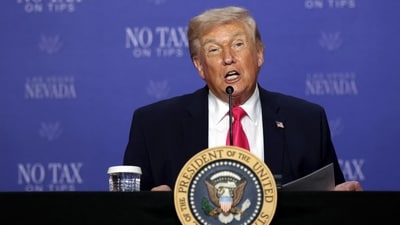
The new order from instructs the Food and Drug Administration (FDA) to take new actions regarding drug safety regulation. The agency is expected to provide updated guidance to researchers on how to structure clinical trials for substances such as psilocybin, ibogaine, and other serotonin receptor agonists. These substances, which also encompass LSD and MDMA, are known to induce hallucinogenic effects and are prohibited in the United States.
The POTUS emphasized the potential benefits of these drugs for military veterans and other people suffering from PTSD.
“I’ve always believed in ensuring that the American patients have access to breakthrough treatments and therapies with love for our veterans, and I have a real love for our veterans,” Trump stated on Saturday.
“Today’s order will ensure that people suffering from debilitating symptoms might finally have a chance to reclaim their lives and lead a happier life. They’ve been through so much.”
Also Read:
What is ibogaine?
Currently, ibogaine is categorized as a Schedule I controlled substance in the United States.
The executive order will eliminate legal barriers that have hindered comprehensive studies regarding the medicine and its mechanisms.
Initial studies suggest that the psychedelic substance ibogaine may assist in mitigating mental health challenges, such as addiction and particularly post-traumatic stress disorder experienced by veterans in the United States.
Ibogaine is a naturally occurring psychoactive alkaloid extracted from the root of Tabernanthe iboga, a shrub indigenous to Central Africa. Traditionally, it has been used in ceremonies by the Bwiti and Mbiri communities, and it has attracted interest for its potential in addressing substance use disorders, especially opioid and alcohol dependence, as per University of Virginia School of Medicine.
Hallucinogenic effects of ibogaine
Emerging research indicates that ibogaine may reduce drug-seeking behavior by alleviating cravings and withdrawal symptoms. The hallucinogenic effects of ibogaine were recently emphasized on a well-known podcast, which could enhance public awareness and lead to an increase in its exposure. Patients often report experiencing vivid hallucinations, which they describe as psychologically enlightening.
However, despite the encouraging reports, ibogaine is linked to certain risks and is currently categorized as a Schedule I substance in the United States. While research continues, the existing evidence regarding the effectiveness and risks associated with ibogaine use remains quite limited, University of Virginia School of Medicine reported.
Study on Ibogaine and military veterans
For military veterans, many of the most profound injuries sustained during war remain unseen: Traumatic brain injuries caused by head trauma or blast explosions are a primary contributor to , anxiety, depression, and suicide rates among veterans. Limited treatment options have proven effective in alleviating the long-term consequences of TBI, resulting in a sense of hopelessness for many veterans.
Researchers at Stanford Medicine have found that the plant-derived psychoactive substance ibogaine, when paired with magnesium to safeguard the heart, can safely and effectively alleviate , anxiety, and depression while enhancing the functioning of veterans suffering from TBI.
In a study published on July 24, 2025, in Nature Mental Health, Dr. Nolan Williams, an associate professor of psychiatry and behavioral sciences, along with his team, examined electroencephalography and MRI scans from a group of 30 veterans to reveal the neural mechanisms that contribute to cognitive improvements. They discovered, for instance, that veterans who exhibited enhancements in executive function following ibogaine treatment often displayed an increase in a specific type of brain wave known as theta rhythms. Additionally, they observed that veterans who experienced a reduction in PTSD symptoms post-treatment tended to show a decrease in the complexity of brain activity within the cortex.
The researchers hypothesize that enhanced theta rhythms may promote neuroplasticity and cognitive flexibility, while reduced cortical activity complexity may diminish the heightened stress response associated with PTSD. Patterns of brain activity prior to treatment could also serve as indicators to identify patients who would gain the most from ibogaine therapy.
“No other drug has ever been able to alleviate the functional and neuropsychiatric symptoms of traumatic brain injury,” Williams stated. “The results are dramatic, and we intend to study this compound further.”