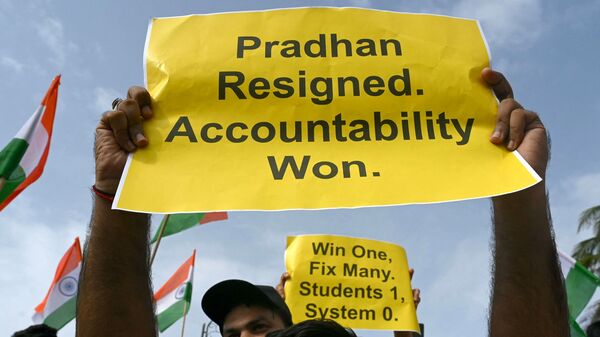
Dharmendra Pradhan’s resignation has drawn widespread international attention, with major global news organisations reporting on the political significance of the youth-led ‘Cockroach’ movement and its campaign against India’s education minister.
The resignation, announced on Saturday, came after weeks of protests led by the Cockroach Janta Party (), a youth-driven movement that began amid anger over alleged irregularities and paper leaks surrounding competitive examinations. The agitation expanded into a broader campaign focused on accountability, student welfare and the condition of India’s education system.
Quick answers to key questions
What caused Dharmendra Pradhan’s resignation as Union Education Minister?⌵
Dharmendra Pradhan resigned primarily due to widespread protests led by the Cockroach Janta Party, which centered around allegations of irregularities in competitive examinations and broader educational concerns.
Why is the Cockroach Janta Party (CJP) significant in Indian politics?⌵
The CJP is significant as it represents a youth-led movement that transformed from a satirical online campaign into a major protest force demanding accountability in the education system and government reforms.
How did protests influence Pradhan’s decision to resign?⌵
The protests, which included large-scale mobilization and public demonstrations, placed immense pressure on the government, leading Pradhan to step down in response to the demands for political accountability.
What remained unresolved after Pradhan’s resignation according to CJP leaders?⌵
CJP leaders stated that unresolved issues included demanding compensation for families of students who died by suicide and seeking action against police personnel involved in the crackdown during protests.
Should the youth-led protests focus on systemic reforms after Pradhan’s resignation?⌵
Yes, movement leaders emphasized that the focus should remain on promoting systemic reforms in the education sector and ensuring transparency in examination processes beyond the resignation of Pradhan.
How The Guardian’s covered it extensively
The international coverage reflected the significance of the development. The Guardian placed the resignation prominently among its leading stories, describing Pradhan’s departure as a major victory for the movement and reporting on the protests that had grown into a significant challenge for the government. Its coverage also traced the movement’s evolution from an online phenomenon into a mass mobilisation involving students and young people across the country.
View full Image
The newspaper had extensively followed the protests in the weeks leading up to the resignation, including the large demonstrations in Delhi and the campaign’s demand that Pradhan step down. It reported that the movement had been driven by anger over exam-related controversies, wider concerns about education and unemployment, and growing frustration among young Indians over what protesters described as a lack of accountability.
The scale and persistence of the movement were central to international coverage of Pradhan’s resignation. The Guardian described the protests as one of the most significant anti-government demonstrations in years and reported that the movement had evolved into a serious political challenge after beginning as an online joke.
View full Image
Norwegian journalist Helle Lyng posts about Pradhan’s resignation
The resignation also drew attention from international journalists and commentators following the protests. Norwegian journalist shared a post on X celebrating the development, writing: “What a historic day for the youth in India (sic).” The post was shared as celebrations followed the announcement of Pradhan’s resignation and reflected the wider international interest in the movement’s success.
The CJP movement had initially emerged as a satirical online campaign but rapidly developed into a sustained protest movement. Its central demand was the resignation of Pradhan, whom protesters held politically responsible for the broader examination crisis.
The campaign gained momentum as students and young people gathered in Delhi and other parts of the country, while the protests also drew attention to concerns over and the pressure placed on students by India’s highly competitive examination system.
A major turning point came with the participation of education activist Sonam Wangchuk, who undertook a prolonged hunger strike in support of the protesters’ demands. He was later moved to hospital by Delhi Police after concerns were raised about his health following 20 days without food. The action generated further public attention and became another flashpoint in the wider confrontation between the movement and the authorities.
The protests escalated further on 20 July, when tens of thousands of demonstrators gathered in and attempted to march towards Parliament despite police restrictions. The demonstrations were met with a security response that included the use of tear gas, while images and reports of clashes intensified scrutiny of the government’s handling of the agitation.
CNN, AP, and BBC’s coverage of the protest
The resignation was also reported by other major international news organisations, including CNN and the , underlining the extent to which the development had moved beyond India’s domestic political news cycle. Their coverage placed the announcement in the context of the prolonged protests and the growing pressure on the government over the examination controversy.
View full Image
View full Image
The development was similarly reported by international news agencies. The Associated Press described Pradhan’s resignation as a major achievement for the -led movement, while noting that the protests had grown beyond the original examination controversy to encompass broader demands for government accountability and reform.
View full Image
The resignation came after the CJP’s campaign had remained focused on Pradhan’s removal despite attempts by the government to address aspects of the wider controversy. The movement’s leaders had also demanded action relating to students who died by , the withdrawal of cases against protesters and reforms to the examination system. Reports indicated that the government and protest representatives had held talks as the pressure intensified.
For international observers, the significance of the resignation lies not only in the departure of a senior Union minister but also in the manner in which a youth-led campaign moved from digital to sustained street mobilisation and ultimately forced the government to respond to its central demand. The development has therefore been framed by international coverage as a significant moment in India’s recent protest politics.
With Pradhan’s resignation now announced and the CJP movement withdrawing its agitation following discussions with the government, attention is expected to shift towards the implementation of the wider commitments made during the negotiations and the future of the reforms demanded by the protesters.