Wendell Berry, the acclaimed American writer, farmer and environmentalist has died at 92. Berry died on Monday, August 31, 2026, at his home in Port Royal, , his daughter Mary Berry confirmed to The New York Times. A cause of death was not immediately disclosed.
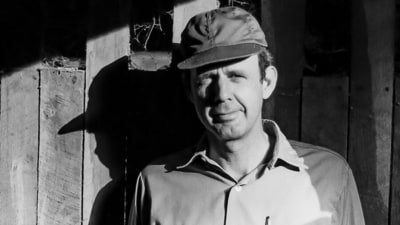
The author spent more than six decades writing poetry, fiction and essays that explored humanity’s relationship with nature. He became one of America’s strongest voices against industrial farming and environmental destruction.
Berry wrote more than 50 books during his career. His writing work also includes poetry collections, novels and cultural criticism. His 1977 book “The Unsettling of America: Culture & Agriculture” became a landmark work in the sustainable farming movement.
Also read:
A farmer who turned his land into his life’s work
Wendell Erdman Berry was born in Louisville, Kentucky, on August 5, 1934, and was raised in a farming community. His family was deeply rooted in Henry County, Kentucky, where the land was farmed for many generations.
Berry studied English at the University of Kentucky, where he also earned his master’s degree. He later studied creative writing at Stanford University under novelist and environmentalist Wallace Stegner. Berry also traveled to Italy during his search for an ideal career and then landed in New York to learn and teach at New York University. He eventually got married and had two kids.
After teaching at New York University for two years, Berry ultimately decided to return to Kentucky. In 1964, he and his wife, Tanya Amyx Berry, moved back to Henry County and began farming near the Kentucky River, where his ancestors had lived since 1803. According to his writings, Berry had often visited the house as a boy and had also spent a summer there with his wife, Tanya.
In an essay titled “The Long-Legged House,” Berry addressed his decision to move back home and wrote, “In the life we lived that summer, we represented to ourselves what we wanted — and it was not the headlong pilgrimage after money and comfort and prestige.”
They purchased Lanes Landing, a 125-acre farm nearby, and began cultivating vegetables for their own table as well as sheep, corn, and grain crops. Additionally, Berry started a 20-year teaching association with the University of Kentucky.
Alongside farming, Berry also wrote about agriculture, conservation and the importance of local communities. Berry farmed with traditional methods. He used Belgian draft horses and often rejected modern technologies he believed harmed the environment.
Berry wrote by hand, often using a pencil or pen, and avoided computers and television. He believed staying connected to the landscape helped him write honestly about rural America.
“The landscape was there to check me if I was wrong,” Berry told The New York Times in a 2018 interview. He said living among farmers and neighbours kept his writing connected to real experiences.
His work frequently criticized large-scale agriculture and corporate farming that pushed small farmers away from their land.
In his manifesto to save small farms from big business, “The Unsettling of America: Culture & Agriculture,” Berry wrote, “The concentration of farmland into larger and larger holdings and fewer and fewer hands — with the consequent increase in overhead, debt, and dependence on machines — is a matter of complex significance, and its agricultural significance cannot be disentangled from its cultural significance.”
Also read:
Poems, books and lasting influence
Berry’s fictional community of Port William, Kentucky, became the setting for many of his stories about murder, grief, and marital turmoil against the backdrop of declining rural existence.
His novels included “The Memory of Old Jack” (1974), “Jayber Crow” (2000) and “Hannah Coulter” (2004). Critics like English scholar Joan Joffe Hall praised his ability to capture the emotional ties between people and places.
Berry wrote about 30 books of collected poetry, the first of which was “The Broken Ground” (1964). In the collection is featured the poem “Sparrow” that The New York Times described as “typically economical.” The words go:
His other poetry collections include “A Timbered Choir” (1998) and “The Selected Poems of Wendell Berry.”
Throughout his career, Berry received numerous honours. In 2011, President Barack Obama awarded him the National Humanities Medal for his achievements as a poet, novelist, farmer and conservationist.
Berry continued advocating for environmental causes later in life. He participated in protests against mountaintop-removal coal mining, coal-fired power plants and the death penalty.
He is survived by his wife Tanya, daughter Mary Berry, son Pryor “Den” Berry, grandchildren and great-grandchildren.