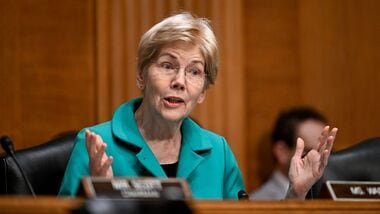
(Bloomberg) — Senator Elizabeth Warren pressed Treasury Secretary Scott Bessent to explain the Trump administration’s justification for intervening in the yen, extending the senior Democrat’s pattern of scrutinizing the Trump administration’s foreign-exchange policies.
“To date, the administration has yet to provide a detailed justification for its intervention, nor has it officially disclosed how much taxpayer-linked funds were spent purchasing yen,” wrote in the letter, dated Aug. 13.
confirmed media reports of the first US-Japan joint intervention to support the yen since 1998 in the wake of the July 31 actions, but hasn’t spelled out how much was used. He’s indicated that the operation featured use of euros from the Treasury’s Exchange Stabilization Fund, or ESF.
“intends for these authorities to be invoked judiciously to advance the national interest,” Warren said of the ESF’s use. “Please provide the administration’s legal analysis” for using the ESF, she said, asking for a response by Aug. 28.
Warren, the top Democrat on the Senate Banking Committee, also asked Bessent to outline the expected cost to US taxpayers, and “the scale and conditionality of the US financial support currently under consideration” for Japan.
Argentina, Europe
The US Treasury didn’t immediately respond to a request for comment on the Warren letter.
Bessent previously used ESF funds in the fall of 2025 to intervene in the market for , offering support for President Javier Milei in an initiative that Warren also sought to scrutinize. In her latest letter, she described that as a “politically driven, taxpayer-backed bailout.”
The Treasury chief has said the US made money on its support for Argentina but his department hasn’t released specifics of that intervention.
Warren also asked whether the Treasury consulted with the European Central Bank on the use of in the yen operation. Earlier this month, Bessent said on CNBC that he assured European officals “that it’s just a reallocation of our reserves.” The Financial Times reported that the ECB was only told after the fact.
The senator more broadly queried Bessent on how financial market turmoil in Japan could affect US jobs, wages and financial stability. Japan is the single largest foreign holder of Treasuries, and analysts have surmised that one of Bessent’s reasons for intervening was to head off sales by that might have sent US yields higher.
More stories like this are available on
©2026 Bloomberg L.P.
Disclaimer: This story has been published from a wire agency feed without modifications to the text. Only the headline has been changed.