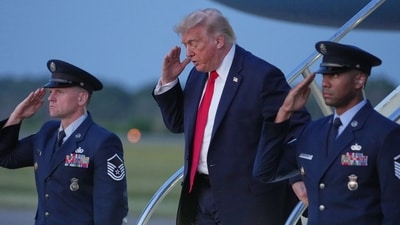
The US Navy has issued a major update to its facial hair grooming standards, tightening rules governing medical shaving waivers while reaffirming that sailors are generally expected to remain clean shaven to ensure operational readiness and compatibility with protective equipment.
The updated guidance, issued through a NAVADMIN, applies to both active-duty and reserve personnel. It introduces stricter requirements for granting and renewing medical shaving waivers, mandates regular readiness evaluations and, in some cases, could lead to administrative separation for sailors who remain unable to comply with grooming standards after prolonged treatment.
The policy does not affect religious accommodations for facial hair.
Why has the Navy updated its facial hair policy?
According to the Navy, the revised standards are intended to ensure facial hair does not interfere with the proper fit and effectiveness of protective breathing equipment, such as gas masks and respirators.
The service said maintaining uniform grooming standards is essential for personnel safety, mission readiness and equipment compatibility across all operational environments.
What is the standard grooming requirement?
Under the updated policy:
-Sailors in uniform or performing official duties in civilian clothing must remain clean shaven.
-Mustaches continue to be permitted under existing Navy regulations.
-All new applicants and reentry candidates must meet grooming standards before joining the Navy. Those who cannot comply will have their entry deferred until they meet the requirements.
Who can receive a shaving waiver?
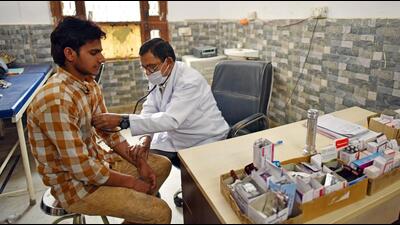
Medical shaving waivers are intended for sailors diagnosed with conditions that make daily shaving difficult, most commonly Pseudofolliculitis Barbae (PFB), also known as razor bumps.
The process involves several steps:
-A military medical provider must diagnose the condition and recommend treatment.
-The recommendation must be documented on the prescribed Navy medical form.
-Only a commanding officer (CO) has the authority to approve a medical shaving waiver.
What are the limits on facial hair?
Even with an approved waiver, facial hair cannot be grown freely.
The updated policy limits facial hair to one-quarter inch (¼ inch) in length, measured outward from the face.
Sailors with approved waivers must also carry a signed copy of the authorization whenever they are in uniform during periods when they are exempt from shaving.
How long can a shaving waiver last?
The Navy has introduced strict limits on the duration of medical accommodations.
-Each shaving waiver can be approved for up to 90 days.
-Waivers may be renewed, but the total treatment period cannot exceed 12 months.
-A maximum of four 90-day waivers may be granted within a year.
-Medical providers may prescribe shorter treatment periods based on individual cases.
If a sailor transfers to another command, both the commanding officer and the new medical provider must review the existing waiver before extending it.
Personnel reporting without valid documentation must arrive clean shaven.
What happens after 12 months?
One of the most significant changes concerns sailors whose condition persists despite treatment.
If, after 12 consecutive months of prescribed medical treatment, a sailor still cannot comply with daily shaving requirements, the Navy will conduct an evaluation to determine whether the condition is permanent.
If a Medical Evaluation Board (MEB) determines the condition is permanent and prevents compliance with grooming standards, the sailor may be considered for administrative separation, unless referred to the Disability Evaluation System.
To initiate administrative separation, commands must document:
-That the sailor acknowledged the possibility of separation if unable to meet grooming standards.
-Completion of 12 months of medical treatment.
-Continued inability to shave without a medical accommodation.
-An MEB determination that the condition is permanent and unmanageable.
However, the Navy said administrative separations under the new policy will not begin until one year after the NAVADMIN’s release, allowing commands time to implement the updated procedures.
How will compliance be monitored?
The revised policy increases command oversight of sailors with medical shaving waivers.
Commands must:
-Track all personnel receiving facial hair accommodations.
-Monitor treatment progress and waiver durations.
-Ensure medical accommodations do not exceed 12 months without further evaluation.
-Maintain records of approved waivers.
Operational commands must also conduct quarterly readiness evaluations for personnel assigned to duties requiring respiratory protective equipment. These assessments will verify that affected sailors can properly wear and operate breathing masks and respirators.
What about Special Operations personnel?
The policy allows Special Operations Force units to request modified grooming standards when required for validated mission-essential needs.
However, all personnel must be clean shaven before deployment to areas facing a high risk of chemical, biological, radiological or nuclear (CBRN) threats, where a proper mask seal is critical.
Enforcement and discipline
The Navy emphasized that grooming standards are “non-negotiable” and said Chief Petty Officers play a key role in enforcing military bearing and professional conduct.
The guidance also states that willful violations of grooming standards may be treated as military justice matters.