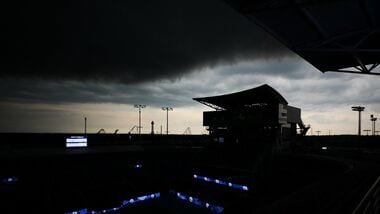
One person was killed in what is suspected to be a house explosion as severe storms blew through the on Tuesday (local time).
The person who died in Indiana passed away in Portage, which lies around 30 miles from Chicago. Firefighters were unable to reach on time due to the massive damage and debris the storm left behind, NBC reported, citing police officials.
The cause of the fire is under investigation, but officials suspect the weather may have played a role.
Police Capt Rob Maynard said in a press conference that despite having lived for 50 years, the storms he saw on Tuesday were “probably the most severe weather event that any of us here can remember.”
Fire Chief Chris Crail said, “When this call came in, everything was breaking free,” reported NBC.
Two confirmed were reported in Illinois, as per the National Weather Service – in southern Cook County and in eastern Will County.
Damage from both storms was consistent with that seen with EF-1 tornadoes, the National Weather Service (NWS) said, NBC reported.
More than half a million people in the area and northwestern Indiana were without power as thunderstorms and extreme gusts of wind pummeled the region, causing widespread damage, as per a report by the Associated Press.
According to forecasters, a wind gust of 99 mph (159 kph) was recorded in Gary, Indiana. In other areas, reports showed gusts of 80 mph (128 kph) or more.
As per preliminary information, the intense system that swept through Iowa and then went into Indiana over several hours qualifies as a ‘derecho’, according to the NWS’s Storm Prediction Center.
Derechos are prolonged straight-line winds that unleash heavy rainfalls and can travel far distances. The damage they leave behind is sometimes similar to the destruction caused by tornadoes or hurricanes.
“Total devastation. No roof,” said Kerry Hourigan to AP as she stood outside her home of 25 years in Tinley Park, another Chicago suburb. “Stupid thing, but my focus was I just bought a new barbecue grill, and I have no idea where that is. It’s disappeared,” she said.
According to meteorologist Scott Baker, the Midwest was on the outer edge of a ‘ring of fire’ that brought waves of excessive moisture, instability and storms, AP reported.
As of 4:15 PM New York time on 11 August, more than 200 flights flying either in or out of Chicago’s O’Hare International Airport were cancelled, while more than 1,000 flights were delayed, FlightAware reported. More than 140 flights at New York’s John F. Kennedy International Airport were cancelled.
(With agency inputs)