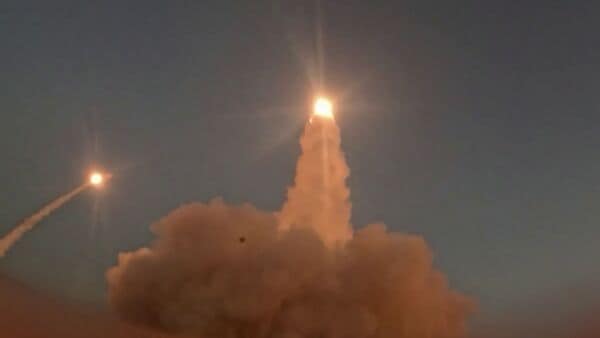
The United States has launched a fresh round of airstrikes on Iran, this time carrying out attacks during daylight hours, signalling an escalation in its military campaign as tensions over the Strait of Hormuz continue to intensify.
According to the Associated Press (AP), the s Central Command confirmed on Wednesday that the new strikes had begun, marking a shift from previous operations that were conducted only at night.
“The strikes are designed to further degrade military capabilities Iranian forces have used to attack commercial shipping in the Strait of Hormuz,” Central Command said in a statement.
The renewed attacks come as an interim agreement between Washington and Tehran has effectively collapsed. The US has also reimposed a naval blockade on Iran after accusing Tehran of attacking vessels attempting to transit the strategic waterway.
Iranian officials said one of the strikes targeted a barracks belonging to the country’s 388th Mechanised Infantry Brigade in Sistan and Baluchestan province. State television reported that at least 13 missiles struck the site, killing seven soldiers, including conscripts and career personnel, while several others were injured.
Government spokesperson Fatemeh Mohajerani said more than 30 people have been killed in recent days of . Health Ministry spokesperson Hossein Kermanpour added that over 260 people were wounded in overnight attacks alone, though he did not provide an updated death toll. The Iranian military vowed what it described as a “decisive response” to the latest American strikes.
Meanwhile, Iran continued launching missiles and drones at US allies in the Gulf. Missile alerts sounded in Bahrain and Kuwait, while Jordan said it intercepted three incoming Iranian missiles. Tehran claimed responsibility for attacks targeting all three countries, each of which hosts American military forces. US Central Command chief Admiral Brad Cooper said Iran had fired dozens of missiles and drones at neighbouring Gulf states in recent days.
US President warned that additional American strikes could follow if negotiations fail to resume. Speaking to Fox News, Trump said bridges and power infrastructure could become future targets, adding, “You better make a deal, or you’re not going to have anything left.”
Iran’s ambassador to the , Amir Saeid Iravani, condemned the US military action, saying Washington was “the aggressor, not the victim.” According to AP, the Strait of Hormuz remains the central flashpoint in the conflict. Around one-fifth of the world’s oil and natural gas trade passes through the narrow waterway during normal conditions.
Iran had effectively shut the strait after the conflict began earlier this year, disrupting global shipping and driving up oil prices. Although an interim agreement briefly allowed limited commercial movement through an alternative US-monitored route near Oman, renewed attacks on vessels have led to fresh military confrontation.
Iran’s Revolutionary Guard has warned that if the US blockade continues, energy exports from across the Middle East could be halted.
“The export of oil and gas from the region will be either for everyone or for no one,” the force said.
Brent crude traded above $85 per barrel on Wednesday, reflecting continued concerns over disruptions to global energy supplies. Regional mediators are continuing efforts to bring both countries back to the negotiating table, though prospects for renewed diplomacy remain uncertain.