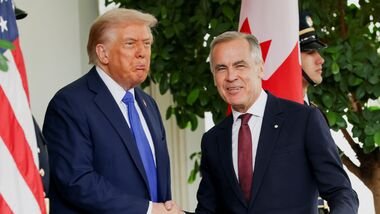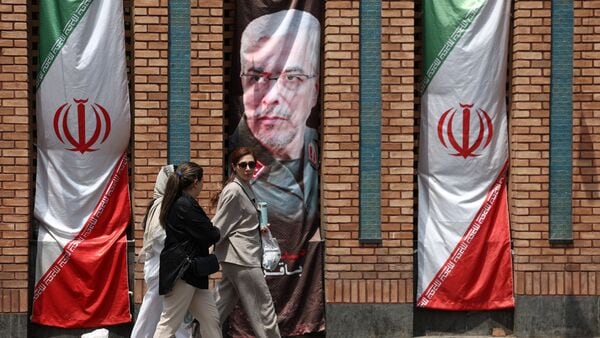
The United States carried out its 10th consecutive night of airstrikes on Iran late Monday (July 21), intensifying its campaign to weaken Tehran’s military capabilities amid a widening regional conflict that has spilled across the Gulf.
The latest attacks came after another American service member was killed and Iran launched fresh strikes targeting US allies, including Kuwait, Jordan and Bahrain.
US launches fresh strikes
that American forces had begun another round of strikes targeting Iranian military assets allegedly linked to attacks on commercial shipping in the Strait of Hormuz.
Quick answers to key questions
What are the reasons behind the US airstrikes on Iran?⌵
The US airstrikes on Iran aim to degrade Iranian military capabilities that threaten commercial shipping in the Strait of Hormuz, following increased attacks on US allies and the death of American service members.
How has Iran retaliated against the US strikes?⌵
Iran has retaliated by launching missile attacks targeting US allies, including Bahrain and Kuwait, as part of a strategy to escalate the conflict and punish those cooperating with the US.
What specific military targets has the US identified in Iran for airstrikes?⌵
The US has targeted a range of Iranian military assets, including command centers, air defense systems, missile launch facilities, and maritime capabilities associated with threatening commercial shipping.
Should the US expect further Iranian attacks following recent airstrikes?⌵
Yes, given Iran’s history of retaliating against US actions, further Iranian attacks on US forces or allies in the region are anticipated as tensions remain high.
What is the significance of the Strait of Hormuz in the US-Iran conflict?⌵
The Strait of Hormuz is a critical chokepoint for global oil shipping, making it a strategic focal point in the US-Iran conflict, as disruptions there can have major implications for international trade and energy supplies.
“The strikes are designed to further degrade Iranian military capabilities used to attack commercial shipping” in the strategic waterway, in a statement on X.
The latest operation marks the 10th consecutive night of US military action against Iran following the collapse of last month’s interim ceasefire.
Trump vows retaliation after US troop deaths
The latest strikes followed the and Iraq.
The , while another US service member died in Iraq during the controlled detonation of a downed Iranian drone.
Reacting to the deaths, President .
“Every time Iran kills an American Soldier they will pay for that killing many times over!” .
Trump is expected to attend a ceremony at Dover Air Force Base on Tuesday to receive the remains of at least one fallen service member.
US launches ninth consecutive night of strikes on Iran, targets military sites
The United States launched its ninth consecutive night of airstrikes against Iran, targeting military infrastructure that Washington says has been used to threaten commercial shipping in the Strait of Hormuz, as the conflict between the two countries continued to intensify.
The US Central Command (CENTCOM) said the latest wave of strikes hit a broad range of Iranian military assets, including command centres, air defence systems, coastal surveillance facilities, missile and drone launch sites, maritime capabilities and communications networks.
In a statement posted on social media, CENTCOM said the strikes were aimed at degrading Iran’s ability to conduct military operations and disrupt shipping in the strategically vital waterway.
The latest operation follows a series of US attacks over the past nine days. Last week, American forces also struck bridges and a communications tower at an Iranian port as part of efforts to weaken Tehran’s military infrastructure.
Iranian media reports casualties
Iran’s state-run IRNA news agency reported that at least one person was killed in the latest US strikes near the northwestern city of Tabriz, located around 520 kilometres from the capital, Tehran.
Tabriz is believed to host underground missile facilities operated by Iran’s Islamic Revolutionary Guard Corps (IRGC), making it a key strategic military location.
IRNA also reported that American strikes likely targeted several other locations across Iran, including Bandar Imam Khomeini in Khuzestan province, Sirik and Jask in Hormozgan province, and the southeastern cities of Konarak and Chabahar in Sistan and Baluchistan province.
Strait of Hormuz remains flashpoint
The , with both military operations and commercial shipping increasingly disrupted.
The British military’s United Kingdom Maritime Trade Operations (UKMTO) said another commercial vessel was attacked near the United Arab Emirates after a separate ship caught fire near Oman’s coast following a projectile strike.
Iran’s Revolutionary Guards later claimed responsibility for targeting tankers transiting the strait.
The US has increasingly focused its military campaign on degrading Iran’s maritime capabilities, arguing they threaten one of the world’s busiest oil shipping lanes.
Houthis threaten Saudi oil exports
Another front opened after .
The group said it intended to block shipping routes between the Red Sea and the Gulf of Aden, threatening an alternative export route Saudi Arabia has relied upon as traffic through the Strait of Hormuz slows.
The announcement heightened concerns over global energy supplies, contributing to higher oil prices.
Benchmark Brent crude traded above $88 a barrel on Monday, while average US gasoline prices climbed to around $4 per gallon.
Diplomatic efforts continue
Despite the military escalation, diplomatic channels remain active.
Iranian Interior Minister Eskandar Momeni arrived in Islamabad for talks with Pakistani leaders as Islamabad continued efforts to revive negotiations between Washington and Tehran.
Pakistan’s Interior Minister Mohsin Naqvi struck an optimistic tone.
“God willing, We will have good news,” Naqvi said after welcoming Momeni.
US Secretary of State also said Washington remained willing to negotiate if Tehran showed genuine intent.
“If the door opens to diplomacy — if the guys that want to do something productive for Iran win and take control of that system, or take control of the negotiations — that’ll be a very positive development,” Rubio said.
“That’s not where we are tonight, unfortunately.”
Human and regional toll grows
Iranian authorities said at least 50 people had been killed and 517 wounded in the latest round of US strikes.
Since the , the Pentagon says 17 American service members have been killed.
With fighting spreading across multiple countries, shipping disruptions worsening and diplomatic efforts struggling to gain traction, the confrontation between Washington and Tehran continues to move closer to a broader regional war.
(With AP inputs)