The US and Iran signed a tentative deal for an “immediate and permanent end” to all military operations on all fronts including Lebanon, indicating an apparent end to the more than 100 days after it began in late February.
The announcement was made by Shehbaz Sharif, the Prime Minister of Pakistan, which was a key mediator for peace negotiations between the US and Iran. In a post on his social media, Sharif said that the official signing of the deal will take place in Switzerland on Friday, 19 June.
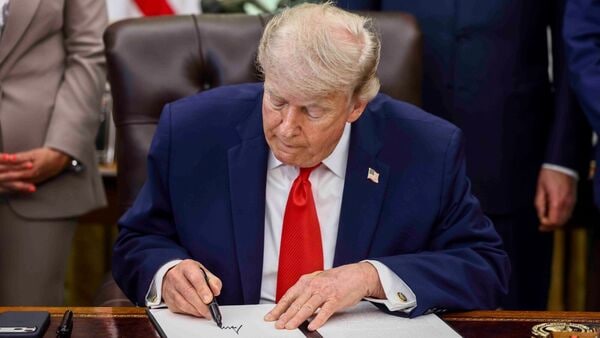
This was followed by US President ‘s post on social media platform Truth Social, where he wrote, “The Deal with the Islamic Republic of Iran is now complete. I hereby fully authorize the toll-free opening of the Strait of Hormuz, and, simultaneously herewith, authorize the immediate removal of the United States Naval blockade.”
Quick answers to key questions
What is the US-Iran peace deal about?⌵
The US-Iran peace deal aims for an immediate and permanent end to military operations between the two countries, including conflicts in Lebanon, and focuses on reopening the Strait of Hormuz for toll-free passage.
Why is the reopening of the Strait of Hormuz significant?⌵
The reopening of the Strait of Hormuz is significant as it is a crucial shipping lane for about a fifth of the world’s oil supply, facilitating global energy trade and enhancing regional stability.
How will the agreement affect Iran’s frozen assets?⌵
Under the deal, up to $24 billion in frozen Iranian assets may be released, with $12 billion possibly made available before negotiations commence following the Memorandum of Understanding.
What happens next after the signing of the peace deal?⌵
After the signing, a 60-day negotiation period will begin to finalize terms regarding Iran’s nuclear program, sanctions relief, and further actions to ensure lasting peace.
Should the international community be concerned about the nuclear negotiations in the peace deal?⌵
Yes, there are concerns regarding the nuclear negotiations, as there are no assurances that Iran’s nuclear program will be adequately addressed within the framework of the agreement.
“Ships of the World, start your engines. Let the oil flow!” Trump asserted.
Soon after, Iran’s Deputy Foreign Minister Kazem Gharibabadi said in televised comments that the deal put an “immediate end” to the countries’ war and that they would hold talks within two months to seek a “final agreement.”
Here are top-10 highlights and reaction to the US-Iran peace deal:
- Iran’s Mehr news agency reported that the US will release $12 billion in frozen assets to Iran before the start of negotiations, citing a 14-point MoU, the details of which are yet unclear.
2. After the MoU is formally signed, the US is expected to release $24 billion in frozen Iranian assets during the 60-day negotiation period
3. Brent price plunged 3.95% to $83.88 a barrel in response to the peace deal announcement.
4. In a joint statement, the United Kingdom, France, Germany and Italy said they were prepared to lift sanctions imposed on Iran and will work “with the US, Iran and regional partners to seize this moment, maintain momentum and achieve a long-term diplomatic settlement.”
5. The Strait of Hormuz is expected to reopen after the formal signing of the deal on Friday. However, Turkish news agency Anadolu Agency cited the MoU to indicate that the critical waterway may reopen within 30 days of the formal signing of the deal.
6. Energy experts have warned that it will take months before oil companies can resume operations to the point of meeting the world’s demand.
7. The Indian rupee is poised to climb well past 95 per US dollar at open on Monday, having settled at 95.11 on Friday.
8. Iranian Foreign Minister Abbas Araghchi said the terms of dealing with Iran’s nuclear program would be finalized in the 60 days after the initial agreement is signed and that the parties could decide to extend that period.
9. Trump said Sunday that the peace deal with Iran was delayed “by a few hours” because of an Israeli strike on Beirut. Trump fumed at Israeli Prime Minister Benjamin Netanyahu over the attack on Beirut, saying “Why did Bibi (Netanyahu) have to do a f***ing attack?” Axios reported.
10. Trump is now heading to the French Alps to meet with fellow world leaders at the Group of Seven (G7) summit after announcing the agreement.