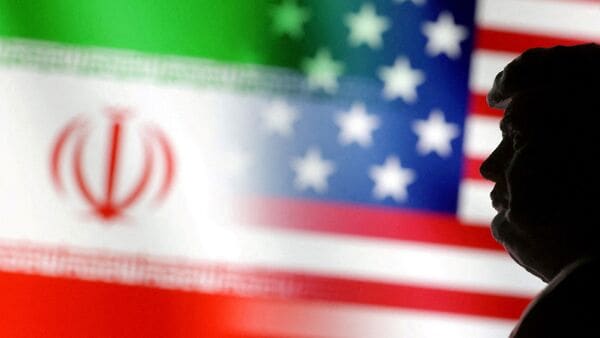
A day after US President rejected Iran’s latest proposal, stating that he was not ‘satisfied’, a senior Iranian official on Saturday (local time) said that the proposal would reopen shipping in the Strait of Hormuz and lift the US blockade on Iran, while postponing discussions on Tehran’s nuclear programme.
What did Iran’s latest proposal mention?
The official, who spoke to Reuters on condition of anonymity, said that the Islamic Republic believed that its latest to delay nuclear talks for a later stage was a significant shift aimed at facilitating an agreement.
He further noted that under the latest proposal, the US-Iran war would end with a guarantee that Israel and the US would not attack again, and that Tehran would open the Strait of Hormuz, which has been effectively shut since the conflict started in late February, while Washington would lift its .
Future talks would then be held on curbs to Iran’s nuclear programme in return for the lifting of sanctions, with Iran demanding Washington recognise its right to enrich uranium for peaceful purposes, even if it agrees to suspend it.
“Under this framework, negotiations over the more complicated nuclear issue have been moved to the final stage to create a more conducive atmosphere,” the official said.
US rejects Iran’s latest proposal
Speaking to reporters at the White House on Friday, Trump said that he was ‘unhappy’ and ‘not satisfied’ with the proposal. He added, “They want to make a deal, but I’m not satisfied with it,” and added, “We just had a conversation with Iran. Let’s see what happens. But I would say that I am not happy.” When asked what the shortcomings of the proposal were, the said, “They’re asking for things I can’t agree to.”
US-Iran peace talks in limbo
The developments came weeks after the US and suspended their bombing campaign on Iran; however, no deal has been reached to end the war so far. After the first round of talks failed in Pakistan’s capital city, Islamabad, on April 11–12, the two sides blamed each other for failing to reach an agreement. While Washington said that Tehran chose not to accept its terms, the Islamic Republic accused Washington of making excessive demands. Following this, the US imposed a naval blockade of Iranian ports, a move that further hampered the hopes of renewing talks and achieving a deal. Since Trump imposed a naval blockade on April 13, Tehran’s leaders have denied coming to the negotiating table, citing the blockade as the primary reason. While Tehran wants the removal of the blockade to continue talks, the US wants a final deal before removing it, thereby continuing the stalemate.
Military escalation likely?
Days after Israel’s Defence Minister, Israel Katz, issued a that renewed military action could be likely as Tel Aviv received over 6,500 tonnes of military equipment, a senior Iranian military officer has also made a similar claim. Speaking to Fars News, Mohammad Jafar Asadi, a key central command figure, said that “a renewed conflict between Iran and the United States is likely.” He added, “US officials’ actions and statements are largely media-oriented, aimed first at preventing a drop in oil prices and second at escaping the predicament they have created for themselves.”
These developments come as the US Central Command (CENTCOM), which is carrying out a naval blockade, briefed Trump on Thursday regarding a potential military strike in Iran, as talks between the two sides failed and Tehran continues to maintain its hold on the Strait of Hormuz.