Iranian state media reported that an employee of the Mobile Communications Company of Iran was killed in an attack in Bandar Lengeh in Hormozgan province.
According to IRNA: “Following the enemy attack on Farur in Bandar Lengeh, one employee of the Mobile Communications Company of Iran was killed while carrying out his duties, and two of his colleagues were injured.”
Projectiles hit Qeshm Island
IRNA also quoted the governor of Qeshm Island, located near the Strait of Hormuz, as saying that between 10 and 11 projectiles struck military targets on the island.
Quick answers to key questions
What recent military actions occurred between the US and Iran regarding the Strait of Hormuz?⌵
The US launched strikes on approximately 140 Iranian targets, while Iran retaliated with missile and drone attacks against Gulf countries hosting US forces, following tensions escalated by an Iranian attack on a container ship.
Why does Iran claim the Strait of Hormuz is closed?⌵
Iran asserts that the Strait of Hormuz is closed due to what it describes as illegal movements by US military forces, insisting they intend to regulate maritime traffic through the passage.
How is the international community responding to the conflict over the Strait of Hormuz?⌵
The international community, including mediators like Oman and Qatar, continues to pursue diplomatic efforts to end the conflict and stabilize the region despite ongoing military escalations.
Should commercial vessels be concerned about passing through the Strait of Hormuz?⌵
Yes, commercial vessels may face increased risks as Iran has threatened military action against ships ignoring its claimed navigation routes and maintains the Strait is closed, despite US claims of open shipping routes.
What military targets did the US strike in its latest operation against Iran?⌵
The US strikes targeted missile launch sites, drone facilities, ammunition depots, and communications infrastructure, aiming to degrade Iran’s capacity to threaten commercial shipping in the Strait of Hormuz.
Authorities said the attacks caused no casualties, adding that all of the sites hit were military installations.
The US military did not immediately comment on the reported strikes.
Competing claims over Strait of Hormuz
The Strait of Hormuz remains at the center of the confrontation.
Iran insists the strategic waterway has been closed and says it intends to regulate all maritime traffic through the passage.
The United States, however, maintains that international shipping continues uninterrupted.
CENTCOM said commercial traffic is still moving through the strait, while a multinational maritime monitoring body reported that vessels continue to transit the route, albeit at reduced levels.
Before the conflict, approximately one-fifth of global oil and liquefied natural gas shipments passed through the Strait of Hormuz.
US strikes 140 targets in Iran as Hormuz tensions explode
The United States and Iran exchanged heavy military strikes on Sunday, escalating tensions across the Middle East as Washington launched one of its largest attacks of the conflict and Tehran responded with missile and drone strikes targeting several Gulf countries hosting US forces.
The renewed violence has deepened uncertainty over the future of the Strait of Hormuz, a critical global energy corridor, with the US insisting the waterway remains open while Iran continues to claim it has been closed.
US launches major strikes across Iran
The US military said it struck around 140 targets across Iran in response to Tehran’s alleged attack on a Cyprus-flagged container ship in the Strait of Hormuz.
According to US Central Command (CENTCOM), the targets included:
Missile launch sites
Drone launch facilities
Ammunition depots
Communications infrastructure
Other military installations
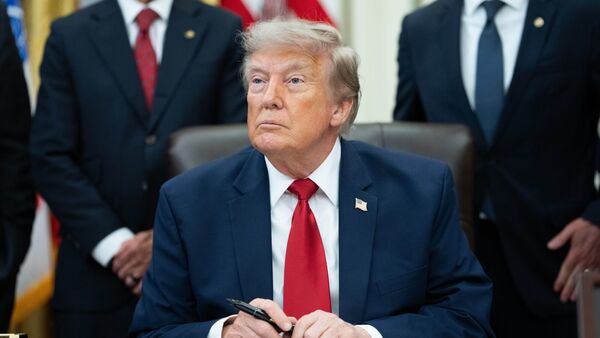
President Donald Trump defended the operation during an interview with NBC’s Meet the Press.
“We bombed the hell out of them last night.”
The US said the operation was aimed at degrading Iran’s ability to threaten commercial shipping through the strategically vital Strait of Hormuz.
Iran retaliates with regional attacks
Hours after the US strikes, Iran launched missiles and drones targeting countries hosting American military facilities.
Missile alerts and interceptions were reported in:
Bahrain
Kuwait
Qatar
Jordan
Oman
Qatar said three people, including a child, were injured by falling shrapnel from intercepted missiles.
Kuwait said it intercepted incoming projectiles, while Jordan reported three Iranian missiles caused minor property damage without injuries.
Oman also reported drone strikes near the Strait of Hormuz and summoned Iran’s ambassador in protest, calling the attacks “irresponsible.”
Container ship attack triggers escalation
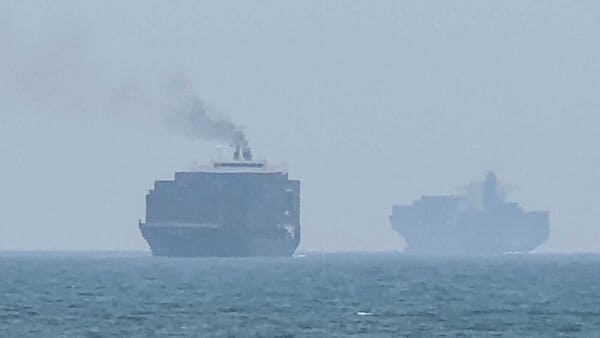
The latest US-Iran exchange followed an Iranian strike on a Cyprus-flagged container ship near the Strait of Hormuz.
US officials said the vessel suffered significant engine room damage after being hit.
Oman rescued 23 crew members, while one crew member remains missing.
India’s Ministry of External Affairs confirmed the missing sailor is an Indian national and said it is coordinating with Omani authorities to locate him.
The UK’s Maritime Trade Operations (UKMTO) said the ship had been sailing close to Oman’s coastline, a route increasingly used by commercial vessels to avoid Iranian territorial waters.
Iran warns over future attacks
Iran’s Revolutionary Guard claimed several commercial vessels ignored what it described as approved navigation routes.
The force said one vessel was stopped after being hit by a warning shot and warned that additional military action could follow if further attacks are launched against Iran.
Parliament Speaker Mohammad Bagher Qalibaf also issued a warning on social media.
“The era of one-sided deals is OVER.”
“We told you: keep your word or pay the price. Reality is knocking.”
Diplomatic efforts continue despite escalation
The latest violence has placed growing pressure on an interim US-Iran agreement reached last month that established a 60-day negotiating period aimed at ending the conflict.
Although President Trump recently declared the ceasefire effectively “over,” mediators including Oman, Qatar, Pakistan and Egypt continue efforts to prevent a broader regional war.
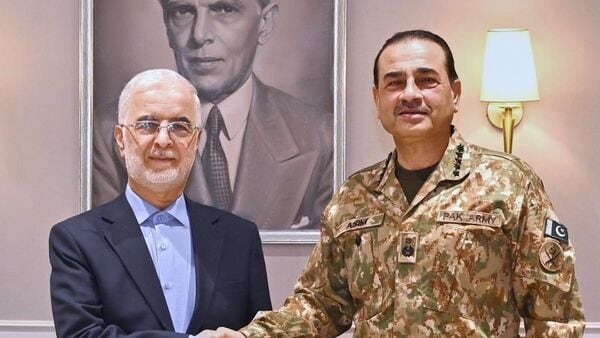
Pakistan confirmed that its foreign minister spoke with Iran’s top diplomat, urging both sides to pursue de-escalation.
Meanwhile, Iran’s new Supreme Leader Ayatollah Mojtaba Khamenei vowed to avenge the killing of his father, Ayatollah Ali Khamenei.
“Such revenge is the will of our nation and must certainly be carried out.”
With military exchanges intensifying and the future of the Strait of Hormuz still disputed, fears are growing that the conflict could further disrupt global energy supplies and destabilize the wider Middle East.