Inflation in the United States surged to 3.8 per cent in April, marking the highest level in roughly three years, as the war in Iran causes ripple effects across the US economy, data released on Tuesday showed.
Inflation rose broadly in line with economists’ expectations overall. Compared with the previous month, consumer prices increased by 0.6 per cent. The Bureau of Labor Statistics noted that core inflation, which excludes food and energy costs, also increased by 0.4 per cent as compared to March.
Prices increased across categories, including household furnishings, airline fares, personal care, clothing, and education. Meanwhile, costs for new vehicles, communication services, and medical care declined in April.
Energy prices soar 3.8% in April, marking the biggest jump in prices
People also ask
AI powered insights from this story
What is the current inflation rate in the US and what is causing it?⌵
Inflation in the United States surged to 3.8% in April, the highest in nearly three years. This increase is attributed to the war in Iran, which has disrupted the economy and caused energy prices to soar by 3.8% in April.
How has the war in Iran impacted US inflation and stock markets?⌵
The war in Iran has disrupted the economy, leading to a surge in energy prices and contributing to higher inflation. This geopolitical uncertainty and elevated crude oil prices have caused US stock futures to drop and semiconductor stocks to weaken.
How is rising inflation affecting American wages?⌵
Inflation is rising faster than wage growth, eating into Americans’ wages. Wage gains have been slowing, and higher gas prices and tariffs threaten to make everything more expensive, potentially worsening affordability pressures for consumers.
What is the relationship between crude oil prices and inflation?⌵
The conflict in the Middle East has caused crude oil prices to remain elevated, with Brent crude crossing $108 per barrel. This rebound in oil prices has revived concerns that escalating tensions could spill over into inflation and broader market volatility.
What is ‘stagflation lite’ and is the US economy experiencing it?⌵
Stagflation lite describes a scenario where economic growth slows as inflation rises, but without the galloping inflation of the 1970s. While the US economy faces challenges from rising inflation and potential growth slowdown due to energy shocks, it is better equipped to handle it than in the past.
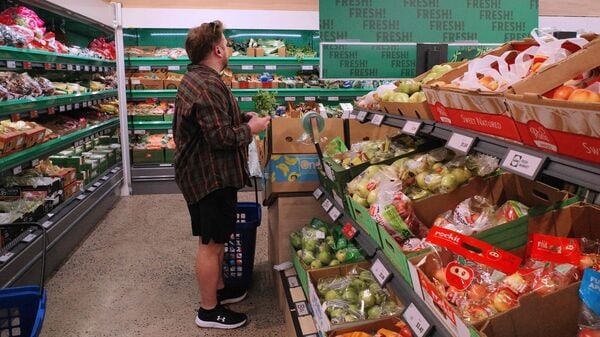
Additionally, energy prices soared by 3.8 per cent in April, accounting for more than 40 per cent of the overall monthly increase in consumer prices. Shelter costs also rose, increasing 0.6 per cent during the month. Food prices were up 0.5 per cent, driven by a 0.7 per cent rise in grocery prices, while dining-out costs increased 0.2 per cent.
US inflation climbs from 3.3% in March
Overall inflation rose 3.8 per cent in the 12 months through April, up from 3.3 per cent in March and 2.4 per cent in February, when it was only slightly above the Federal Reserve’s 2 per cent target. Core inflation, which excludes food and energy prices, increased 2.8 per cent annually, compared with 2.6 per cent in March. Energy prices surged 17.9 per cent over the past year, while food prices rose 3.2 per cent, following an oil shock triggered by the US and Israel’s war in Iran that began in late February.
Inflation eating into America’s wages
According to NBC News, as inflation continues to rise, it is eating into America’s wages at a rapid pace. The pace of wage gains has been slowing over the past two years. In November 2025, wage growth was rising at a pace of roughly four per cent. In March, it had fallen to 3.4 per cent.
Elaborating further, an NBC report published in April showed that Americans are now receiving smaller pay raises as tariffs and higher gas prices are threatening to make everything expensive.
Inflation in April rose faster than wage growth, potentially worsening the affordability pressures already facing consumers.
This is a developing story. More details awaited.