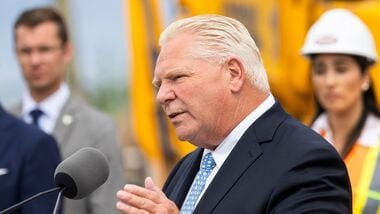
, the Premier of Ontario, who got into a heated war of words with US President Donald Trump recently over the latter’s imposition of 50% tariffs on $20-billion worth of Canadian imports, told CBS News that Trump is treating his country ‘like we’re Communist China here’.
“We’re the closest friends and allies that the US has anywhere in the entire world, and I want to keep it that way,” Ford insisted in an interview with the publication.
Ford’s conciliatory tone was reflected in another interview he gave to Bloomberg Television, wherein he agreed, “Things got a little heated…He was throwing insults”. “And I hit back. But I think it’d be more productive if the prime minister and the president sit down and have a fair deal for everyone,” Ford added.
Quick answers to key questions
What are the specific goods affected by Canada’s retaliatory tariffs against the US?⌵
Canada’s retaliatory tariffs will impose duties of 50% on steel, aluminum, furniture, and clothing; 25% on cheese, appliances, and some seafood; and 15% on electronics and tools.
Why did Canada decide to impose counter-tariffs on US goods now?⌵
Canada imposed counter-tariffs following the collapse of trade talks and the US decision to impose 50% tariffs on $20 billion worth of Canadian imports, aiming to protect domestic industries affected by these tariffs.
How are the new Canadian tariffs designed to mitigate the impact on consumers?⌵
The Canadian government designed the tariffs to limit their impact on consumers while still applying pressure on US exporters, intending to strike a balance between protecting Canadian businesses and minimizing consumer costs.
Should Canadian businesses be concerned about the impact of the US tariffs?⌵
Yes, Canadian businesses are likely to face challenges due to escalating tariffs, as the measures aim to affect $20 billion worth of annual US exports to Canada, potentially increasing costs and disrupting supply chains.
What broader implications do the tariffs have on Canada-US relations?⌵
The tariffs mark a significant escalation in trade tensions, representing a new low in Canada-US relations, with both countries increasingly resorting to trade barriers amidst hostile rhetoric.
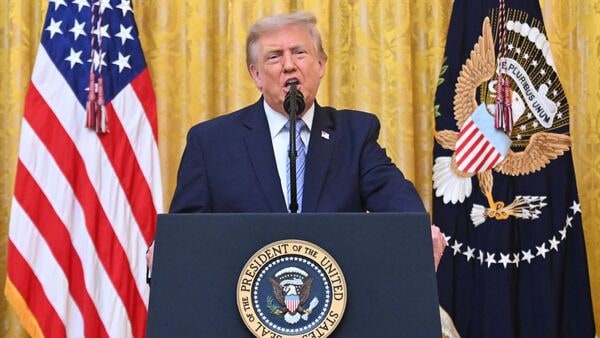
With talks for a trade deal collapsing between the two sides, the on hundreds of imports from Canada, which was followed by Prime Minister announcing that Ottawa will be imposing counter-tariffs, leading to Trump threatening on Monday that he would be doubling tariffs on Canadian autos to 50%.
Ford had then slammed the US President for the threat, telling a radio host that Trump could “kiss my a—— as far as I’m concerned.”
Trump did not let these insults slide past, and called Ford a ‘flunky’ of Carney’s, and also said that he was considering renaming Lake Ontario to Lake America.
Ford retorted back, saying, “I have to laugh when he comes up with these ideas. It’s always going to be Lake Ontario here in Canada. … If he wants to name it Lake America, Lake Trump, whatever he wants to do, that’s his prerogative.”
Canada then announced on Tuesday that it would be doubling its current counter-tariffs on steel and aluminium items coming in from the US to 50%. Milk, furniture, clothing, and apparel imported from the US would also have new duties imposed on them, alongwith video gaming consoles, electronics, and numerous other products.
Canada can leverage electricity
Another place where Canada can hurt the US is electricity. The country sends electricity to more than 20 states in the US through integrated cross-border transmission lines.
However, Ford said that he is not thinking about cutting off electricity to US for now.
“I wouldn’t say cut it off, but surcharges for sure,” Ford told Bloomberg, and added that he would like to send more electricity to the US.
Ford has a history of leveraging electricity, as in 2025, in the early weeks of the trade war between the two countries, he had added a 25% surcharge to electricity supplied to three US states for a single day before he decided to reverse the decision so that trade talks could continue.