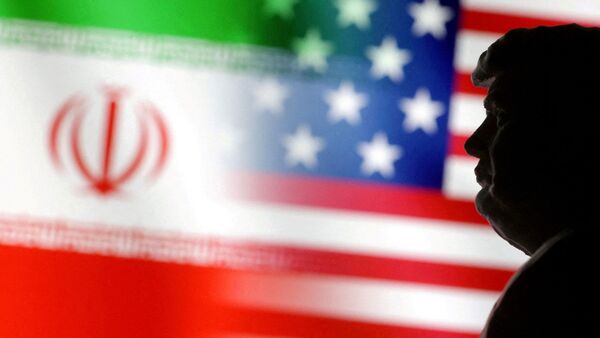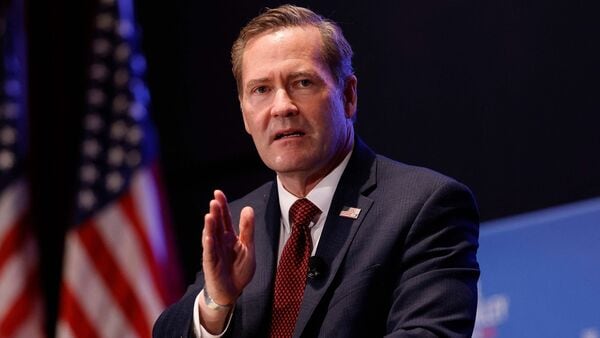
US President Donald Trump is giving diplomatic efforts with Iran more time to progress as Washington pauses military strikes against Tehran for a second consecutive day, US Ambassador to the United Nations Mike Waltz said on Sunday.
Waltz said the US remains prepared for further military action but is allowing negotiations to continue amid efforts to revive an interim ceasefire arrangement between the two sides.
“Trump is giving talks some space — he’s giving it a little bit of room,” Waltz told Fox News.
The comments came after the US military halted strikes on Iran following nearly two weeks of escalation triggered by attacks linked to tensions around the Strait of Hormuz.
US remains ready for further action
Waltz stressed that the pause did not mean Washington was stepping back from its military posture.
“The United States remains locked and loaded,” he said, adding that additional military assets had been moved into the region.
Appearing on NBC’s Meet the Press, Waltz rejected reports that the US military was limiting weapons use because of concerns over depleted supplies.
“The US military — and I’ve verified this every which way — has everything that it needs to conduct this campaign as effectively as it needs to be,” he said.
Waltz also dismissed claims that shortages of missile interceptors were affecting US operations.
“The people that are leaking this nonsense deserve to be in jail,” he added.
Diplomatic push to restore ceasefire
The US and Iran have both paused attacks as diplomatic efforts continue to bring the two sides back to negotiations over an interim ceasefire deal.
It remains unclear why Washington halted strikes after targeting Iranian coastal areas and infrastructure for nearly two weeks. The Pentagon has not publicly explained the decision.
Waltz said talks involving Iran, Oman and other negotiators were continuing at multiple levels.
“We’ve had both Oman and Iran, and a number of our other negotiators, engaged at every level, from the most senior levels all the way down to the technical level,” he said.
Strait of Hormuz remains key issue
The 60-day interim agreement signed in mid-June is now in its later phase, but major issues — including Iran’s nuclear programme — remain unresolved.
The Strait of Hormuz, one of the world’s most important energy shipping routes, remains at the centre of negotiations.
Iran’s Foreign Ministry spokesperson Esmail Baghaei said Tehran’s talks with Oman on ensuring safe passage of ships had made progress.
However, Iran maintained that the status of the waterway remained unchanged and argued that it has the right to manage shipping routes through the strait.
The US has continued efforts to enforce restrictions on Iranian maritime activity. The US military said its naval blockade against Iran remained active, with several commercial vessels redirected or boarded.
Regional risks grow beyond Hormuz
Concerns have also expanded to the Bab al-Mandeb Strait, a key shipping route connecting the Red Sea and the Gulf of Aden.
Iran-backed Houthi rebels in Yemen recently threatened a blockade targeting Saudi-linked shipping, raising concerns over global energy supplies and economic stability.
Rising tensions have already pushed fuel prices higher, increasing fears of further disruption to international markets.
Netanyahu backs Trump’s diplomatic approach
Meanwhile, Israeli Prime Minister Benjamin Netanyahu is scheduled to meet Trump in Washington on Tuesday (July 28) as Iran remains a central issue on the agenda.
Netanyahu said he supports Trump’s efforts to pressure Tehran and prevent Iran from advancing its nuclear programme.
“I fully support Trump’s efforts to weaken Iran and press it to end its nuclear program,” Netanyahu told Fox News.
“If he can do so without returning to intense military fighting, that’s fine. Why not?” he added.
Netanyahu said he would use the meeting to hear Trump’s strategy rather than present new intelligence.
“I think it’s a good thing to have the opportunity to sit with our good friend President Trump and to hear what he has in mind, because I think in many ways it’s his decision,” he said.
However, Netanyahu warned Iran against any future attacks on Israel, either directly or through allied groups.
“If Iran attacks Israel, either directly or through proxies, it will make a terrible mistake,” Netanyahu said.
The Trump-Netanyahu meeting is expected to focus on Iran’s nuclear ambitions, regional security and whether diplomacy can prevent a renewed military escalation.